The U.S. inverter manufacturing industry is heading for a transformation as Federal Communications Commission restrictions on foreign-produced power inverters combine with more than 100 GW AC of announced domestic photovoltaic and power conversion system inverter manufacturing capacity that could be available by the end of 2027.
The inverter manufacturing expansion represents a significant shift for a market dependent on imports. According to Wood Mackenzie, more than 200 GW AC of PV inverters were delivered to U.S. commercial, industrial and utility-scale solar projects over the past decade, with more than 90 percent imported.
China-headquartered manufacturers supplied more than 70 GW during the period and controlled nearly 50 percent of the U.S. inverter market in both 2024 and 2025, Wood Mackenzie report said.
The combination of tighter regulation and large-scale domestic investment could reshape competition across solar, battery storage, grid infrastructure and emerging AI data-center power systems.
FCC Restrictions Add Pressure to Localize Inverter Supply
The FCC added foreign-produced power inverters to its Covered List on July 28, 2026, introducing another regulatory consideration for manufacturers and developers sourcing equipment for the U.S. market.
The action does not automatically prohibit every foreign inverter already installed or previously authorized in the United States. Treatment depends on equipment authorization, applicable exceptions and the specific FCC framework.
U.S. Inverter Manufacturing Pipeline Exceeds 100 GW
Wood Mackenzie estimates that manufacturers have announced more than 100 GW AC of U.S. PV and power conversion system inverter manufacturing capacity that could be available by the end of 2027.
EPC Power Targets Up to 40 GW of Annual Capacity
EPC Power is undertaking one of the largest U.S. power-conversion manufacturing expansions.
The company announced a 167,000-square-foot manufacturing facility in Fountain Inn, South Carolina, in July 2026. The factory is expected to add 27 GW of annual production capacity at full initial production and provide a pathway toward as much as 40 GW annually.
The expansion, which is expected to create 275 jobs, will nearly triple EPC Power’s production capacity.
EPC Power says its technology has more than 15 GW deployed across 62 countries. Its two South Carolina manufacturing facilities together are capable of providing more than 30 GW of annual production capacity.
TMEIC Texas Factory Starts With 9 GW Capacity
TMEIC’s 144,000-square-foot Westport manufacturing facility in Waller County, Texas, started producing utility-scale PV inverters in November 2024. By February 2025, the facility had manufactured more than 300 PV inverters. The factory was established with initial annual production capacity of 9 GW.
GE Vernova Invests More Than $10 Million in U.S. Inverter Production
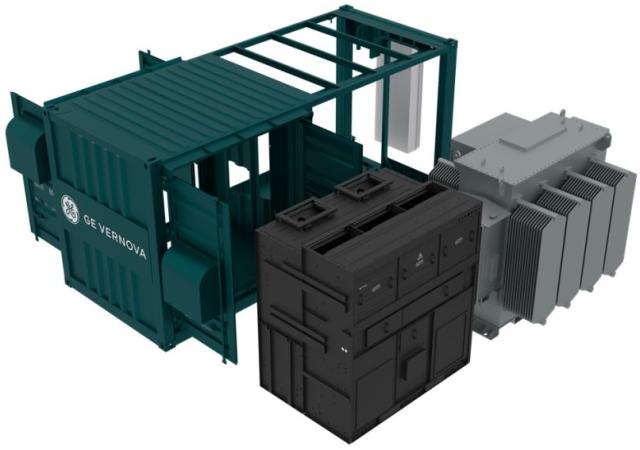
GE Vernova is investing more than $10 million to establish domestic FLEXINVERTER manufacturing at its Pittsburgh facility.
The expansion is expected to create more than 270 jobs and support production of 1,500V and 2,000V inverter systems for utility-scale solar and energy-storage projects.
The investment forms part of GE Vernova’s broader U.S. industrial expansion involving nearly $600 million across factories and facilities over two years.
Enphase Ships 725.2 MW of Microinverters in Q2 2026
Enphase Energy remains a major player in distributed solar and storage as domestic inverter competition intensifies.
Enphase generated $291.9 million in revenue in Q2 2026 and shipped approximately 1.59 million IQ Microinverters, representing 725.2 MW DC of capacity.
The company also shipped 113.8 MWh of IQ Batteries during the quarter.
SolarEdge Recognizes 50,500 Inverters and 331 MWh of Batteries
SolarEdge is competing through a power-electronics ecosystem covering inverters, power optimizers and energy storage.
During Q1 2026, SolarEdge recognized approximately 50,500 inverters and 2.4 million power optimizers as revenue.
The company also recognized 331 MWh of batteries for PV applications as revenue during the quarter.
The figures demonstrate how inverter competition is expanding beyond standalone hardware. Integration between inverters, optimizers, batteries and energy-management technology is becoming an increasingly important differentiator.
SMA Pursues U.S. Manufacturing Through Partnership
SMA Solar Technology is taking a partnership-based route to U.S. localization. SMA and Create Energy announced plans to manufacture Sunny Highpower PEAK3 string inverters and PowerSkid systems at Create Energy’s manufacturing facility in Portland, Tennessee.
CPS America Installed Base Exceeds 10 GW
CPS America brings another competitive advantage: an established U.S. installed base exceeding 10 GW across more than 30,000 sites.
The installed base provides customer relationships, field experience, replacement opportunities and technical-service capabilities that could become increasingly valuable as developers place greater emphasis on reliability, lifecycle support and supply continuity.
Domestic Inverters May Initially Cost More
Wood Mackenzie expects U.S.-manufactured inverter alternatives to initially command a price premium compared with products manufactured through established international supply chains.
Domestic factories face the challenge of competing against global manufacturers benefiting from mature component ecosystems, high production volumes and lower manufacturing costs.
The more than 100 GW AC manufacturing pipeline could also increase domestic competition as additional plants reach production, placing downward pressure on premiums.
45X Tax Credit Raises Long-Term Competitiveness Question
The eventual phase-out of the 45X advanced manufacturing production tax credit will provide another test for the economics of U.S. inverter manufacturing.
Manufacturers have an opportunity to use the current expansion period to increase scale, improve production efficiency, develop domestic supply chains and establish customer relationships.
AI Data Centers Expand the Addressable Market
The inverter manufacturing boom is no longer solely about solar power.
EPC Power is positioning its South Carolina expansion to address solar, energy storage, grid applications and rapidly growing AI data-center infrastructure.
Enphase has also identified potential multi-gigawatt opportunities associated with its next-generation power-conversion technology.
Rising electricity requirements from AI infrastructure could therefore create an additional growth market for companies investing in advanced power electronics and power conversion.
U.S. Inverter Competition Shifts From Capacity to Execution
Different manufacturers are approaching the U.S. opportunity from different competitive positions.
TMEIC has an operating 9 GW annual-capacity manufacturing platform in Texas, while EPC Power is adding 27 GW of annual capacity with potential expansion to 40 GW. GE Vernova is investing more than $10 million in Pittsburgh as part of a nearly $600 million, two-year U.S. industrial investment program.
Enphase’s 725.2 MW DC of Q2 2026 microinverter shipments demonstrate commercial throughput, while SolarEdge’s 50,500 inverters, 2.4 million optimizers and 331 MWh of batteries recognized as revenue in Q1 2026 highlight its integrated product strategy.
CPS America has more than 10 GW installed across 30,000-plus U.S. sites, while SMA is pursuing localization through its manufacturing partnership.
SHAFANA FAZAL