
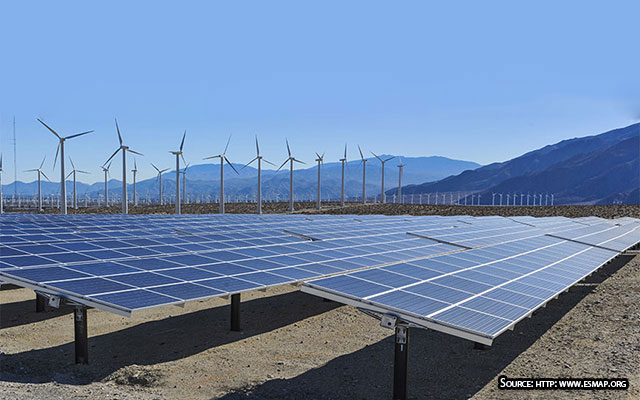
Indonesia is accelerating one of Southeast Asia’s largest electricity transformation programmes with planned investments of US$176.9 billion to US$188 billion through 2034, even as the country remains heavily dependent on fossil fuels. Despite growing renewable energy investments and ambitious solar expansion plans, coal continues to dominate the national power system, creating financial, operational and infrastructure challenges.
Indonesia’s current energy mix remains overwhelmingly fossil fuel-based. Coal accounts for 41.3 percent of the national energy mix, followed by oil at 28.1 percent, natural gas at 14.5 percent, and new and renewable energy at 16.0 percent. Overall, fossil fuels still represent 82 percent of the country’s energy demand, while coal-fired power plants contribute approximately 32 percent of total electricity generation.
State utility PLN generated 354,928 GWh of electricity, but sold only 317,690 GWh, highlighting significant transmission and distribution losses across the national grid.
Indonesia’s electricity network also faces growing reliability risks. A major blackout in Sumatra was triggered after the collapse of 12 transmission towers following failure of a 275-kV transmission line between Muara Bungo and Sungai Rumbai, exposing structural weaknesses in the transmission system.
Fuel price volatility is creating additional financial pressure. Every US$1 per tonne increase in coal prices raises PLN’s operating costs by approximately US$69 million, while currency depreciation has increased fuel expenses by 12 percent.
Although renewable energy deployment is expanding, progress remains below long-term policy ambitions. Indonesia originally targeted 23 percent renewable energy under its National Energy Policy before revising the target to 17 percent to 19 percent. Renewable energy accounted for 16 percent of the national energy mix in 2025, rising to 17.89 percent in early 2026, with renewable electricity generation reaching 29.62 TWh.
Regional performance varies considerably. Sumatra has achieved 41.76 percent renewable energy penetration, supported primarily by hydropower, geothermal energy and biomass resources.
The rooftop solar market remains relatively underdeveloped compared with neighbouring countries. Indonesia has installed only 0.85 GW (853 MW) of rooftop solar capacity, compared with Vietnam’s 6.9 GW, Thailand’s 3.6 GW, and Malaysia’s 1.8 GW.
Affordability remains a major barrier. Installing a 1 kW rooftop solar system costs between IDR 20 million and IDR 30 million, while Indonesia’s GDP per capita stands at US$4,925, or approximately IDR 80 million. As a result, rooftop solar installation costs represent approximately 25 percent to 37.5 percent of annual average income. Additional constraints include ESCO financing limited to five years and zero-percent net metering buyback, reducing incentives for households to export excess solar electricity.
To modernise the electricity system, Indonesia’s RUPTL 2025–2034 plan calls for total investment of US$176.9 billion to US$188 billion. Generation projects will require US$130.16 billion to US$131 billion, while transmission investments total US$24.0 billion to US$34.48 billion. Distribution infrastructure will receive US$11.0 billion to US$16.38 billion, including US$5.1 billion dedicated to smart grid deployment.
The expansion programme aims to add 69.5 GW of new generating capacity, with 76 percent coming from renewable energy. It also includes construction of 47,758 circuit kilometres of transmission lines and 107,950 MVA of additional substation capacity.
Despite these ambitious plans, financing remains a major challenge. Indonesia’s RUKN framework estimates infrastructure investment requirements of US$103.1 billion between 2025 and 2060, averaging more than US$3 billion annually. Actual investment averages only US$1.4 billion per year, declining to US$1.1 billion in 2024, leaving an annual grid investment gap of around US$1 billion.
Economic analysis also highlights the growing competitiveness of renewable energy. Coal-fired electricity has a levelized cost ranging from US10.7 cents to US11.9 cents per kWh, compared with utility-scale solar at US4 cents to US6 cents per kWh.
PLN’s financial position remains under pressure. The utility reports a 2 percent return on equity, well below its 8.5 percent cost of capital. Government subsidies and compensation increased from 19 percent of PLN revenue in 2020 to 34 percent in 2025, while fuel costs rose from 1.2 times electricity tariff levels in 2020 to 1.5 times in 2025. Domestic coal pricing policies under the Domestic Market Obligation (DMO) and Domestic Price Obligation (DPO) allocated 254 million tonnes of coal at regulated prices, reducing fuel costs by 6 percent to 9 percent, although at the expense of market efficiency.
Looking ahead, Indonesia aims to deploy 100 GW of solar capacity to reduce diesel consumption and expand rural electrification. Independent power producers are increasingly focused on renewable energy, with 86 percent of planned investment—worth IDR 1,341.8 trillion (approximately US$81.85 billion)—allocated to green energy projects.
Other major initiatives include a US$30 billion subsea electricity export project linking Indonesia and Singapore, while more than 130 companies have committed to sourcing 100 percent renewable electricity.
Indonesia also faces broader infrastructure funding challenges, with an estimated national infrastructure financing gap of US$56 billion annually. Public infrastructure spending currently stands at only 1.9 percent of GDP, well below the estimated 6.0 percent of GDP required to meet long-term development needs.
The report concludes that Indonesia’s electricity transition is entering a critical phase. While renewable energy has increased to 17.89 percent, investment plans total up to US$188 billion, 76 percent of new generation will come from renewable sources, and 100 GW of solar capacity is targeted, coal still accounts for 41.3 percent of the energy mix. Combined with an annual grid investment gap of around US$1 billion, rooftop solar capacity of only 0.85 GW, and subsidies reaching 34 percent of PLN revenue, the coming decade will determine whether Indonesia can successfully build a more resilient, affordable and low-carbon electricity system.
SHAFANA FAZAL
