
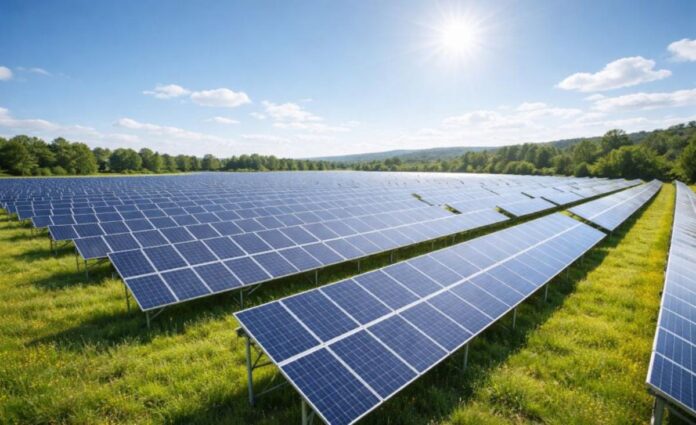
Pakistan’s power sector is undergoing a major transformation as rapid solar adoption, battery storage investments and coal plant restructuring reshape the country’s energy landscape. According to analysis, Pakistan is balancing rising financial pressure from fossil fuel dependence with an accelerating shift toward renewable energy, while seeking to reduce circular debt and strengthen long-term energy security.
A key element of the transition is the future of the 1,320 MW Sahiwal Coal-Fired Power Plant. Retiring or repurposing the facility would require a strategic buyout estimated at US$400 million to US$1.5 billion. Under optimized transition scenarios, the upfront cost could fall below US$100 million, potentially avoiding nearly US$5 billion in contracted capacity payments through 2046. The report notes that Pakistan’s electricity and gas sectors continue to face severe financial stress as circular debt has expanded into the multi-trillion Pakistani rupee (PKR) range.
Pakistan’s energy security remains heavily dependent on imported LNG, with nearly 90 percent of supplies sourced from Qatar. Geopolitical disruptions affecting the Strait of Hormuz and Ras Laffan significantly reduced LNG deliveries, leaving Pakistan with only three long-term contract cargoes during the peak of the crisis. The country was forced to purchase LNG on the spot market, where prices increased from US$18.4 per MMBtu in April to US$19.1 per MMBtu in June.
The higher fuel prices pushed electricity generation costs to approximately PKR 51 per kWh (around US$0.18 per kWh). During periods of peak summer electricity demand exceeding 28,000 MW, Pakistan relied increasingly on expensive backup fuels such as Heavy Furnace Oil (HFO) and High-Speed Diesel (HSD), further increasing generation costs and reducing system efficiency.
Meanwhile, distributed solar power has emerged as one of the fastest-growing segments of Pakistan’s energy sector. Installed solar capacity reached 34,000 MW (34 GW) by 2025, with approximately 25,000 MW (25 GW) connected to the national electricity system through net-metered and hybrid installations.
The rapid expansion of solar generation reduced grid electricity demand by 11 percent in FY2025 compared with FY2022 while lowering LNG demand by 15.4 percent year on year. The impact has been significant for thermal power stations, with utilization rates falling to 61.6 percent at the Bhikki LNG plant, 63 percent at Haveli Bahadur Shah, 53.5 percent at Balloki, and just 16 percent annually at Trimmu, declining further to only 2 percent during the first quarter of 2025. Much of the growth has been driven by widespread installation of 5 kW to 8 kW rooftop solar systems across residential and commercial consumers.
Battery energy storage is also gaining momentum. Pakistan imported 1.25 GWh of lithium-ion batteries during 2024, followed by another 400 MWh in early 2025. Under a business-as-usual scenario, battery storage capacity could reach 8.75 GWh by 2030, while accelerated deployment could increase total capacity to 16.1 GWh. At that level, stored solar electricity could supply between 26 percent and 54 percent of evening peak summer demand, reducing dependence on imported LNG while improving grid reliability.
The report highlights that volatility in LNG prices—from US$18.4 per MMBtu in April to US$19.1 per MMBtu in June—has created unsustainable generation costs of PKR 51 per kWh, roughly two to three times higher than normal generation costs. This has forced greater reliance on HFO and HSD, increasing both fiscal costs and carbon emissions.
Retiring the Sahiwal coal plant could also deliver substantial environmental benefits by preventing between 27 million tonnes and 38 million tonnes of CO₂ emissions over a 10-year transition period. Alongside coal retirement, improved hydropower management has increased available clean hydroelectric capacity from 1,800 MW to 4,100 MW, strengthening Pakistan’s ability to balance intermittent solar generation.
Looking ahead, long-term energy planning proposes a 30:30:30:10 electricity mix by 2030, comprising 30 percent wind and solar, 30 percent hydropower, 30 percent thermal generation across coal, gas and LNG, and 10 percent nuclear energy. The strategy aims to reduce fuel import dependence, stabilize circular debt and improve electricity system resilience.
Despite challenges such as a 48 percent battery import duty, strong private-sector investment continues because rooftop solar and battery systems typically offer payback periods of 3 to 6 years. The report concludes that Pakistan’s transition from fossil fuel dependence toward a 34,000 MW solar-powered electricity system, supported by up to 16.1 GWh of battery storage and strategic coal restructuring, can strengthen energy security, reduce emissions and improve long-term financial sustainability.
SHAFANA FAZAL
