
The latest geopolitical tensions in the Middle East have once again exposed the vulnerability of the global energy system, which remains heavily dependent on fossil fuels. Energy experts and policy organizations warn that repeated oil and gas price shocks highlight the urgent need for governments to accelerate the transition toward renewable energy.
According to the Global Renewables Alliance, expanding renewable energy infrastructure is the fastest and most cost competitive path to long term energy security, economic stability, and resilience against global fuel market disruptions.
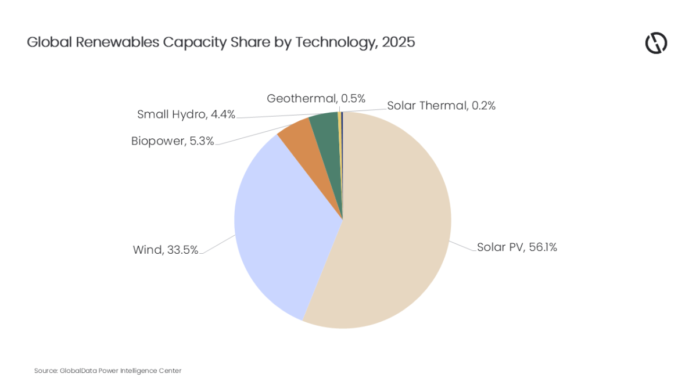
The above chart from GlobalData shows capacity of renewable energy in 2025.
Fossil Fuel Dependence Continues to Trigger Energy Crises
Global energy crises have repeatedly emerged over the past several decades due to heavy reliance on fossil fuels. Major geopolitical events have repeatedly disrupted oil and gas supplies, triggering global economic instability.
Key crises include the 1973 oil crisis, the Gulf War in the early 1990s, the 2022 global gas crisis after Russia’s invasion of Ukraine, and the current conflict in the Middle East.
These events demonstrate a consistent pattern. When fossil fuel supplies are disrupted or prices surge, economies around the world experience inflation, higher energy costs, and financial stress.
Approximately three quarters of the world’s countries rely on imported fossil fuels, making them highly vulnerable to global price volatility. Since oil and gas are critical inputs for electricity generation, heating, transportation, and industrial activity, sudden price increases quickly impact household energy bills, government budgets, and corporate operating costs.
Renewable Energy Offers a Path to Energy Security
Renewable energy technologies such as solar power, wind power, hydropower, geothermal energy, and energy storage provide a more stable and locally sourced alternative to fossil fuels.
Unlike oil and gas, renewable power relies on domestic natural resources such as sunlight, wind, and water. This reduces exposure to international commodity price swings and supply disruptions. Renewable energy systems also have stable operating costs once installed, further protecting consumers and industries from volatility in global fuel markets.
Countries that have invested heavily in renewable generation, modern electricity grids, and energy storage technologies have demonstrated greater resilience during periods of energy market instability.
Energy Transition Becomes a National Security Priority
Energy experts increasingly view the renewable energy transition not only as an environmental goal but also as a strategic national security priority.
Just as earlier crises led to international coordination on energy security policies, the current situation is expected to drive stronger global collaboration to build renewable based and electrified energy systems. Several governments have already reaffirmed their commitment to accelerate renewable energy deployment and reduce dependence on fossil fuel imports.
Five Priority Actions for Governments
The Global Renewables Alliance is urging governments worldwide to adopt emergency measures that can rapidly scale renewable energy deployment and strengthen energy security.
1. Fast Track Renewable Project Approvals
Governments should streamline permitting and regulatory approval processes for renewable energy projects. Accelerating approvals for wind, solar, and energy storage facilities could significantly expand clean energy capacity within the next three years.
2. Modernize Power Grids and Energy Storage
Expanding and upgrading electricity grids is critical to integrate new renewable capacity. Governments should prioritize grid modernization, reduce connection delays for renewable projects, and ensure that clean power sources receive priority dispatch in electricity markets.
3. Mobilize Investment for Renewable Infrastructure
Policy makers are encouraged to unlock public and private financing for renewable energy projects. Measures may include preferential lending rates, dedicated renewable financing programs, and policies that redirect capital away from carbon intensive industries.
4. Accelerate Electrification Across Sectors
Electrification of transportation, heating, and industrial processes can significantly reduce fossil fuel consumption. Governments should develop national strategies to promote electrification supported by energy storage systems, demand response programs, and flexible electricity markets.
For sectors that cannot be directly electrified, green hydrogen is emerging as a key alternative fuel to support decarbonization.
5. Strengthen Renewable Energy Supply Chains
Developing resilient supply chains for renewable energy equipment, grid infrastructure, and energy storage technologies will be essential to support rapid deployment. Governments should implement industrial policies that provide clear demand signals, encourage manufacturing investment, and build skilled workforces in the renewable energy sector.
Renewable Energy Seen as the Long Term Solution
Energy analysts argue that the current crisis should serve as a turning point for global energy policy. By accelerating renewable energy adoption, countries can reduce exposure to volatile fossil fuel markets while strengthening economic resilience and national security.
BABURAJAN KIZHAKEDATH
