
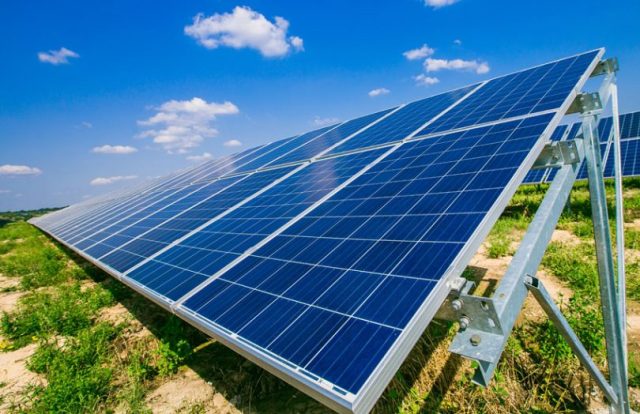
Solar net metering rules in India can significantly influence the financial returns from rooftop solar installations. A 5 kW residential system generating 7,200 units annually may deliver different savings in Maharashtra, Kerala, Gujarat or Delhi because electricity tariffs, export compensation, credit settlement and billing arrangements vary.
For homeowners investing ₹2 lakh–₹3 lakh in rooftop solar, understanding these regulations is essential before selecting a vendor.
Net Metering vs Net Billing: Which Saves More?
Under net metering, electricity exported to the grid is credited against imported electricity according to the applicable regulatory settlement rules. Unused credits may be carried forward or settled separately.
Under net billing, imported electricity is charged at the applicable retail tariff while exported electricity receives a separately determined rate.
Gross metering measures and compensates solar generation separately from household electricity consumption.
Consider a household generating 600 units monthly, consuming 300 units directly and exporting 300 units.
| Billing scenario | Monthly electricity value |
| 600 units valued at ₹8/unit | ₹4,800 |
| 300 units self-consumed at ₹8 + 300 exported at ₹2.82 | ₹3,246 |
| 300 units self-consumed at ₹8 + 300 exported at ₹4 | ₹3,600 |
| 300 units self-consumed at ₹8 + 300 exported at ₹5 | ₹3,900 |
These are illustrative energy values, not guaranteed bill reductions. Actual results depend on tariff slabs, settlement rules, grid imports and fixed charges.
Solar Net Metering Rules 2026: State-Wise Comparison
Regulations differ by state, consumer category, system capacity and utility. Export tariffs should not be compared without confirming whether they apply to net metering, net billing or annual surplus settlement.
| State | Key regulatory consideration | What homeowners should verify |
| Maharashtra | Net metering framework and surplus compensation | Applicability of ₹2.82/unit FY2026–27 generic tariff |
| Kerala | KSERC regulations and KSEB implementation | Current operative rules, banking and surplus settlement |
| Gujarat | State rooftop solar regulations and amendments | Capacity eligibility and export-credit calculation |
| Delhi | Net metering, group and virtual net metering provisions | Consumer eligibility and credit allocation |
| Tamil Nadu | State-specific rooftop solar billing arrangements | Export compensation and applicable charges |
| Karnataka | KERC rules and distribution-company procedures | Sanctioned load, capacity and settlement |
| Rajasthan | State renewable energy metering framework | Banking, annual settlement and approvals |
| Uttar Pradesh | UPERC regulations and utility procedures | Metering eligibility and surplus valuation |
Maharashtra: Export Tariff and Solar Savings
Maharashtra provides an important example of how export compensation affects rooftop solar returns.
The Maharashtra Electricity Regulatory Commission approved a generic tariff of ₹2.82 per kWh for FY2026–27 for the relevant surplus rooftop solar category.
A household exporting 3,600 units annually would receive an illustrative export value of ₹10,152 if that tariff applies.
At ₹4 per unit, the same exports would be worth ₹14,400—a difference of ₹4,248 annually.
Consumers should check MSEDCL’s rooftop solar net-metering procedures and the applicable MERC tariff order before assuming any export rate.
Kerala: KSEB Rules and Solar Returns
Kerala’s rooftop solar economics require particular attention to monsoon generation, daytime electricity consumption and the applicable KSEB billing arrangement.
For example, a 5 kW system generating 6,800 units annually could have an illustrative annual energy value of ₹40,800 if all generation were valued at ₹6 per unit.
However, where exports receive a lower rate, actual value depends on how much electricity the household consumes directly.
Homeowners should verify the latest legally operative KSERC rules and KSEB procedures, particularly because earlier regulatory changes were subject to litigation. A previously reported court stay should not be treated as proof of the current legal position.
Gujarat: Rooftop Solar Eligibility and Settlement
Gujarat’s rooftop solar framework distinguishes consumer categories and metering arrangements.
A household consuming 500 units monthly and generating 600 units monthly should not assume that all exported electricity offsets purchases at the highest retail tariff.
The applicable settlement mechanism determines the benefit.
Consumers can check the Gujarat Electricity Regulatory Commission regulations for the notified framework and amendments.
Delhi: Group and Virtual Net Metering
Delhi provides additional options through group and virtual net metering arrangements, subject to eligibility requirements.
These mechanisms can be relevant where electricity generation and consumption are allocated across eligible connections rather than confined to a single conventional rooftop installation.
The Delhi Electricity Regulatory Commission listed a second amendment to its renewable-energy net-metering guidelines dated July 16, 2026.
Consumers should examine the DERC regulations and their distribution company’s current implementation requirements.
PM Surya Ghar Subsidy: How Much Can Households Receive?
The central PM Surya Ghar: Muft Bijli Yojana offers financial assistance for eligible residential rooftop solar installations.
| Rooftop solar capacity | Standard central subsidy |
| 1 kW | ₹30,000 |
| 2 kW | ₹60,000 |
| 3 kW | ₹78,000 |
| 5 kW | ₹78,000 |
| 10 kW | ₹78,000 |
The standard central subsidy is capped at ₹78,000 for systems of 3 kW and above, subject to scheme eligibility and conditions.
The Electricity (Rights of Consumers) amendments introduced in 2024 also simplified rooftop solar procedures, including exemption from technical feasibility studies for systems up to 10 kW under the prescribed framework.
Homeowners should confirm vendor eligibility, application requirements and assistance through the official PM Surya Ghar portal.
5 kW Solar System: Installation Cost, Savings and Payback
Consider a residential installation with the following assumptions:
| Parameter | Illustrative value |
| System capacity | 5 kW |
| Installation cost | ₹2,90,000 |
| Eligible central subsidy | ₹78,000 |
| Net investment | ₹2,12,000 |
| Annual solar generation | 7,200 units |
| Direct household consumption | 3,600 units |
| Annual exports | 3,600 units |
| Retail electricity value | ₹8/unit |
| Assumed export compensation | ₹2.82/unit |
Direct consumption would save ₹28,800 annually, while exports would provide ₹10,152 in value.
Total illustrative annual energy benefit: ₹38,952.
Simple payback: approximately 5.4 years, excluding maintenance, financing, degradation, fixed charges and equipment replacement.
How Export Tariffs Change Solar Payback
Using the same ₹2.12 lakh investment and 7,200-unit annual generation:
| Export compensation | Annual energy value | Simple payback |
| ₹2/unit | ₹36,000 | 5.9 years |
| ₹2.82/unit | ₹38,952 | 5.4 years |
| ₹4/unit | ₹43,200 | 4.9 years |
| ₹5/unit | ₹46,800 | 4.5 years |
These scenarios are hypothetical, not a comparison of confirmed state tariffs.
They demonstrate why households should evaluate self-consumption and export compensation separately.
What Homeowners Must Check Before Installing Solar
A rooftop solar quotation should clearly identify the applicable metering arrangement, permitted system capacity, export compensation, billing cycle, unused-credit treatment and connection charges.
For example, an additional ₹20,000 in mounting or electrical work would increase the illustrative investment from ₹2.12 lakh to ₹2.32 lakh. At ₹38,952 in annual energy value, simple payback would increase from 5.4 to approximately 6 years.
Households should also budget for maintenance and potential inverter replacement.
The most important decision is not simply choosing the state with the highest advertised export tariff. It is selecting a properly sized rooftop solar system that maximizes useful generation, complies with current utility rules and delivers measurable savings after all charges.
SHAFANA FAZAL
