
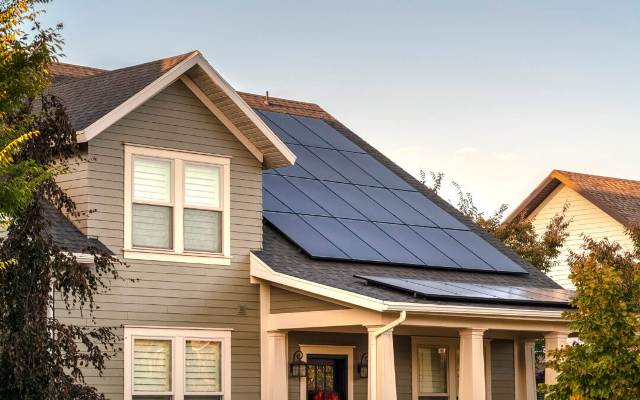
PM Surya Ghar Yojana 2026: Check rooftop solar subsidy up to ₹78,000, eligibility, 1 kW to 10 kW installation costs, online application, electricity savings and loan options.
India’s PM Surya Ghar: Muft Bijli Yojana offers eligible households up to ₹78,000 in central subsidy for rooftop solar installations, helping families reduce electricity bills and dependence on grid electricity.
Launched on February 13, 2024, with a government allocation of ₹75,021 crore, the scheme aims to support rooftop solar installations in one crore households by FY2026–27.
The programme has already achieved significant scale. According to the Ministry of New and Renewable Energy (MNRE), more than 50.06 lakh households were benefiting from the scheme by August 4, 2026, with 14.8 GW of rooftop solar capacity commissioned and ₹28,024 crore in subsidies released.
Nearly 19 lakh households reportedly received zero electricity bills during at least one billing period. However, zero electricity bills are not guaranteed throughout the year.
PM Surya Ghar Scheme 2026: Key Figures
| Indicator | Details |
| Government allocation | ₹75,021 crore |
| Target households | 1 crore |
| Beneficiary households, August 2026 | Over 50.06 lakh |
| Rooftop solar capacity commissioned | 14.8 GW |
| Subsidies released | ₹28,024 crore |
| Maximum standard central subsidy | ₹78,000 |
| Scheme target year | FY2026–27 |
These progress figures are from the August 4, 2026 government update, not confirmed October totals.
PM Surya Ghar Subsidy 2026: How Much Can You Receive?
Under the standard subsidy structure for eligible residential consumers in general-category states, including Kerala, the government provides ₹30,000 per kW for the first 2 kW and ₹18,000 for the third kW.
| Solar capacity | Central subsidy |
| 1 kW | ₹30,000 |
| 2 kW | ₹60,000 |
| 3 kW | ₹78,000 |
| 5 kW | ₹78,000 |
| 10 kW | ₹78,000 |
The standard subsidy is capped at 3 kW. Installing a larger system does not increase the central subsidy.
Eligible special-category states and Union Territories may receive up to ₹85,800 under the applicable assistance structure.
Consumers should verify eligibility and equipment requirements through the MNRE PM Surya Ghar operational guidelines.
Solar Installation Cost After Subsidy in India
The cost of rooftop solar depends on panel capacity, inverter technology, mounting structure, installation complexity and local vendor pricing.
| System | Installation cost | Net cost after subsidy |
| 1 kW | ₹60,000–₹90,000 | ₹30,000–₹60,000 |
| 2 kW | ₹1.10–₹1.50 lakh | ₹50,000–₹90,000 |
| 3 kW | ₹1.50–₹2.10 lakh | ₹72,000–₹1.32 lakh |
| 5 kW | ₹2.30–₹3.20 lakh | ₹1.52–₹2.42 lakh |
| 10 kW | ₹4.50–₹6.50 lakh | ₹3.72–₹5.72 lakh |
These are indicative 2026 planning estimates for standard on-grid systems, not verified vendor quotations. They assume receipt of the full applicable standard subsidy.
Example 1: Installing a 3 kW Solar System
A household purchasing a 3 kW rooftop solar system for ₹1.80 lakh can receive ₹78,000 in subsidy, reducing its net investment to ₹1.02 lakh.
Example 2: Installing a 5 kW Solar System
A 5 kW installation costing ₹2.75 lakh would require a net investment of ₹1.97 lakh after subsidy.
Example 3: Installing a 10 kW Solar System
A 10 kW installation costing ₹5.50 lakh would require ₹4.72 lakh after the standard subsidy.
Larger installations should be justified by electricity consumption and export-credit rules, not simply available roof space.
PM Surya Ghar Eligibility: Who Can Apply?
Eligible applicants generally need a residential electricity connection, suitable rooftop access and compliance with the scheme’s technical and documentation requirements.
Commercial and industrial electricity connections are not eligible for the standard residential subsidy.
Tenants require appropriate property-owner consent. Apartment residents and housing societies should verify rooftop access and applicable collective-installation rules.
Existing solar installations do not automatically qualify for retrospective subsidy payments.
How to Apply for PM Surya Ghar Subsidy Online
Consumers can apply through the official PM Surya Ghar National Portal.
The application process generally involves:
Registering with the required mobile number, state, electricity distribution company and consumer details.
Submitting the rooftop solar application and proposed system capacity.
Following applicable technical approval or feasibility procedures.
Selecting an eligible registered solar vendor.
Completing installation, metering and commissioning.
Submitting the required bank and subsidy-redemption details.
The government has simplified approval procedures for qualifying systems up to 10 kW, but consumers should confirm current DISCOM requirements.
A March 2026 government update indicated an average subsidy processing time of approximately 15 days after a correctly completed redemption request. Actual payment times may vary.
How Much Electricity Can Rooftop Solar Generate?
Solar electricity generation depends on local weather, panel orientation, shading and equipment performance.
For preliminary planning, a rooftop system may generate approximately 100–140 units per kW monthly.
| Solar capacity | Estimated monthly generation |
| 1 kW | 100–140 units |
| 2 kW | 200–280 units |
| 3 kW | 300–420 units |
| 5 kW | 500–700 units |
| 10 kW | 1,000–1,400 units |
For example, a 3 kW installation producing 360 units monthly generates approximately 4,320 units annually.
Actual output may be lower during monsoon periods or where rooftops experience significant shading.
Electricity Bill Savings and Solar Payback Period
The financial benefit depends on the value of electricity consumed directly and compensation for surplus electricity exported to the grid.
The following examples assume each solar unit delivers an average financial benefit of ₹6.
| System | Monthly generation assumed | Illustrative annual savings |
| 2 kW | 240 units | ₹17,280 |
| 3 kW | 360 units | ₹25,920 |
| 5 kW | 600 units | ₹43,200 |
| 10 kW | 1,200 units | ₹86,400 |
These are hypothetical calculations, not guaranteed bill reductions. Fixed charges, billing rules and export compensation can reduce actual savings.
For a 3 kW installation costing ₹1.02 lakh after subsidy, annual savings of ₹25,920 would imply a simple payback period of approximately 3.9 years.
A 5 kW installation with a net cost of ₹1.97 lakh and annual savings of ₹43,200 would have a simple payback of approximately 4.6 years.
Financing costs, maintenance and future equipment replacement are excluded.
Consumers can use the Government of India rooftop solar calculator for preliminary financial estimates.
PM Surya Ghar Solar Loan: Interest Rate and EMI
A July 2026 government update described collateral-free rooftop solar loans through nationalised banks at a concessional annual interest rate of 5.75 percent, linked to the RBI repo rate, with repayment periods of up to 10 years.
For illustration:
| Loan amount | Monthly EMI at 5.75%, 10 years |
| ₹50,000 | ₹549 |
| ₹1 lakh | ₹1,098 |
| ₹2 lakh | ₹2,196 |
Rates and eligibility may change. Consumers should confirm current terms, fees and subsidy treatment with the lender.
The government’s rooftop solar financing announcement provides further details on the reported financing arrangements.
PM Surya Ghar in Kerala: KSEB Rules and Installation Considerations
Kerala households should check current KSEB rooftop solar procedures, applicable billing arrangements and the e-Kiran platform before installation.
A 3 kW system may suit homes with moderate electricity consumption, while 5 kW installations may be appropriate for households using air conditioners and other high-demand appliances.
However, Kerala’s monsoon season, rooftop shading, waterproofing requirements and solar export compensation can affect financial returns.
Consumers should obtain at least three itemised quotations and compare approved panel models, inverter specifications, warranties, installation quality and after-sales support.
Is PM Surya Ghar Worth It in 2026?
PM Surya Ghar can substantially reduce rooftop solar installation costs, particularly for 2 kW and 3 kW residential systems.
The maximum standard subsidy of ₹78,000 can make solar attractive for eligible households with suitable rooftops and sufficient electricity consumption.
However, the programme does not guarantee 300 free electricity units every month or a zero electricity bill.
For homeowners, the best investment is a correctly sized solar system with verified subsidy eligibility, reliable equipment, transparent installation pricing and realistic electricity savings.
SHAFANA FAZAL
