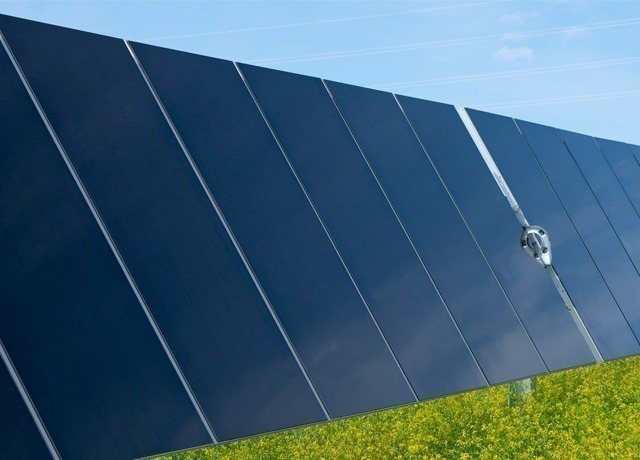
A 5 kW rooftop solar system in India can generate approximately 18–22 units of electricity daily, or 540–660 units monthly, under suitable operating conditions. Annual generation may reach 6,500–8,000 units, depending on location, sunlight, shading and equipment efficiency.
For Indian households, a 5 kW solar installation can substantially reduce electricity bills, particularly where daytime electricity consumption is high.
In 2026, an illustrative 5 kW grid-connected installation may cost ₹2.40 lakh–₹3.50 lakh before subsidy. Eligible residential consumers can receive up to ₹78,000 in central assistance under PM Surya Ghar: Muft Bijli Yojana.
However, actual financial returns depend on installation costs, electricity tariffs and compensation for surplus solar power exported to the grid.
How Much Electricity Does a 5 kW Solar System Generate Daily and Monthly?
A 5 kW system has a rated maximum output of 5 kilowatts under standard test conditions. Actual generation changes throughout the day.
| Generation period | Estimated electricity output |
| Daily average | 18–22 units |
| Monthly average | 540–660 units |
| Annual generation | 6,500–8,000 units |
| Illustrative annual output | 7,300 units |
| Average generation per day at 7,300 units/year | 20 units |
These are planning estimates, not guaranteed production figures.
Research on actual Indian installations demonstrates how performance varies.
A monitored 5 kWp rooftop solar installation in northern India generated approximately 7,175 units annually, while a 5.05 kWp grid-connected installation in Rajkot, Gujarat, recorded approximately 8,265 units annually.
The northern India rooftop solar performance study illustrates the importance of local operating conditions.
5 kW Solar Generation in Kerala, Gujarat, Rajasthan and Tamil Nadu
Solar output varies across India because of differences in irradiation, rainfall, temperature and rooftop conditions.
| Location | Main generation consideration |
| Kerala | Monsoon cloud cover and seasonal rainfall |
| Gujarat | Strong solar resource; summer heat losses |
| Rajasthan | High sunshine; dust and temperature |
| Tamil Nadu | Good solar potential; coastal weather |
| Maharashtra | Seasonal monsoon variation |
For example, a household in Kerala may experience lower output during June–August, while a Rajasthan installation may experience higher irradiation but also greater dust accumulation and heat-related efficiency losses.
Homeowners can check location-specific solar irradiation using the Global Solar Atlas.
Installers should provide monthly generation forecasts rather than promising identical electricity production throughout the year.
5 kW Solar Panel Installation Cost in India 2026
The installation price depends on solar modules, inverter capacity, mounting structures, wiring, electrical protection and labour.
| Cost component | Illustrative budget |
| Solar panels | ₹1.00–₹1.45 lakh |
| On-grid inverter | ₹35,000–₹55,000 |
| Mounting structures | ₹25,000–₹40,000 |
| Wiring and electrical protection | ₹20,000–₹35,000 |
| Installation and other work | ₹60,000–₹70,000 |
| Total indicative cost | ₹2.40–₹3.45 lakh |
Component figures are illustrative budgeting assumptions, not verified October 2026 supplier quotations. Actual packages and inclusions vary.
Buyers should compare complete installation quotations rather than panel prices alone.
PM Surya Ghar Subsidy for a 5 kW Solar System
Under the standard central assistance structure, eligible households receive ₹30,000 per kW for the first 2 kW and ₹18,000 for the third kW.
The maximum standard subsidy is ₹78,000, even when the installation capacity exceeds 3 kW.
For example:
| Financial indicator | Amount |
| 5 kW installation price | ₹2,80,000 |
| Central subsidy | ₹78,000 |
| Net household investment | ₹2,02,000 |
This example assumes full eligibility and successful subsidy approval.
Applications, registered vendor information and eligibility requirements are available through the official PM Surya Ghar National Portal.
How Much Can a 5 kW Solar System Save on Electricity Bills?
The financial value of solar electricity depends on how much generation is consumed directly and how exported electricity is credited.
Consider a 5 kW installation producing 600 units monthly.
| Electricity usage | Units | Assumed value | Monthly benefit |
| Solar consumed at home | 350 | ₹7/unit | ₹2,450 |
| Solar exported to grid | 250 | ₹3/unit | ₹750 |
| Total | 600 | ₹3,200 |
This illustrative household would receive approximately ₹38,400 in annual financial benefit, before other billing adjustments.
If all 600 units could instead offset purchases at ₹7 per unit, the theoretical monthly benefit would reach ₹4,200.
However, net-metering and net-billing arrangements differ across states. Actual export credits are not necessarily ₹3 per unit, and fixed electricity charges may remain payable.
5 kW Solar Payback Period: Realistic Examples
Consider three hypothetical households installing the same 5 kW system at a net cost of ₹2.02 lakh after subsidy.
| Annual bill savings | Simple payback |
| ₹30,000 | 6.7 years |
| ₹38,400 | 5.3 years |
| ₹50,000 | 4.0 years |
Higher daytime electricity consumption can improve savings when self-consumed solar electricity offsets relatively expensive grid purchases.
However, a larger solar installation may deliver weaker returns if substantial surplus electricity is exported at low compensation rates.
These calculations exclude financing, maintenance, inverter replacement and changes in electricity tariffs.
Which Solar Panel Brands Can Be Used for a 5 kW Installation?
Indian households can evaluate equipment from several established manufacturers.
Tata Power Solar: Offers residential rooftop solar installation solutions and related services.
Waaree Energies: Supplies N-type and other solar modules, including products suitable for residential installations.
Adani Solar: Offers high-power TOPCon solar modules for suitable rooftop configurations.
Vikram Solar: Supplies N-type high-efficiency modules, including its Hypersol range.
For example, ten 550 Wp modules provide 5.5 kWp of nominal panel capacity, while nine 560 Wp modules provide 5.04 kWp.
The installer must match panel capacity with inverter specifications, available roof space and applicable DISCOM requirements.
Consumers should also verify equipment eligibility for the subsidy scheme.
How Much Roof Space Does a 5 kW Solar System Need?
A 5 kW installation may require approximately 400–600 square feet of suitable rooftop space, depending on module dimensions, layout and maintenance access.
Water tanks, parapet walls, trees and neighbouring buildings can reduce usable area or create shading.
For example, ten panels measuring approximately 2.3 square metres each occupy around 23 square metres of module surface area, but additional space may be necessary for access and layout.
A structural assessment is important for older buildings and roofs requiring specialised mounting.
Can a 5 kW Solar System Run Two Air Conditioners?
A 5 kW solar installation can help power air conditioners during sunny periods, but its output varies throughout the day.
Consider two inverter air conditioners averaging 1.2 kW each while operating.
Together, they consume approximately 2.4 units per hour, or 9.6 units over four hours.
If the rooftop system generates 20 units during the day, those air conditioners could consume nearly half the daily solar production in this illustration.
Other household appliances and nighttime cooling demand may still require grid electricity.
A conventional on-grid system also shuts down during power outages unless compatible backup equipment is installed.
25-Year Electricity Generation and Long-Term Savings
Solar panels can remain operational for decades, although their electricity output gradually declines.
Consider a 5 kW system generating 7,300 units in its first year, with an assumed annual degradation rate of 0.5%.
Under these assumptions, cumulative generation over 25 years would be approximately 172,000 units.
At a constant illustrative financial value of ₹6 per unit, this represents approximately ₹10.3 lakh in gross electricity value over 25 years.
This is not guaranteed profit. It excludes installation costs, inverter replacement, maintenance, financing and changes in electricity tariffs or export compensation.
A long-term investment assessment should consider these expenses and discount future cash flows.
Is a 5 kW Rooftop Solar System Worth Installing in India?
A 5 kW rooftop solar installation can be attractive for households with adequate roof space and electricity consumption of approximately 500–750 units monthly, although suitability depends on usage patterns and local billing rules.
The strongest financial case generally comes from competitive installation pricing, high daytime consumption and reliable solar generation.
Before investing, compare at least three itemised quotations, verify subsidy eligibility and request location-specific monthly production estimates.
For Indian homeowners in 2026, a properly sized 5 kW rooftop solar system can deliver meaningful long-term electricity savings, but actual payback depends on how much generated power reduces the household’s electricity bill.
SHFANA FAZAL