
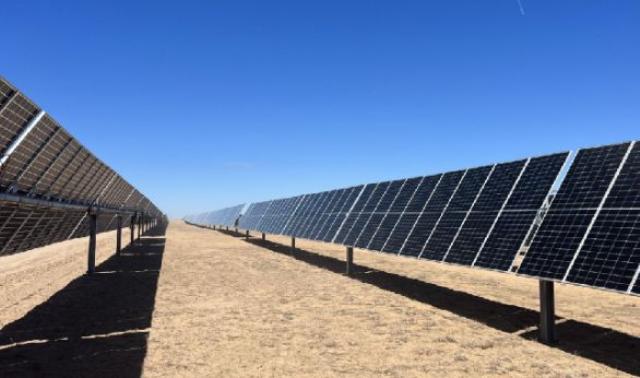
Check solar panel installation costs in India in 2026. Compare 3 kW, 5 kW and 10 kW rooftop solar prices after PM Surya Ghar subsidy, monthly electricity generation, savings and payback.
Installing rooftop solar panels in India can significantly reduce household electricity bills, with eligible residential consumers receiving up to ₹78,000 in central subsidy under the PM Surya Ghar: Muft Bijli Yojana.
In 2026, a 3 kW rooftop solar system typically costs an estimated ₹1.65 lakh–₹2.10 lakh before subsidy, while a 5 kW installation costs ₹2.55 lakh–₹3.20 lakh. Larger 10 kW systems may require ₹4.80 lakh–₹5.90 lakh.
However, the best investment depends on electricity consumption, state tariffs, rooftop conditions and the value of solar power exported to the grid.
India’s rooftop solar programme has expanded rapidly. Government data reported more than 50.06 lakh beneficiary households and 14.8 GW of commissioned capacity under the scheme as of August 4, 2026.
Solar Panel Installation Cost in India 2026: Price Comparison
| Solar system | Price before subsidy | Central subsidy | Estimated cost after subsidy |
| 1 kW | ₹60,000–₹80,000 | ₹30,000 | ₹30,000–₹50,000 |
| 2 kW | ₹1.10–₹1.50 lakh | ₹60,000 | ₹50,000–₹90,000 |
| 3 kW | ₹1.65–₹2.10 lakh | ₹78,000 | ₹87,000–₹1.32 lakh |
| 5 kW | ₹2.55–₹3.20 lakh | ₹78,000 | ₹1.77–₹2.42 lakh |
| 10 kW | ₹4.80–₹5.90 lakh | ₹78,000 | ₹4.02–₹5.12 lakh |
Indicative installed market prices for standard on-grid residential systems, not official government tariffs or verified vendor quotations. Estimates assume eligibility for the full standard central subsidy in general-category states. Batteries, structural modifications and additional charges may increase costs.
PM Surya Ghar Subsidy 2026: How Much Will Homeowners Receive?
The PM Surya Ghar scheme provides central financial assistance for eligible residential rooftop solar installations.
The standard subsidy in general-category states is:
1 kW: ₹30,000
2 kW: ₹60,000
3 kW and above: ₹78,000 maximum
A 5 kW or 10 kW system does not receive a larger standard central subsidy because assistance is capped at 3 kW.
Special-category states and Union Territories may have different assistance rates. Additional state incentives may also apply.
Homeowners can apply through the official PM Surya Ghar rooftop solar portal, select an eligible registered vendor and follow the required installation, inspection and commissioning procedures.
The subsidy is generally processed after the required approvals and commissioning steps. Consumers should not assume that the subsidy amount will be deducted from the initial vendor payment.
How Much Electricity Will 3 kW, 5 kW and 10 kW Solar Panels Generate?
Solar generation depends on sunlight, temperature, shading, roof orientation and system efficiency.
A practical preliminary estimate for India is 100–140 electricity units per kW per month, although actual production varies by location and season.
| System | Monthly generation | Annual generation | Approximate roof space |
| 3 kW | 300–420 units | 3,600–5,040 units | 240–300 sq. ft. |
| 5 kW | 500–700 units | 6,000–8,400 units | 400–500 sq. ft. |
| 10 kW | 1,000–1,400 units | 12,000–16,800 units | 800–1,000 sq. ft. |
Roof-space estimates include preliminary installation allowances. Actual requirements depend on panel dimensions, layout and access.
For example, a 3 kW system producing 360 units monthly could offset a substantial portion of a household’s electricity consumption, but the financial benefit depends on daytime consumption and the applicable billing mechanism.
Solar Panel Savings: How Much Can Households Save?
The following examples illustrate potential savings using an assumed average value of ₹6 per unit of solar generation.
| Solar system | Monthly generation assumed | Illustrative monthly savings | Annual savings |
| 3 kW | 360 units | ₹2,160 | ₹25,920 |
| 5 kW | 600 units | ₹3,600 | ₹43,200 |
| 10 kW | 1,200 units | ₹7,200 | ₹86,400 |
Illustrative calculations, not guaranteed bill savings. They assume every generated unit delivers ₹6 of financial benefit. Export tariffs, self-consumption, fixed charges and state billing rules can produce substantially different results.
Example: 3 kW Solar Installation
Consider a household installing a 3 kW system for ₹1.80 lakh.
After receiving ₹78,000 in subsidy, the net investment becomes ₹1.02 lakh.
If annual electricity savings reach ₹25,920, the simple payback period is approximately 3.9 years.
Example: 5 kW Solar Installation
A 5 kW system costing ₹2.85 lakh would require a net investment of ₹2.07 lakh after subsidy.
With illustrative annual savings of ₹43,200, simple payback is approximately 4.8 years.
Example: 10 kW Solar Installation
A 10 kW system costing ₹5.30 lakh would require ₹4.52 lakh after subsidy.
At illustrative annual savings of ₹86,400, simple payback is approximately 5.2 years.
These calculations exclude financing interest, maintenance, equipment replacement and tariff changes. They should not be interpreted as expected returns for every household.
Solar Panel Cost in Kerala, Maharashtra, Gujarat and Tamil Nadu
Solar installation economics differ across Indian states because electricity tariffs, solar irradiation, distribution-company rules and household consumption patterns vary.
Kerala: Rooftop solar can be attractive for households with significant electricity consumption. However, monsoon conditions, shading from trees and KSEB billing arrangements must be considered when calculating generation and savings.
Maharashtra: Households in Mumbai, Pune and other cities should compare installation prices, applicable distribution-company tariffs and rooftop access. Apartment residents may need housing society approval.
Gujarat: Strong solar resources can support rooftop generation, but homeowners must verify applicable export compensation, technical requirements and subsidy eligibility.
Tamil Nadu: Households in Chennai, Coimbatore and other locations should assess rooftop shading, electricity consumption and current TANGEDCO/TNPDCL billing requirements.
For every state, compare annual electricity consumption with expected solar generation rather than choosing system capacity solely from the size of the house.
Which Solar Panel Brands Should You Compare?
Indian households can evaluate rooftop solar equipment from Waaree Energies, Tata Power Solar, Vikram Solar, Adani Solar and RenewSys, subject to model availability and scheme eligibility.
For inverters, buyers may encounter brands such as Sungrow, Solis, Growatt and GoodWe.
Compare panel efficiency, approved product specifications, warranty terms, inverter compatibility and local service support.
Under PM Surya Ghar, verify the applicable domestic-content and approved-equipment requirements before selecting products. Brand recognition alone does not establish subsidy eligibility.
A cheaper installation may become expensive if it uses poor-quality mounting structures, inadequate electrical protection or equipment with weak after-sales support.
On-Grid vs Hybrid Solar: Which Is More Economical?
| Feature | On-grid solar | Hybrid solar |
| Battery required | No | Usually yes |
| Upfront cost | Lower | Higher |
| Power during grid outages | Normally unavailable | Possible with suitable backup configuration |
| Maintenance | Generally lower | Higher |
| Primary benefit | Electricity bill reduction | Bill savings and backup power |
On-grid systems are usually the lower-cost choice for households primarily interested in reducing electricity bills.
Hybrid solar may be suitable where outages are frequent, but battery purchase and replacement costs can extend the investment payback period.
How to Apply for Solar Subsidy and Avoid Extra Costs
Homeowners should review 12 months of electricity bills, estimate the required system capacity and obtain at least three itemised vendor quotations.
Confirm whether the price includes panels, inverter, mounting structure, electrical protection, installation, taxes, approvals, metering work and monitoring.
The Government of India’s rooftop solar calculator can support preliminary cost and generation estimates.
Before paying, verify the vendor’s registration, equipment eligibility, warranty terms and subsidy application process.
Is Rooftop Solar Worth Installing in India in 2026?
For households with suitable roofs and substantial electricity consumption, rooftop solar can offer long-term savings.
A 3 kW system costing approximately ₹87,000–₹1.32 lakh after subsidy may be a practical option for moderate consumption. A 5 kW system suits higher electricity demand, while 10 kW installations require careful assessment of consumption and export compensation.
The strongest financial returns generally come from correctly sized systems, reliable equipment, competitive installation costs and high-value self-consumption rather than simply installing the largest available capacity.
SHAFANA FAZAL
