
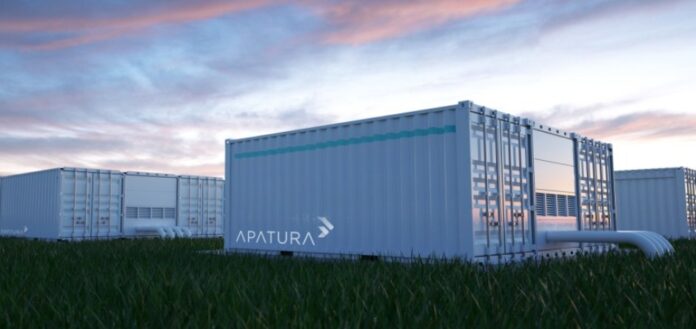
The U.S. energy storage industry achieved its strongest first quarter on record in 2026, installing 9.7 gigawatt-hours (GWh) of new storage capacity during Q1, according to the latest U.S. Energy Storage Market Outlook Q2 2026 released by the Solar Energy Industries Association and Benchmark Mineral Intelligence.
Energy storage installations in the United States increased 32 percent year-over-year in Q1 2026 despite growing policy uncertainty and federal actions targeting clean energy projects. The report forecasts that more than 610 GWh of energy storage capacity will be deployed in the U.S. by 2030, reflecting stronger long-term market expectations driven by rising electricity demand, AI infrastructure expansion, and volatile energy prices.
The rapid expansion of AI-focused data centers is emerging as one of the biggest catalysts for battery energy storage system (BESS) growth in the United States. Technology companies including Google and Meta have announced agreements this year to procure tens of thousands of megawatt-hours of energy storage capacity to support energy-intensive AI infrastructure and cloud computing operations.
According to the report, solar and storage projects are becoming increasingly attractive because they are insulated from fuel price volatility and are increasingly manufactured domestically in the United States. Investors, developers, and grid operators are also responding to disruptions in global gas and gas turbine supplies, which are contributing to electricity price instability.
Darren Van’t Hof, interim president and CEO of the Solar Energy Industries Association, said energy storage technology is helping lower electricity costs, improve grid reliability, and strengthen energy security in the United States. However, he warned that permitting delays in Washington could slow industry growth at a time when electricity demand is rapidly increasing.
The report highlighted that 467 solar and storage projects currently have permits pending and remain vulnerable to delays or cancellations linked to federal permitting bottlenecks. Industry analysts warn that prolonged delays could increase household electricity costs and weaken the United States’ competitiveness in the global AI race, particularly against China.
Shan Tomouk, BESS and Energy Lead at Benchmark Mineral Intelligence, described energy storage as critical energy security infrastructure rather than simply backup power systems. The report noted that supportive battery storage policies will be essential for scaling AI infrastructure and reducing energy cost pressures on consumers.
Texas, Arizona, and California remained the top utility-scale battery storage markets in Q1 2026. Notably, 71 percent of all utility-scale energy storage capacity installed during the quarter was deployed in states won by President Donald Trump. The report also noted that 13 U.S. states now have explicit energy storage deployment targets, helping accelerate investments across the country.
States including Georgia, Iowa, and Mississippi posted notable increases in installed energy storage capacity during the quarter.
Utility-scale projects accounted for the majority of deployments, with 7.8 GWh installed during Q1 2026. Commercial and industrial (C&I) energy storage installations reached 648 megawatt-hours (MWh), while residential storage installations totaled 515 MWh during the quarter.
BABURAJAN KIZHAKEDATH
