
The global steel industry is undergoing a structural transformation as energy procurement moves from a routine operational function to a core strategic priority. Rising volatility in fossil fuel markets, combined with tightening carbon regulations and the accelerating shift toward low-emission technologies, is forcing steelmakers to fundamentally redesign how they source and manage energy.
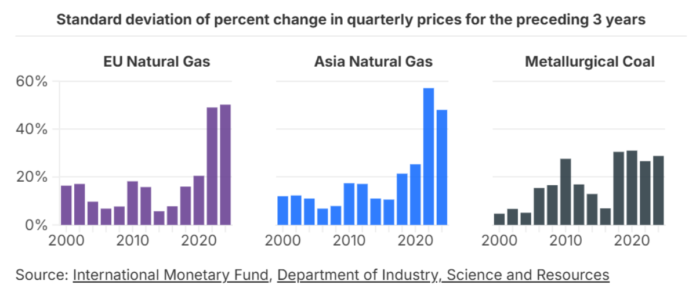
A recent report by the Institute for Energy Economics and Financial Analysis (IEEFA) highlights that price instability in natural gas and metallurgical coal is no longer cyclical. Instead, it reflects a sustained upward trend driven by geopolitical disruptions and structural supply constraints. This shift is turning fossil fuel dependence into a financial liability, increasing exposure to unpredictable costs and eroding long-term profitability, Lachlan Wright, Energy Finance Analyst at IEEFA, said.
Geopolitical tensions, particularly in the Middle East, have amplified supply-side risks, pushing price volatility for key inputs to historic highs. European and Asian gas markets have experienced extreme fluctuations since 2020, complicating cost forecasting for an industry already operating on thin margins. For steel producers, this uncertainty translates into higher risk premiums, elevated financing costs and delayed investment decisions.
At the same time, the industry’s transition toward cleaner production technologies is creating a new set of challenges. Direct Reduced Iron (DRI), widely viewed as a lower-carbon alternative to blast furnaces, remains heavily dependent on natural gas in many planned projects. This creates a strategic contradiction where companies investing in decarbonization are simultaneously increasing their exposure to volatile gas markets. Rising LNG prices are also feeding into electricity costs in major industrial economies, creating a dual cost burden for gas-based steelmakers.
Regulation is further accelerating this transformation. The European Union’s Carbon Border Adjustment Mechanism, fully implemented in 2026, is reshaping global trade flows by attaching a direct financial cost to carbon emissions. With carbon prices becoming material, the era of loosely defined green claims is ending. Steelmakers must now quantify emissions with precision, leading to a clear separation between low-carbon producers and those still reliant on fossil fuels. This dynamic is narrowing the cost gap between conventional blast furnace production and emerging hydrogen-based pathways.
While Europe grapples with high energy prices, new competitive hubs are emerging. Oman is positioning itself as a leader in green iron production, supported by large-scale investments such as Vale’s planned project in Duqm. By mandating the integration of green hydrogen into new DRI facilities, the region is creating a model that bypasses fossil fuel volatility and enables the export of low-carbon Hot Briquetted Iron to global markets.
Major steelmakers are already adapting to this new landscape. ArcelorMittal is investing in renewable energy partnerships and hydrogen-based steelmaking in Europe.
Tata Steel is advancing electric arc furnace transitions and piloting hydrogen-based DRI projects.
POSCO is pursuing hydrogen ironmaking technologies.
China Baowu Steel Group is scaling renewable energy integration alongside its shift toward electric arc furnaces.
Three clear energy procurement strategies are emerging across the industry. First, direct investment in renewable energy assets such as wind and solar is helping companies secure long-term, low-cost power while reducing exposure to market volatility.
Second, long-term power purchase agreements are becoming a critical tool for locking in price certainty as electricity demand rises with electrification.
Third, the shift toward hydrogen-based steelmaking is transforming steel producers into large-scale buyers of green electricity and hydrogen, fundamentally altering traditional procurement models.
In parallel, steelmakers are improving internal efficiency through waste heat recovery, energy recycling and increased use of scrap in electric arc furnaces. These measures reduce overall energy demand and enhance flexibility in sourcing cleaner power.
Regional differences remain significant. Europe is leading in regulatory-driven decarbonization and renewable procurement but faces cost challenges. Asia continues to rely more on fossil-based systems while gradually scaling clean energy adoption. The United States benefits from relatively lower power costs and a higher share of electric arc furnace production, enabling faster integration of renewables.
Ultimately, renewable energy is emerging not just as a sustainability solution but as a financial instrument. By shifting to fixed-price renewable contracts and captive clean energy generation, steelmakers can stabilize operating costs and reduce exposure to geopolitical risks. This transition allows companies to move away from commodity-driven volatility and compete on technological capability, cost predictability and low-carbon credentials.
FASNA SHABEER
