
The global EV battery market is poised for steady expansion, with research from MarketsandMarkets forecasting the market to grow from USD 103.04 billion in 2026 to USD 168.95 billion by 2035, registering a compound annual growth rate (CAGR) of 5.6 percent during the forecast period.
Gigafactories and Localized Manufacturing Reshape EV Battery Industry
The EV battery market is shifting toward large-scale gigafactory production and localized battery manufacturing as industry participants seek greater cost competitiveness. Manufacturing scale, plant utilization, and supply chain efficiency are becoming more important than raw material costs alone.
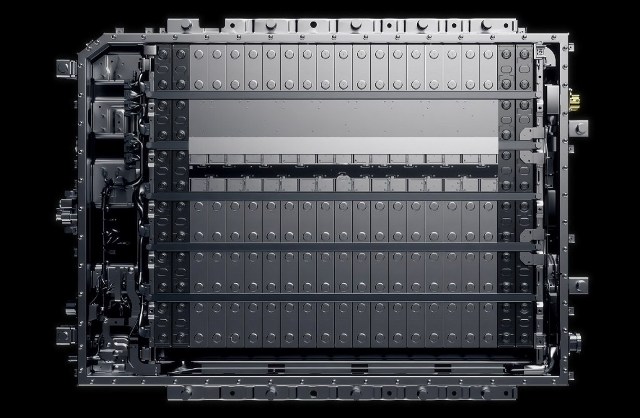
Automakers are also standardizing battery platforms across multiple vehicle models to streamline sourcing, accelerate development cycles, and improve manufacturing efficiency. This trend is encouraging the adoption of larger battery cell formats and simplified battery pack architectures that reduce component complexity while improving production efficiency.
Battery recycling and critical material recovery are emerging as strategic priorities, becoming integral parts of long-term supply chain planning rather than merely end-of-life solutions.
Lithium-Ion Batteries Remain the Dominant Technology
Lithium-ion batteries are expected to maintain their leadership position throughout the forecast period due to their strong combination of energy density, charging performance, cycle life, and lightweight characteristics.
Advancements in battery chemistries such as Lithium Iron Phosphate (LFP), Nickel Manganese Cobalt (NMC), high-manganese batteries, and silicon-enhanced anodes are helping improve vehicle range while lowering battery costs per kilowatt-hour.
The technology also benefits from a mature global manufacturing ecosystem, enabling large-scale commercialization and cost efficiency. Fast-charging capabilities and high power output continue to make lithium-ion batteries the preferred choice for modern EV platforms.
A notable industry development occurred in October 2025, when Gotion Inc. began construction of a new lithium-ion battery intelligent manufacturing facility in Nanjing, China. The project involves an investment of USD 0.59 billion (CNY 4 billion) and is designed to deliver 20 GWh of annual production capacity for EV and energy storage batteries by 2027.
Passenger Cars Lead EV Battery Demand
Passenger vehicles are expected to account for the largest share of EV battery demand due to higher production volumes and larger battery consumption compared with other vehicle categories.
Automakers are accelerating investments in dedicated passenger EV platforms, enabling large-scale battery procurement and greater battery standardization. Consumer demand for longer driving ranges, faster charging, and improved vehicle performance is also increasing average battery capacity per vehicle.
Leading electric vehicle models illustrate this trend. The Tesla Model Y is available with battery capacities ranging from approximately 60 kWh to 80 kWh, while Tesla Model 3 variants feature battery capacities between 54 kWh and 82 kWh. The Chevrolet Equinox EV utilizes a battery pack of approximately 90 kWh.
Passenger EVs are also leading adoption of advanced technologies such as cell-to-pack (CTP) architecture, structural batteries, and larger-format battery cells, further increasing battery value and integration levels.
North America Strengthens Position in EV Battery Market
North America is expected to hold a significant share of the global EV battery market during the forecast period as the region expands local battery production, pack assembly operations, and upstream supply chains.
The region is witnessing rapid development of gigafactories and integrated battery ecosystems designed to reduce dependence on imported battery components and strengthen supply security.
A major example came in March 2026, when Tesla and LG Energy Solution signed an agreement to establish a USD 4.3 billion lithium iron phosphate (LFP) prismatic battery cell manufacturing facility in Lansing, Michigan. Production at the plant is expected to begin in 2027.
Growing electric vehicle demand across the United States and Canada, particularly for passenger cars and electric trucks, is encouraging automakers to localize battery sourcing and improve production flexibility.
In another significant move, Stellantis announced in May 2026 plans to launch more than 60 new vehicle models and undertake approximately 50 major model refreshes by 2030. The roadmap includes 29 battery electric vehicles (BEVs), 15 plug-in hybrid vehicles (PHEVs), and 24 hybrid models, with a substantial portion of investment focused on North America.
The region is also expanding battery material processing capabilities, recycling infrastructure, and closed-loop supply chain networks to strengthen long-term competitiveness in the global EV battery market.
EV Battery Market Outlook
The EV battery market is entering a new phase characterized by gigafactory expansion, platform standardization, battery recycling initiatives, and localized supply chains. With the market projected to grow from USD 103.04 billion in 2026 to USD 168.95 billion by 2035, lithium-ion technology, increasing passenger EV production, and large-scale investments across North America are expected to remain the primary catalysts driving industry growth over the next decade.
BABURAJAN KIZHAKEDATH
