
Lenovo has accelerated its sustainability agenda with major advances in renewable energy, greenhouse gas reduction, circular economy, and sustainable product design, according to its Sustainability Report FY2025/26.
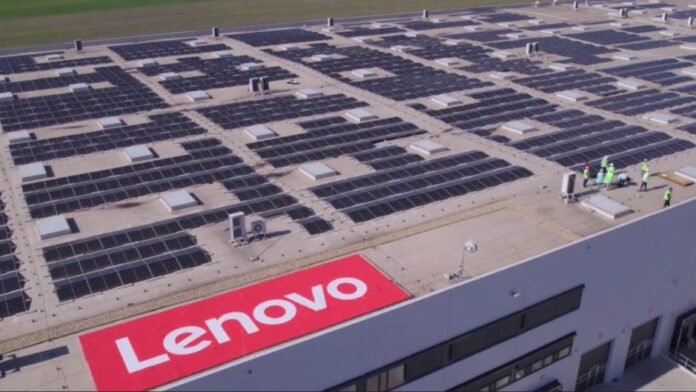
The technology company converted 90 percent of the electricity consumed across its global operations to renewable energy sources between 2021 and 2026 while maintaining 36 MW of operational solar capacity across its facilities. These achievements support Lenovo’s Science Based Targets initiative (SBTi)-validated commitment to achieve net-zero greenhouse gas emissions by 2050 while strengthening energy resilience and reducing operational emissions.
Lenovo continues to align its climate strategy with the Science Based Targets initiative (SBTi) and remains on track to achieve net-zero greenhouse gas emissions by 2050. The company was the first PC and smartphone manufacturer and one of the first 139 companies globally to receive SBTi validation for its net-zero target. During FY2025/26, Lenovo participated in the SBTi Corporate Net-Zero Standard V2 Pilot after joining the UN Global Compact Forward Faster initiative in 2023.
The company’s near-term climate targets include reducing absolute Scope 1 and Scope 2 greenhouse gas emissions by 50 percent by FY2029/30, reducing Scope 3 emissions from the use of sold products by 35 percent on average for comparable products, lowering Scope 3 emissions from purchased goods and services by 66.5 percent per million US dollars of gross profit, and cutting Scope 3 emissions from upstream transportation and distribution by 25 percent per tonne-kilometer. Lenovo reported that all of these climate targets remain on track, Lenovo Sustainability Report indicated.
Looking beyond 2030, Lenovo plans to reduce Scope 1, Scope 2 and Scope 3 greenhouse gas emissions by 90 percent by FY2049/50, with the remaining 10 percent neutralized through carbon removal initiatives including reforestation and carbon capture technologies to achieve net-zero emissions.
The company has also introduced new ESG goals through 2030. Lenovo aims to source 100 percent of electricity for global operations from zero-carbon sources by 2030, excluding facilities consuming less than 100 MWh annually or locations where zero-carbon electricity is not technically, commercially or financially feasible. It also plans to incorporate 200,000 metric tonnes of sustainable materials into products and packaging while enabling the recycling and reuse of 160,000 metric tonnes of end-of-life products by 2030.
Lenovo’s renewable energy strategy has already delivered measurable progress. Between 2021 and 2026, the company converted 90 percent of electricity used across its worldwide operations to renewable sources while operating 36 MW of solar generation capacity. These investments support the company’s efforts to lower greenhouse gas emissions, improve operational efficiency, and reduce reliance on conventional electricity.
Energy efficiency remains another focus area. Total energy consumption increased from 377,338 MWh in FY2023/24 to 396,935 MWh in FY2024/25 and 423,856 MWh in FY2025/26, reflecting business growth. At the same time, direct fuel combustion declined significantly from 25,498 MWh to 16,042 MWh, demonstrating continued improvements in operational energy management.
Circular economy initiatives continue to expand across Lenovo’s global business. Since 2005, the company has recovered and reused more than 800 million pounds of end-of-life products while incorporating over 300 million pounds of post-consumer recycled plastics into its products.
Lenovo has also implemented its REAL circularity framework to extend product life cycles, maximize material recovery, and reduce waste. Additionally, 84 percent of product repairs can now be completed at customer locations, reducing transportation-related emissions while extending device life.
Sustainable product design has become standard across Lenovo’s portfolio. One hundred percent of Lenovo’s PC products now incorporate post-consumer recycled materials, excluding tablets and accessories. Smartphone packaging contains 60 percent recycled materials while reducing single-use plastics by 50 percent, lowering packaging waste and dependence on virgin raw materials.
Artificial intelligence is playing an increasingly important role in Lenovo’s sustainability strategy. Through its Hybrid AI approach, the company uses AI to optimize factory energy consumption, identify environmental hotspots, improve lifecycle sustainability management, and deliver real-time sustainability insights to customers. Lenovo’s latest Neptune liquid cooling technologies also help data centers reduce energy consumption compared with conventional fan-based cooling systems.
The company continues extending sustainability throughout its supply chain. Through the Lenovo 360 Circle initiative, Lenovo collaborates with partners to advance circular economy practices, environmental transparency, and responsible operations. These efforts contributed to Lenovo receiving a CDP Supplier Engagement Leadership rating of A, recognizing its leadership in supplier engagement and value chain emissions reduction.
Lenovo’s sustainability strategy is led by David Carroll, Senior Vice President and Chief Legal & Corporate Responsibility Officer, with Virginie Le Barbu, Executive Director of Global Sustainability, leading downstream sustainability initiatives and the Lenovo 360 Circle program.
David Carroll said: “We believe technology and innovation are key to a smarter future, and that we must take the most credible and collaborative path to measuring our sustainability initiatives.”
Lenovo’s FY2025-26 Sustainability Report demonstrates measurable progress across climate action, renewable energy, emissions reduction, circular economy, sustainable product innovation, AI-enabled environmental management, and responsible supply chain practices. With 90 percent renewable electricity, 36 MW of operational solar capacity, 800 million pounds of recovered end-of-life products, 300 million pounds of recycled plastics incorporated into products, 100 percent recycled content across its PC portfolio, a CDP Supplier Engagement Leadership rating of A, and more than 25 million people reached through social impact initiatives, Lenovo continues strengthening its position as a global leader in sustainable technology while advancing toward its 2050 net-zero emissions commitment.
SHAFANA FAZAL
