
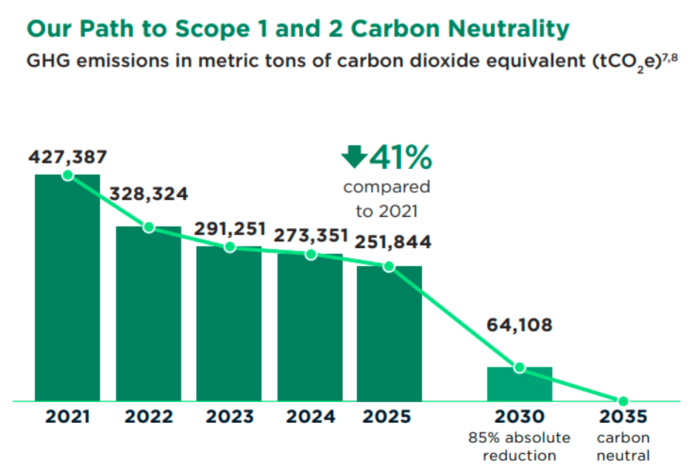
BorgWarner is accelerating its environmental sustainability strategy with targets to cut greenhouse gas emissions by 85 percent by 2030, reduce Scope 3 emissions by 25 percent, and achieve carbon-neutral Scope 1 and Scope 2 operations by 2035.
The automotive technology supplier released its 2026 Sustainability Report, Powering Tomorrow, on September 2, 2026, outlining progress across greenhouse gas emissions reduction, renewable energy, energy efficiency, supplier decarbonization and resource management. BorgWarner said the latest report reflects its broader objective of supporting a cleaner and more energy-efficient economy.
The company’s BorgWarner sustainability strategy and reports place measurable emissions reductions at the center of its environmental roadmap as it works to decarbonize manufacturing operations and its wider supply chain.
BorgWarner Targets 85% Scope 1 and Scope 2 Emissions Reduction
One of BorgWarner’s most significant climate commitments is an 85 percent absolute reduction in combined Scope 1 and Scope 2 greenhouse gas emissions by 2030, measured against a 2021 baseline.
The target addresses emissions generated directly by BorgWarner’s operations as well as indirect emissions associated with purchased energy. It represents the company’s principal interim milestone toward operational carbon neutrality.
BorgWarner has identified energy-efficient manufacturing, operational improvements and increased renewable energy use among the measures supporting the transition.
Progress started relatively quickly. By the end of 2022, BorgWarner had reported a 24.4 percent reduction in Scope 1 and Scope 2 emissions from the 2021 baseline.
The scale of the 2030 target means the company will need to continue reducing emissions significantly across its manufacturing footprint during the remainder of the decade.
Scope 3 GHG Emissions Target Set at 25% by 2030
BorgWarner is also targeting emissions generated across its value chain.
The company aims to achieve a 25 percent absolute reduction in Scope 3 greenhouse gas emissions by 2030, again compared with the 2021 base year. The Scope 3 target complements the 85 percent Scope 1 and Scope 2 reduction goal, expanding the decarbonization program beyond BorgWarner’s own factories and energy consumption.
BorgWarner initially had a 2031 Scope 3 target but accelerated the deadline to 2030 to align with updated SBTi guidance.
The company’s partnership with Manufacture 2030 to reduce supply-chain emissions is one of the mechanisms being used to address this challenge. The initiative gives direct-material suppliers access to digital tools for measuring energy consumption and tracking emissions-reduction initiatives.
BorgWarner has been using supplier sustainability scorecards and engagement programs to encourage suppliers to establish their own emissions commitments.
Supply-chain decarbonization is particularly important because Scope 3 includes indirect emissions associated with areas such as purchased materials, transportation, outsourced activities and waste disposal.
SBTi Validation Adds Measurement to BorgWarner Climate Goals
BorgWarner’s science-based climate framework establishes two major 2030 targets from the common 2021 baseline: an 85 percent reduction in absolute Scope 1 and Scope 2 emissions and a 25 percent absolute reduction in Scope 3 emissions.
BorgWarner confirmed that the targets were validated by SBTi, strengthening the measurement framework supporting its climate program.
Using absolute rather than intensity-based reductions is significant because progress depends on lowering total emissions rather than simply reducing emissions per unit of production or revenue.
The targets also create a direct link between BorgWarner’s manufacturing operations, energy procurement, supplier relationships and its broader environmental performance.
Carbon-Neutral Operations Targeted for 2035
Beyond the 2030 science-based targets, BorgWarner plans to achieve carbon-neutral Scope 1 and Scope 2 operations by 2035.
The 2035 carbon-neutral target extends the company’s operational climate strategy five years beyond its major interim emissions milestone.
BorgWarner’s published sustainability goals confirm the progression from an 85 percent Scope 1 and Scope 2 emissions reduction by 2030 to carbon neutrality for Scope 1 and Scope 2 by 2035.
Energy-efficient manufacturing processes, renewable electricity and other operational decarbonization measures are expected to play central roles in reaching the target.
Renewable Energy Usage Increased 48%
Renewable energy is becoming an increasingly important part of BorgWarner’s operational emissions strategy because reducing the carbon intensity of purchased electricity can directly support Scope 2 emissions reductions.
BorgWarner previously reported that nine facilities installed or expanded solar power systems during 2023.
At the same time, the company’s renewable energy usage increased 48 percent from 2022 levels.
Solar installations and renewable-energy procurement complement energy-efficiency programs by reducing both the amount of energy required for manufacturing and the emissions associated with the energy that remains necessary.
Further expansion of renewable electricity will be important as BorgWarner moves toward its 85 percent emissions-reduction target in 2030 and eventual 2035 carbon-neutral operations goal.
Energy Consumption Reduced 13%
Reducing energy demand provides another route for BorgWarner to lower operational emissions.
The company reported a 13 percent reduction in overall energy consumption in 2023 compared with 2021.
Energy-management initiatives have included smart metering at manufacturing locations and efficiency programs designed to identify opportunities for reducing electricity and fuel consumption.
For an industrial manufacturer, efficiency improvements can deliver environmental benefits while potentially reducing exposure to volatile energy prices and lowering operating costs.
The combination of a 13 percent reduction in energy consumption, greater renewable-energy deployment and continued manufacturing-efficiency improvements provides multiple operational levers for reaching BorgWarner’s climate targets.
BorgWarner Targets 85% Waste Diversion by 2030
BorgWarner’s environmental targets extend beyond carbon emissions and energy.
The company has established an 85 percent waste-diversion-rate target by 2030, putting resource efficiency alongside its 85 percent Scope 1 and Scope 2 GHG reduction target for the same year. The waste target is included in BorgWarner’s published sustainability goals.
Circular-economy initiatives include remanufacturing, greater use of recycled materials and material recovery across manufacturing and product life cycles.
Reducing manufacturing waste and increasing material reuse could become increasingly important as automotive suppliers expand production of electrification technologies, where responsible management of metals, electronics, batteries and other materials is a growing sustainability priority.
Sustainability Strategy Expands Across BorgWarner Supply Chain
BorgWarner’s environmental strategy increasingly combines factory-level decarbonization with supplier engagement.
Its supplier initiatives are designed to improve visibility into emissions generated outside BorgWarner’s direct operations while encouraging suppliers to measure energy use and establish emissions-reduction programs.
Volker Weng, BorgWarner’s Environmental Sustainability Lead, has highlighted the importance of supplier decarbonization, saying the ability of suppliers to manage, track and reduce their emissions ultimately helps BorgWarner reduce its own Scope 3 footprint.
This approach is particularly important to the 25 percent Scope 3 reduction target, because BorgWarner cannot achieve value-chain reductions solely through changes inside its own manufacturing facilities.
BorgWarner’s Key Sustainability Figures
The 2026 sustainability strategy is anchored by a series of measurable environmental milestones.
BorgWarner is targeting an 85 percent absolute reduction in Scope 1 and Scope 2 greenhouse gas emissions by 2030 and a 25 percent absolute reduction in Scope 3 emissions by 2030, with both targets measured against 2021.
The company ultimately aims for carbon-neutral Scope 1 and Scope 2 operations by 2035.
Earlier progress included a 24.4 percent reduction in Scope 1 and Scope 2 emissions by the end of 2022 compared with the 2021 baseline.
BorgWarner subsequently reported a 13 percent reduction in overall energy consumption in 2023 versus 2021, while renewable energy usage increased 48 percent from 2022 and nine facilities installed or expanded solar power during 2023.
Resource management represents another major component of the program, with BorgWarner targeting an 85 percent waste-diversion rate by 2030.
BorgWarner Sustainability Roadmap Moves From Targets to Execution
BorgWarner’s Powering Tomorrow report shows an environmental strategy increasingly centered on measurable operational and supply-chain outcomes.
The 85 percent Scope 1 and Scope 2 reduction target represents the largest near-term emissions commitment, while the 25 percent Scope 3 reduction target extends responsibility into the company’s supplier network. Both must be achieved by 2030 from a 2021 baseline.
The next stage will depend heavily on execution across BorgWarner’s manufacturing footprint and supply chain. Renewable-energy expansion, energy-efficiency investments, supplier emissions programs, waste diversion and circularity will need to deliver further reductions as the company moves from its 2030 milestones toward carbon-neutral Scope 1 and Scope 2 operations by 2035.
The latest BorgWarner 2026 Sustainability Report announcement reinforces the company’s view that sustainability is increasingly linked not only to environmental performance but also to operational resilience, supplier relationships and long-term value creation.
SHAFANA FAZAL
