
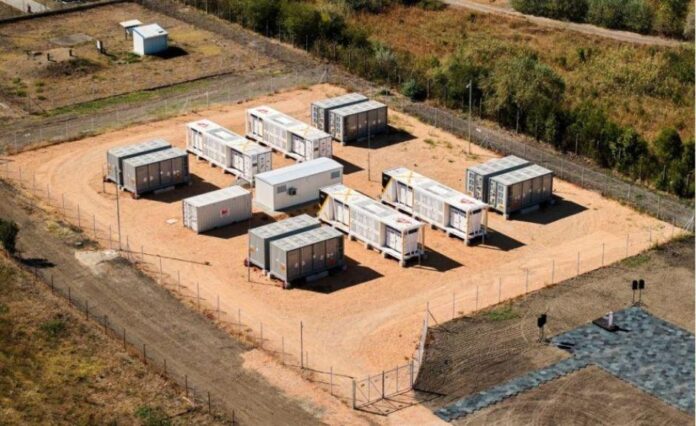
MOL Group has commissioned a 37.4 MWp solar power plant and a 20 MW / 40 MWh battery energy storage system at Algyo in Hungary, expanding its renewable energy portfolio while strengthening the energy independence of its industrial operations.
The new solar and battery project of MOL Group is expected to reduce carbon dioxide emissions by approximately 13,000 tonnes annually and help MOL Group manage fluctuations in renewable electricity generation.
The investment also takes MOL Group’s total photovoltaic capacity across the Central European region to 415 MWp.
MOL Algyő Solar Park Adds 37.4 MWp
The newly inaugurated 37.4 MWp Algyő solar park will supply renewable electricity to MOL Group’s operations in Hungary.
Combined with the company’s existing power generation facilities at Algyő, the new solar project is capable of covering the entire electricity requirement of MOL’s Algyő region.
This will allow MOL to replace part of the electricity it previously purchased from external suppliers, potentially reducing operating costs while improving energy security.
The annual electricity generation from the new solar power plant is equivalent to the yearly electricity consumption of approximately 22,500 households in Csongrád-Csanád County.
For MOL, the investment is therefore not only a renewable energy project but also part of a broader strategy to increase the proportion of electricity generated from its own assets.
20 MW / 40 MWh Battery Supports Renewable Power
A major component of the Algyő investment is the new battery energy storage system (BESS).
The facility has:
20 MW nominal power
40 MWh storage capacity
Ability to store surplus renewable electricity and return power to the grid when required
Capacity to support the management of fluctuations caused by weather-dependent renewable generation
The battery storage facility will increase the flexibility of MOL’s electricity supply while also supporting the Hungarian power system as more solar and other variable renewable energy capacity is connected to the grid.
MOL said the amount of electricity that can be stored and fed back by the system is equivalent to the annual electricity consumption of approximately 7,300 average households in the county.
“Green electricity generated from our own sources reduces our reliance on external energy supplies, while the battery storage system contributes to the stability of the national power grid,” said György Bacsa, Group Chief Strategic Officer of MOL Group.
MOL Targets 500 MWh Battery Storage Capacity by 2030
Battery storage is emerging as an increasingly important component of MOL Group’s renewable energy strategy.
Following the Algyő project, MOL now operates two electricity storage facilities in Hungary with a combined storage capacity of 80 MWh.
The energy company plans a substantial expansion over the next four years.
By 2030, MOL Group aims to install 500 MWh of energy storage capacity in Hungary.
That represents more than a sixfold increase compared with its current 80 MWh portfolio.
Expanding battery capacity should enable MOL to make greater use of electricity generated by its solar portfolio while reducing its exposure to intraday electricity price and generation fluctuations.
MOL Operates 405 MW of Solar Capacity in Hungary
The Algyő project further expands MOL Group’s solar footprint in Hungary.
The company currently operates nine solar parks in Hungary with a combined capacity of 405 MW.
Its regional photovoltaic portfolio has now reached 415 MWp, including projects outside Hungary.
MOL estimates that its regional solar portfolio contributes to an annual reduction of approximately 160,000 tonnes of CO2 emissions.
The figures underline the growing role of renewable electricity in MOL’s broader energy portfolio as the company seeks to decarbonize its traditional industrial and energy operations.
Croatia Solar Capacity to Rise to 23 MW
MOL is also expanding renewable generation outside Hungary.
The company currently operates two solar parks in Croatia with a combined capacity of 10 MW.
A third Croatian solar power plant is expected to be added next year. Once operational, MOL’s solar capacity in Croatia is expected to increase to 23 MW.
This implies the addition of approximately 13 MW of photovoltaic capacity.
Together, the Hungarian and Croatian projects are creating a growing regional renewable electricity platform that can supply MOL’s own operations while reducing dependence on electricity purchased from external suppliers.
ALTEO Builds MOL’s Algyő Solar Project
The new Algyő solar park was constructed by ALTEO Plc., which may also provide aggregation services following completion of the project.
MOL and its partners hold a 73.8 percent stake in ALTEO.
ALTEO operates approximately 115 MW of renewable electricity generation capacity across wind, solar, hydroelectric and biogas power plants.
The combination of renewable generation, battery storage and aggregation could become increasingly important as Hungary integrates larger volumes of intermittent solar generation into its electricity network.
MOL Links Renewable Energy With Industrial Decarbonization
The Algyő project forms part of MOL Group’s long-term SHAPE TOMORROW strategy, under which the company is expanding renewable electricity and energy storage while reducing the carbon footprint of its operations.
The strategy is particularly relevant for MOL because large industrial and energy facilities require reliable electricity throughout the day, while solar generation varies according to weather conditions and time of day.
Combining 37.4 MWp of solar generation with 40 MWh of battery storage provides MOL with greater flexibility to manage this mismatch.
The Algyő investment therefore demonstrates how large industrial companies can combine on-site renewable power generation with battery storage to improve energy independence and reduce emissions.
MOL Renewable Energy Portfolio: Key Figures
MOL Group’s latest renewable energy expansion includes 415 MWp of regional photovoltaic capacity, of which 405 MW is located across nine solar parks in Hungary.
The new Algyő project contributes 37.4 MWp of solar capacity and 40 MWh of battery storage, while reducing CO2 emissions by around 13,000 tonnes per year.
Across its regional solar portfolio, MOL estimates annual CO2 reductions of approximately 160,000 tonnes.
Its battery storage capacity in Hungary currently stands at 80 MWh, but the company is targeting 500 MWh by 2030.
In Croatia, meanwhile, MOL plans to increase solar capacity from 10 MW to 23 MW with the addition of another solar park next year.
The combination of solar generation and rapidly expanding battery storage indicates that MOL’s renewable strategy is moving beyond simply adding photovoltaic capacity. The company is increasingly building an integrated electricity portfolio designed around renewable generation, storage, industrial consumption and grid flexibility.
SHAFANA FAZAL
