
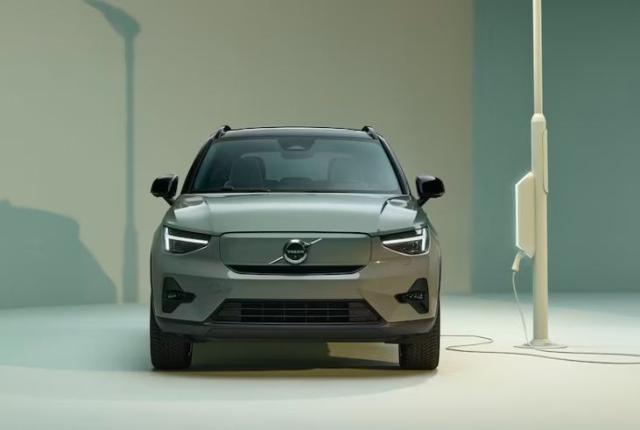
Volvo Cars is recalling 40,323 units of its flagship EX30 electric SUV globally after identifying a potential overheating risk in the high-voltage battery pack, raising fresh customer safety concerns and financial pressure on the Swedish automaker, Reuters news report said.
The recall impacts EX30 Single-Motor Extended Range and Twin-Motor Performance variants equipped with specific high-voltage battery modules. The issue requires replacement of battery modules supplied by Shandong Geely Sunwoda Power Battery, a Geely-backed joint venture.
What Went Wrong With the EX30 Battery?
Volvo said affected vehicles face a potential overheating risk in certain battery modules. As a precaution, the company has advised owners to:
Limit charging to 70 percent
Park vehicles away from buildings
Await further instructions for module replacement
Volvo confirmed it is contacting all affected customers and will replace faulty modules free of charge. The supplier has reportedly fixed the manufacturing defect and will provide replacement cells.
Battery safety remains one of the most sensitive issues in the EV market, as thermal events can significantly damage brand reputation and customer trust.
Customer Concerns Mount Over Safety and Range Loss
The recall has triggered frustration among some EX30 owners across the United States, Australia, Brazil, the United Kingdom, and New Zealand.
Several customers have reportedly considered returning their vehicles. Owners argue that the mandatory 70 percent charging cap reduces the SUV’s advertised driving range, increasing charging frequency and inconvenience.
For many buyers, the EX30 represented an affordable entry into Volvo’s electric lineup while maintaining the brand’s long-standing safety image. Industry analysts say any safety-related defect could disproportionately impact Volvo compared to competitors.
Financial Impact Could Reach $195 Million
A Reuters analysis estimates that replacement battery modules alone could cost up to $195 million, excluding logistics and repair expenses. Volvo described those estimates as speculative and said discussions with the supplier are ongoing.
The recall news led to a 4 percent drop in Volvo’s share price following the report, highlighting investor concerns over potential cost overruns and brand impact.
The situation draws comparisons to the 2020 recall by General Motors involving 140,000 Chevrolet Bolt EVs, which cost approximately $2 billion to resolve due to battery fire risks linked to cells supplied by LG Electronics.
EX30 Is Critical to Volvo’s EV Growth Strategy
The recall comes at a crucial time as Volvo accelerates its transition toward full electrification.
In Q4 2025:
Electrified vehicles accounted for 49 percent of total sales
Fully electric vehicles reached 24 percent of total sales
BEV sales grew for three consecutive months through December
The EX30 is a cornerstone model in Volvo’s plan to compete with lower-cost Chinese EV brands while scaling global electric volumes. The model is expected to complete its first full year of production at Volvo’s Ghent plant in Belgium in 2026.
Broader EV Roadmap and Manufacturing Transition
Volvo’s 2026 strategy focuses on returning to volume growth through an expanded electric portfolio, including:
EX60 mid-size electric SUV launching in 2026
Production ramp-up of EX90
Introduction of ES90 electric sedan and EM90 MPV
To support this transition, Volvo is building up inventory of XC90 and XC60 combustion and hybrid models ahead of EX60 production at its Torslanda plant.
The company has also completed a SEK 18 billion cost and cash action plan in 2025 to strengthen its financial base amid trade tariffs and shifting EV incentives, particularly in the United States.
Brand Reputation at Stake
Volvo has built its global identity around safety leadership. Industry experts note that while recalls are common in the automotive industry, battery-related issues strike at the core of consumer confidence in electric vehicles.
With the EX30 positioned as a high-volume growth driver, Volvo must resolve the issue quickly to prevent long-term damage to customer loyalty and its broader electric transformation strategy.
For affected owners, the immediate concerns remain safety, reduced range, inconvenience, and uncertainty over potential buyback options. How efficiently Volvo manages communication, repairs, and compensation will determine whether the recall becomes a temporary setback or a lasting reputational challenge.
BABURAJAN KIZHAKEDATH
