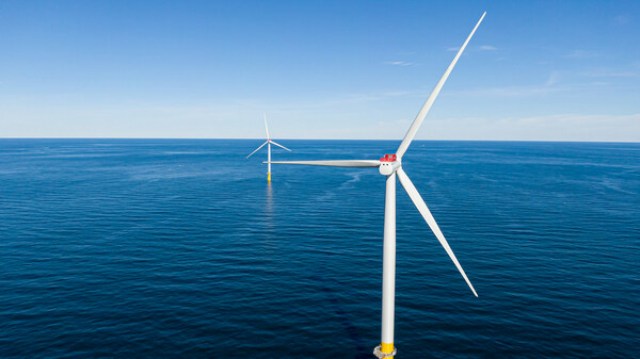
Europe’s offshore wind industry is entering a major investment cycle as developers commit billions of pounds and euros to larger wind farms, ports, turbines, subsea cables, transmission networks and manufacturing facilities.
Europe added 8.8 GW of new wind capacity in the first half of 2026, nearly 33 percent more than H1 2025. The UK is at the center of the offshore expansion, with its latest allocation round securing 8.4 GW of offshore wind capacity and expected to unlock approximately £22 billion of private investment while supporting around 7,000 skilled jobs.
Projects including Dogger Bank, Hornsea 3, Bornholm Energy Island and East Anglia THREE demonstrate how offshore wind is evolving from a renewable generation business into a major infrastructure investment market.
Here are 10 projects shaping the next phase of the European and UK offshore wind market.
1. Dogger Bank: 3.6 GW and £9 Billion Investment
Dogger Bank is Europe’s largest offshore wind development, comprising three 1.2 GW phases — Dogger Bank A, B and C — for a combined 3.6 GW.
Located more than 130 kilometres off England’s North East coast, the project represents approximately £9 billion of investment.
The Dogger Bank offshore wind project is also generating significant economic activity across turbine installation, foundations, subsea cables, ports and engineering.
Up to 180 skilled jobs were announced at Scotland’s Port of Nigg in 2026 to support turbine pre-assembly for Dogger Bank B and C.
2. Hornsea 3: £8.5 Billion Investment and 2.9 GW
Hornsea 3 is another giant UK offshore wind development, combining 2.9 GW of capacity with approximately £8.5 billion of infrastructure investment.
The project is expected to generate enough electricity for more than 3.3 million UK homes.
International capital is playing an increasingly important role. Mubadala committed $325 million in 2026 alongside a consortium led by Apollo-managed funds.
Hornsea 3 is expected to support up to 5,000 construction jobs and approximately 1,200 permanent positions across direct employment and the wider supply chain.
3. Bornholm Energy Island: 3 GW Cross-Border Wind Hub
Denmark and Germany’s Bornholm Energy Island represents a different offshore wind investment model.
Rather than operating simply as a wind farm, the 3 GW development combines offshore renewable generation with cross-border electricity transmission connecting Denmark and Germany.
The project has secured €645 million of EU support through the Connecting Europe Facility.
The European Commission’s Bornholm Energy Island project could provide a blueprint for future offshore energy hubs connecting multiple European electricity markets.
4. Sofia Offshore Wind: 1.4 GW from 100 Turbines
Sofia Offshore Wind Farm has 1.4 GW of capacity generated by 100 Siemens Gamesa 14 MW turbines.
Located approximately 195 kilometres off the UK’s North East coast, the project connects to Teesside through a 220-kilometre export cable.
A major milestone was achieved in June 2026 when installation of all 100 turbines was completed.
Sofia is expected to generate approximately 8,810 FTE person-years of employment across the UK.
5. East Anglia THREE: £4 Billion Investment and 1.4 GW
East Anglia THREE represents approximately £4 billion of investment and 1.4 GW of offshore wind capacity.
Construction reached an important milestone in August 2026 with installation of all 95 offshore foundations.
Each foundation weighs approximately 1,200 to 1,800 tonnes, demonstrating the enormous engineering and industrial requirements associated with modern offshore wind projects.
The development is expected to support more than 2,300 construction jobs and around 100 long-term operational positions.
Nearly £2 billion of UK supply-chain investment is associated with the project, while 285 blades for 95 turbines are being manufactured at Siemens Gamesa’s Hull facility.
The East Anglia THREE offshore wind project demonstrates how offshore wind investment can translate directly into domestic manufacturing activity.
6. Seagreen: £3 Billion Investment and 1.1 GW
Scotland’s Seagreen offshore wind farm combines approximately 1.1 GW of capacity with around £3 billion of investment.
Its 114 turbines have been fully operational since 2023, but the project’s economic impact continues through operations and maintenance.
Activity at Port of Nigg supported 141 skilled positions, while the Montrose operations and maintenance base supports approximately 80 full-time direct jobs.
7. Moray West: £2 Billion Financing for 882 MW
Moray West has 882 MW of capacity from 60 Siemens Gamesa turbines and reached full power in April 2025.
The development was backed by approximately £2 billion of project financing.
Construction supported around 1,500 jobs, while more than 60 long-term operational positions are expected.
Moray West shows that even offshore projects below 1 GW can attract multibillion-pound financing when supported by established supply chains and credible long-term electricity markets.
8. Triton Knoll: £2 Billion Investment and 3,000 Jobs
Triton Knoll represents approximately 857 MW of offshore wind capacity and £2 billion of investment.
Its construction programme supported as many as 3,000 UK jobs, while ongoing operations continue to contribute to the offshore wind services cluster around Grimsby.
9. Neart na Gaoithe: £1.8 Billion Investment
Neart na Gaoithe has 450 MW of capacity from 54 turbines and represents approximately £1.8 billion of investment.
Fully operational since 2025, the project can generate electricity equivalent to the requirements of approximately 375,000 homes.
More than £200 million has been contributed to the Scottish economy through the local supply chain, involving over 50 suppliers in and around Scotland.
Turbines were assembled through the Port of Dundee, while long-term operations and maintenance are based at Eyemouth.
10. Dogger Bank South: Up to 3 GW of Future Capacity
Dogger Bank South is one of the UK’s largest future offshore wind investment opportunities.
The development consists of two projects with potential capacity of up to 1.5 GW each, creating a combined opportunity of 3 GW.
Development consent was secured in May 2026, while both projects secured Contracts for Difference in the UK’s latest allocation round.
The projects could accommodate as many as 200 turbines, potentially creating substantial future demand for turbines, foundations, vessels, cables, ports, manufacturing and grid infrastructure.
UK Offshore Wind Pipeline Could Unlock £22 Billion
The UK’s latest offshore wind allocation round secured 8.4 GW of capacity, providing developers and suppliers with greater visibility over the next investment cycle.
The programme is expected to unlock approximately £22 billion of private investment and support around 7,000 skilled jobs.
The opportunity extends well beyond wind-farm developers.
Capital is flowing into turbine manufacturing, blades, foundations, subsea cables, vessels, ports, grid connections and operations bases. Coastal locations including Hull, Nigg, Dundee, Grimsby and Montrose are consequently becoming important components of Britain’s offshore wind economy.
International investment is also expanding, demonstrated by Mubadala’s participation in Hornsea 3 and growing interest from global infrastructure investors.
Europe Enters Offshore Wind Mega-Project Era
The scale of the leading projects shows how rapidly Europe’s offshore wind investment model is evolving.
Dogger Bank combines 3.6 GW with approximately £9 billion of investment, while Hornsea 3 represents another 2.9 GW and £8.5 billion. East Anglia THREE adds 1.4 GW and approximately £4 billion, while Bornholm introduces a 3 GW cross-border energy hub supported by €645 million of EU funding.
Europe’s offshore wind race is becoming a much broader infrastructure investment opportunity, and the UK is positioned at the center of the next multibillion-pound offshore wind cycle.
SHAFANA FAZAL