
Novartis has released its 2025 Sustainability Update, confirming the achievement of its environmental and social governance milestones.
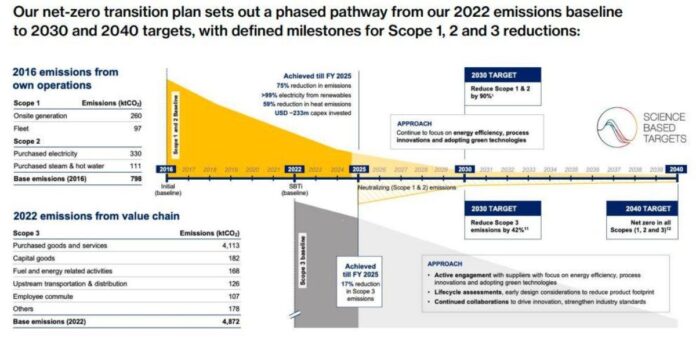
Novartis reached carbon neutrality across its own operations, covering Scope 1 and Scope 2 emissions, supported by a 75 percent absolute reduction in greenhouse gas emissions compared to its 2016 baseline. To address the remaining 195.1 thousand tonnes of CO2e that are currently unavoidable, Novartis utilized verified carbon removal solutions and biomethane certificates, completing its 2025 operational climate target.
Novartis is accelerating its long-term climate strategy, targeting net-zero emissions across its entire value chain by 2040. The company has set a 2030 interim goal of reducing Scope 1 and Scope 2 emissions by 90 percent and Scope 3 emissions by 42 percent, using 2022 as the baseline. Its approach follows a structured decarbonisation pathway focused on avoiding emissions, reducing them through efficiency, replacing energy sources with renewables, and neutralizing residual emissions. The company has committed to limiting carbon credit use to less than 10 percent of emissions by both 2030 and 2040, while maintaining alignment with the Science Based Targets initiative and the 1.5°C Paris Agreement goals.
Novartis, as part of its sustainability goals, has transitioned to 100 percent renewable electricity across its global operations under its RE100 commitment and is advancing plans to electrify its vehicle fleet by 2030 where feasible. Energy efficiency, process optimization, and low-carbon manufacturing remain central to its sustainability transformation.
A significant portion of Novartis’ emissions profile lies within its value chain, where over 90 percent of total emissions are attributed to suppliers. To address this, the company’s “Green Supplier” initiative has embedded environmental sustainability criteria into contracts covering 97 percent of suppliers by spend as of 2025. This ensures that decarbonisation efforts extend across procurement, logistics, and production networks, with active collaboration to transition suppliers toward renewable energy and sustainable practices.
Novartis has also exceeded its environmental targets in water and waste management. The company achieved a 59 percent absolute reduction in water consumption compared to its 2016 baseline, surpassing its original 50 percent goal. Additionally, 97 percent of manufacturing sites and 100 percent of high-risk suppliers now comply with strict water quality standards for effluent discharge. In waste management, Novartis reported a 70 percent reduction in total waste not recycled versus 2016 levels, nearly 20 percentage points ahead of its target. A key milestone in 2025 was the complete elimination of PVC from secondary and tertiary packaging across all global manufacturing sites, reinforcing its circular economy and design-for-sustainability framework.
On the social front, Novartis expanded its global health impact significantly, reaching 301 million patients worldwide in 2025. This includes 30 million people supported through targeted social impact programs aimed at underserved populations. The company recorded a 295 percent increase in access to innovative therapies in low- and middle-income countries since 2019, exceeding its initial 200 percent growth target. A notable healthcare innovation during the year was the launch of a malaria treatment specifically designed for newborns and infants weighing between two and five kilograms, following the fulfillment of a $500 million commitment to research and development for malaria and neglected tropical diseases.
Novartis’ sustainability leadership continues to receive global recognition, with the company maintaining its AAA rating from MSCI and securing a Double A List position from CDP for both climate change and water security. These accolades reflect the company’s integrated approach to sustainability, combining deep decarbonisation targets, responsible resource management, and expanded access to healthcare.
Overall, Novartis’ 2025 sustainability update underscores a comprehensive and science-aligned strategy, with a 75 percent emissions reduction since 2016, 100 percent renewable electricity usage, supplier engagement covering 97 percent of spend, and ambitious targets of 90 percent emissions reduction by 2030 and full net-zero by 2040. Alongside its environmental progress, the company’s ability to reach 301 million patients and expand access to essential medicines positions sustainability as a core driver of both operational excellence and global health impact.
FASNA SHABEER
