
NextEra Energy is accelerating one of the utility industry’s most ambitious sustainability transformations through massive renewable energy investments, large-scale battery storage deployment, green hydrogen development, and a long-term commitment to achieve Real Zero operational carbon emissions by 2045.
Led by John W. Ketchum, Chairman, President and Chief Executive Officer, with ESG and climate risk oversight from Petter Skantze, Executive Vice President and Chief Risk Officer, the company continues to strengthen its position as a leader in the transition toward a low-carbon energy future.
Zero Carbon Blueprint Targets Complete Operational Decarbonization by 2045
At the center of NextEra Energy’s sustainability strategy is its Zero Carbon Blueprint, a comprehensive roadmap designed to eliminate operational carbon emissions without relying on carbon offset credits.
The company established a series of aggressive emissions reduction milestones, targeting a 70 percent reduction in greenhouse gas emissions from 2005 levels by 2025. The target increases to 82 percent by 2030, 87 percent by 2035, and 94 percent by 2040 before achieving full operational decarbonization by 2045, according to the NextEra Energy Sustainability Report 2025.
In parallel, NextEra Energy plans to transition its generation portfolio toward a fully carbon-free electricity mix by 2045, replacing traditional fossil fuel resources with renewable and low-carbon technologies capable of supporting long-term energy demand growth.
More Than 98% of Electricity Comes from Zero-Emissions Resources
NextEra Energy has already achieved significant progress in reducing the carbon intensity of its operations. More than 98 percent of electricity generated across the company’s fleet now comes from zero-emissions energy sources, making it one of the cleanest large-scale electricity producers in North America.
As a result, the company’s carbon emissions rate is 52 percent below the average level of the U.S. electric utility industry. Since beginning its carbon abatement tracking efforts, NextEra Energy has avoided more than 400 million metric tons of carbon dioxide emissions through renewable energy deployment and operational decarbonization initiatives.
These achievements highlight the environmental impact of the company’s clean energy strategy while supporting broader climate goals.
Renewable Energy Portfolio Reaches 80 GW with Strong Development Pipeline
Renewable energy remains the foundation of NextEra Energy’s long-term growth strategy. The company currently operates approximately 80 GW of generating capacity, including one of the largest renewable energy portfolios in North America.
More than 40 GW of renewable generation capacity is deployed across 41 U.S. states and four Canadian provinces, with wind and solar projects representing the majority of these assets.
Demand for clean energy solutions continued to grow during 2025, leading the company to add 13.5 GW of new wind, solar, and battery storage projects to its development backlog. Over the past three years, NextEra Energy has originated approximately 35 GW of renewable energy contracts, resulting in an active development backlog of around 30 GW.
This expanding project pipeline positions the company to continue delivering renewable energy growth while supporting customer decarbonization objectives.
Solar Energy Expansion Planned from 5,000 MW to More Than 90,000 MW
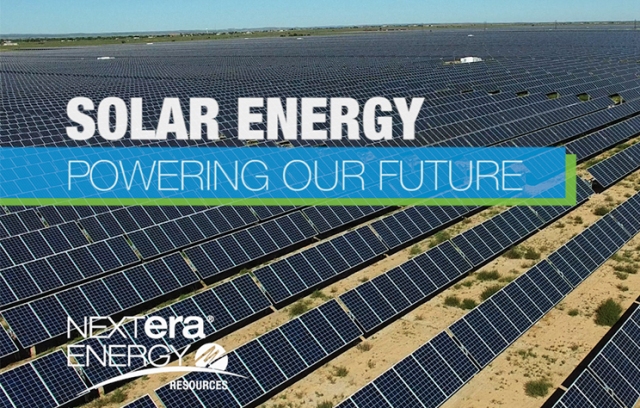
Solar energy is expected to play a dominant role in NextEra Energy’s long-term sustainability strategy. The company plans to increase utility-scale solar generation capacity from approximately 5,000 MW today to more than 90,000 MW by 2045.
This planned expansion reflects growing confidence in solar energy’s ability to provide cost-effective, low-carbon electricity while meeting rising power demand from electrification, data centers, and economic development.
The scale of this planned deployment would significantly strengthen the company’s renewable energy leadership and contribute to long-term emissions reductions.
Battery Storage Pipeline Exceeds 110 GW
Energy storage is another critical component of NextEra Energy’s clean energy transition plan. The company intends to increase battery storage capacity from approximately 500 MW today to more than 50,000 MW by 2045.
Currently, NextEra Energy operates more than 4,000 MW of battery storage projects and maintains a development pipeline exceeding 110 GW.
Battery storage systems are essential for integrating higher levels of renewable generation, improving grid flexibility, balancing electricity supply and demand, and enhancing overall system reliability. Continued investment in storage technologies is expected to strengthen grid resilience while supporting future renewable growth.
Green Hydrogen to Repower 16,000 MW of Natural Gas Assets
To support deeper decarbonization, NextEra Energy is investing in emerging technologies including green hydrogen.
The company plans to convert approximately 16,000 MW of natural gas generation capacity to operate using green hydrogen. This strategy could significantly reduce emissions from dispatchable power resources while maintaining system reliability.
In addition, NextEra Energy plans to retain up to 6,000 MW of renewable natural gas-backed generation capacity to provide backup power when renewable resources are unavailable.
Together, renewable electricity, battery storage, green hydrogen, and renewable natural gas are expected to create a more flexible and resilient low-carbon energy system.
Up to $325 Billion Planned for Clean Energy Infrastructure
NextEra Energy has established one of the largest clean energy investment programs in the utility sector, with planned capital expenditures ranging from $295 billion to $325 billion between 2025 and 2032.
These investments will support renewable energy deployment, battery storage projects, transmission infrastructure upgrades, grid modernization initiatives, and development of advanced clean energy technologies.
A major portion of this investment plan is focused on Florida, where the company expects to invest between $90 billion and $100 billion in grid modernization and infrastructure resilience projects.
The investments are designed to prepare the energy system for increasing electricity demand while improving reliability, sustainability, and climate resilience.
Water Stewardship and Biodiversity Protection Strengthen Environmental Performance
Beyond carbon reduction, NextEra Energy continues to advance broader environmental stewardship initiatives.
More than 85 percent of thermal power plant water requirements are supplied through recycled, reclaimed, or non-potable water sources, reducing dependence on freshwater resources and supporting sustainable water management.
The company has also invested more than $100 million in environmental research, habitat conservation, wildlife protection initiatives, and avian monitoring technologies. These programs help protect biodiversity and minimize environmental impacts associated with energy infrastructure development.
Sustainability Investments Deliver Economic and Community Benefits
NextEra Energy’s sustainability strategy is expected to generate substantial economic value alongside environmental benefits.
The company estimates that implementation of its Zero Carbon Blueprint could support up to 150,000 jobs and contribute approximately $15 billion annually to Florida’s economy by 2045.
Additionally, NextEra Energy has contributed more than $2.5 billion in local property taxes over recent development cycles, helping support schools, public infrastructure, emergency services, and community development programs.
NextEra Energy Strengthens Leadership in the Clean Energy Transition
With more than 98 percent of electricity generated from zero-emissions resources, approximately 80 GW of generating capacity, over 40 GW of renewable assets, a 30 GW development backlog, a battery storage pipeline exceeding 110 GW, and planned investments of up to $325 billion, NextEra Energy continues to lead the transformation of the North American power sector.
The company’s commitment to achieving Real Zero emissions by 2045, expanding solar capacity beyond 90,000 MW, deploying more than 50,000 MW of battery storage, converting 16,000 MW of generation to green hydrogen, and investing billions in resilient energy infrastructure positions it at the forefront of global sustainability and clean energy innovation.
SHAFANA FAZAL
