
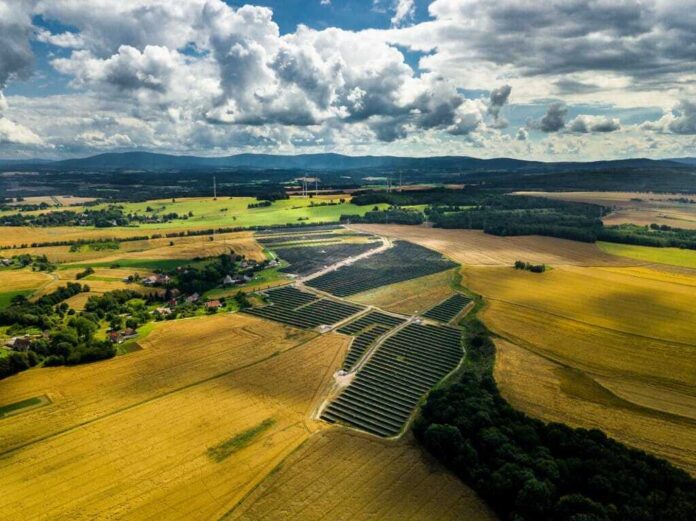
Solar farms represent long-term investments, typically designed to generate clean energy for 25 to 30 years. Yet too often, the focus falls almost entirely on construction: securing the land, sourcing the panels, and connecting to the grid. Once the ribbon is cut and the kilowatt-hours start flowing, maintenance becomes an afterthought — and that is a costly mistake.
The reality is straightforward: a solar farm without a rigorous Operation & Maintenance (O&M) program will underperform, age faster, and ultimately fail to deliver the returns that investors and operators expect. The question is not whether to invest in maintenance — it is how to do it well.
The Hidden Cost of Neglect: How Performance Degrades Over Time
Solar panels degrade naturally at an average annual rate of around 0.5%. That figure may sound modest, but over a decade it translates into a measurable drop in energy yield and revenue. And that is under ideal conditions, with proper upkeep.
When maintenance is neglected, losses compound quickly. Dust, bird droppings and plant overgrowth reduce panel efficiency. In some climates, soiling alone accounts for 5 to 10 percent annual energy losses. Microcracks and hot spots, often invisible to the naked eye, gradually reduce the output of individual cells and accelerate long-term degradation. Inverter faults, cable issues and connection failures can take entire strings or sections offline for days or even weeks before anyone notices. Each of these scenarios represents a direct financial loss. In the case of power purchase agreements with guaranteed output thresholds, they may also lead to contractual penalties.
The most damaging failures are often the least visible until they turn into costly emergencies. O&M teams with access to extensive operational datasets understand this dynamic better than most. Electrum, managing a renewable energy portfolio of over 3 GW across Poland and wider Europe, emphasises that the analytical models behind its monitoring systems are built on realworld data from thousands of operating devices. This depth of operational insight gives the company a clear advantage: issues can be detected earlier, diagnosed more accurately and resolved before they affect the farm’s performance.
What Operation & Maintenance of Solar Farms Actually Covers
Effective O&M is not a single activity. It is an integrated set of processes that operate continuously in the background. At its core, it rests on three pillars:
• Monitoring: Continuous, real-time oversight of energy production, system status, and device communications. A properly configured monitoring system flags deviations the moment they occur, not days later when they appear in a monthly report. Modern platforms can aggregate data from thousands of sensors and present operators with a unified, actionable view of the entire installation.
• Preventive maintenance: Scheduled inspections, panel cleaning, thermal imaging surveys, and component replacements carried out before failures occur. This includes checking mounting structures, verifying electrical connections, and assessing the condition of inverters and transformers. Preventive work follows detailed, site-specific plans rather than generic, one-size-fits-all schedules.
• Corrective maintenance and emergency response: When faults occur—and in any large installation they inevitably will—the speed of response is crucial. Rapid, competent intervention minimizes downtime and prevents the cascading effects that a single unresolved fault can trigger across an interconnected system.
Supporting all three pillars is thorough documentation: detailed records of every inspection, intervention, and performance metric. This data is not merely an administrative requirement; it forms the basis for continuous improvement, warranty claims, and regulatory compliance.
Technology Is Changing the O&M Landscape
The O&M sector has undergone a quiet but profound transformation over the past decade. The shift from reactive to predictive maintenance — intervening before problems escalate rather than after — has been driven by advances in diagnostics technology and data analytics.
Thermal imaging drones, for example, can survey hundreds of panels in a fraction of the time required for manual inspection and with far greater accuracy. By identifying temperature anomalies caused by defective cells, inactive strings, or bypassed diodes, operators can target repairs precisely and efficiently.
Some O&M providers have invested heavily in this capability. Electrum’s drone fleet includes DJI Matrice 30T and Matrice 350 RTK models equipped with the H30T thermal camera, which offers the highest thermal resolution currently available in commercial inspection systems. This level of sensitivity allows technicians to detect anomalies — including inactive strings and active bypass diodes — before they affect the performance of the wider farm.
Advanced SCADA-based platforms push this even further. The best systems integrate data from multiple sources, such as weather stations, energy meters, and grid connection points, and apply analytical models to distinguish genuine performance anomalies from expected fluctuations. Electrum’s proprietary EMACS system combines classic SCADA functionality with advanced analytics in a single environment, processing realtime data from installations across an entire portfolio. Solutions like this shift O&M from eventdriven troubleshooting to continuous, proactive asset management.
For medium-voltage infrastructure, which is often the weak point in a farm’s grid connection, mobile diagnostic laboratories enable precise fault location in underground cables. This significantly reduces response times and lowers the cost of network maintenance.
The Financial Case for Getting O&M Right
For investors and asset managers, the financial logic of O&M is compelling. A 50 MW solar farm losing just 3 percent of its annual energy yield due to unaddressed soiling, faults, or downtime can generate hundreds of thousands of euros in lost revenue in a single year. Over a 25year asset life, the cumulative impact becomes substantial.
Proactive, preventive maintenance consistently outperforms reactive approaches in terms of cost efficiency. Replacing a faulty component during a scheduled inspection costs only a fraction of an emergency intervention following a catastrophic failure. Regular servicing extends inverter life, delays expensive replacements, and protects warranty coverage — all of which directly influence the longterm economics of the asset.
There is also a financing dimension that is easy to overlook. Banks and institutional investors providing project finance for solar assets increasingly require robust O&M programs as a condition for lending. A credible O&M partner with a proven track record and an established monitoring infrastructure is not merely an operational advantage; it is a prerequisite for accessing capital on favourable terms. Lenders need confidence that the asset will perform as modelled — and a strong O&M arrangement provides exactly that.
Finally, there is the question of asset value at exit. A solar farm with a welldocumented performance history, maintained equipment, and a transparent operational record commands a significantly higher valuation in secondary market transactions than one that has effectively been left to run itself.
What Good O&M Looks Like in Practice
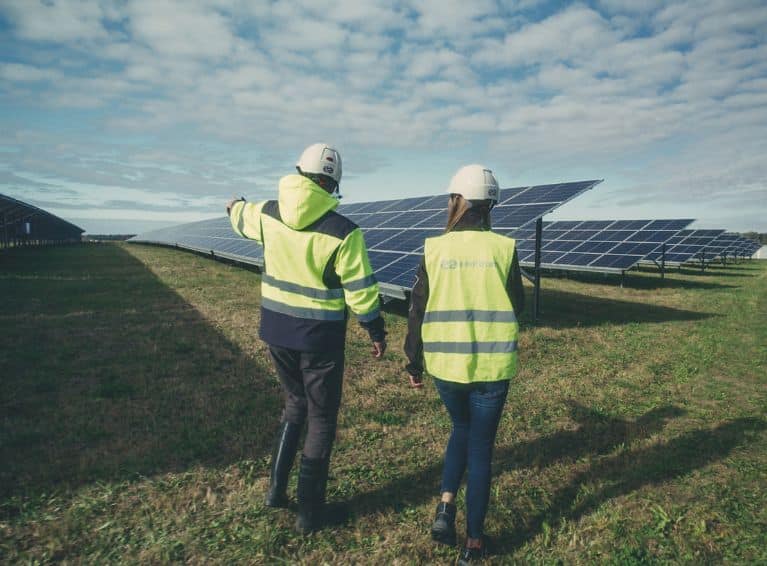
Good O&M starts with people. Technology is a force multiplier, but it does not replace the judgment of experienced engineers who have spent years observing how solar assets behave across seasons, grid conditions, and equipment generations. The best O&M teams combine deep technical knowledge with operational discipline.
Scale also matters. An O&M provider managing a large, diversified portfolio develops a level of pattern recognition that a smaller operator simply cannot achieve. When teams have serviced hundreds of megawatts across different installation types, regions, and grid configurations, the accumulated knowledge directly improves how quickly they can identify and resolve issues at any given site.
Electrum’s team of 80 specialists, operating a 24/7 dispatch center, works across wind and solar assets with a combined capacity exceeding 3 GW. This scale of operation, sustained for more than a decade, creates institutional knowledge that is genuinely difficult to replicate.
Equally important is a commitment to continuous improvement. Each inspection, fault, and intervention feeds back into planning and operational protocols. Over time, a well-run O&M program does not just maintain performance — it incrementally optimizes it.
Good Maintenance Makes Solar Farms Perform
A solar farm is not a setandforget asset. It is a complex technical system operating continuously under demanding environmental conditions. Like any such system, it requires skilled, attentive management to perform as intended over its full operational life.
The most successful solar farm operators are those who treat O&M not as a cost to be minimized, but as a strategic pillar of asset performance. They invest in the right technology, the right people, and the right processes from day one — and they partner with O&M providers who bring the experience, tools, and analytical depth to back that investment up.
In a market where solar assets are increasingly changing hands, attracting institutional capital, and operating under tighter performance guarantees, the quality of O&M has never mattered more. It is, in the end, what separates a solar farm that delivers on its promise from one that merely exists.
