
JinkoSolar Holding reported first quarter 2026 revenue of $1.78 billion (RMB12.25 billion), declining 30 percent sequentially and 11.5 percent year-over-year due to lower module shipment volumes.
Total solar module shipments of JinkoSolar stood at 13.7 GW, down 45.2 percent sequentially and 21.9 percent annually, though over 80 percent of volumes were delivered to overseas markets, highlighting its global demand base.
Despite shipment declines, improving average selling prices (ASP) drove a sharp recovery in profitability. Gross profit surged to $147.7 million (RMB1.02 billion), while gross margin expanded to 8.3 percent from 0.3 percent in Q4 2025 and negative 2.5 percent a year earlier. Operating loss narrowed significantly to $85.3 million, with operating margin improving to negative 4.8 percent.
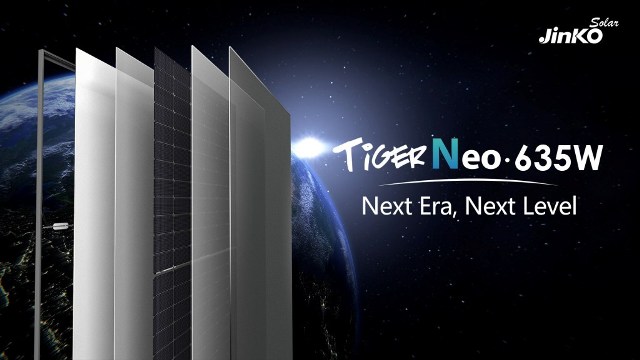
From a product and module strategy perspective, high-efficiency modules of JinkoSolar are becoming central to revenue mix and margin expansion. The Tiger Neo 3.0 series achieved average power output levels of 655 W to 660 W, while modules above 640 W accounted for nearly 25 percent of shipments and commanded premium pricing. The company expects production capacity for modules above 650 W to exceed 40 GW by the end of 2026, supporting ASP stability and cost optimization through scale.
JinkoSolar’s module deliveries surpassed 400 GW, with the Tiger Neo series alone contributing approximately 240 GW, reinforcing its leadership in high-performance module deployment. Energy storage system (ESS) shipments also strengthened, reaching around 1.42 GWh, driven primarily by high-value overseas markets, improving overall business mix and margins.
From a production and capacity standpoint, JinkoSolar is accelerating its integrated solar manufacturing strategy. The company expects total integrated production capacity to reach 100 GW by the end of 2026, including 14 GW from overseas facilities. Advancements in silver-coated copper technology and scaling of high-efficiency modules are expected to further reduce costs and enhance competitiveness.
Strategically, the company is optimizing its geographic mix, prioritizing high-margin international markets while expanding into distributed solar and niche applications across industrial, commercial, residential, and utility segments. This approach aligns with rising global demand for energy security and decentralized power systems.
Looking ahead, JinkoSolar projects second quarter 2026 module shipments of 14 GW to 16 GW and full-year shipments of 75 GW to 85 GW. High-efficiency products are expected to contribute more than 60 percent of total shipments, supporting margin expansion and long-term profitability. The company also anticipates stable module pricing as industry competition normalizes and policy support improves market discipline.
BABURAJAN KIZHAKEDATH
