
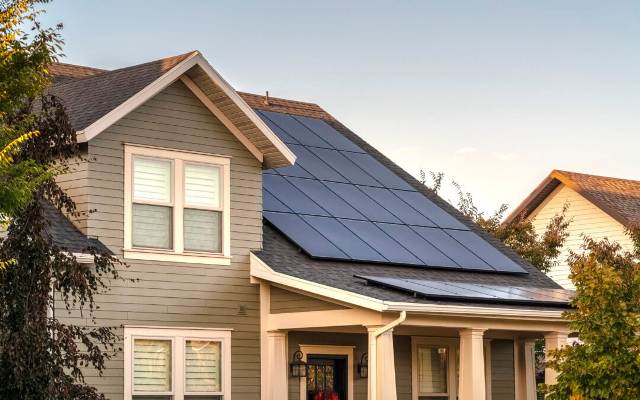
A proposed reform to Australia’s electricity network pricing system could significantly affect households that have invested in rooftop solar panels and home battery storage. The policy shift under review by the Australian Energy Market Commission (AEMC) may increase electricity costs for solar households by introducing higher fixed network charges.
According to a briefing note released by the Institute for Energy Economics and Financial Analysis (IEEFA), the move could undermine the economic value of distributed energy technologies across the country.
Proposed Tariff Reform Could Change How Electricity Costs Are Recovered
Australia’s electricity tariffs currently rely on a hybrid pricing model that combines a fixed daily charge with a usage based fee linked to the amount of electricity consumed from the grid. The reform being evaluated by the Australian Energy Market Commission would shift a larger portion of network costs into fixed daily charges.
This means households would pay more for grid infrastructure regardless of how much electricity they use or generate through rooftop solar systems. The change could significantly reduce the financial incentives for households to invest in solar generation and battery storage.
Financial Viability of Solar and Battery Investments Under Pressure
The Institute for Energy Economics and Financial Analysis analysis suggests that households with battery storage could see substantial cost increases. A home using a 10 kilowatt hour battery system may face additional electricity costs between $5,800 and $11,500 over the lifetime of the battery.
These additional expenses could offset the $3,300 subsidy offered through the federal Cheaper Home Batteries Program, weakening the business case for home energy storage.
Solar-only households may also experience rising costs. Annual electricity bills for rooftop solar users could increase by between $239 and $564 due to reduced volumetric pricing. Lower usage charges reduce the value of solar electricity consumed onsite, which may extend the payback period for combined solar and battery systems by between 1.2 and 4.4 years in major Australian cities.
Energy Companies Accelerate Investment in Grid-Scale Storage
While policymakers debate tariff reforms, major energy companies are expanding investments in grid-scale storage and flexible energy systems.
AGL Energy reported that its 300 megawatt battery fleet generated $35 million in EBITDA during the first half of 2026. The company is also developing the 500 megawatt Tomago Battery and the Liddell Battery projects to improve grid stability.
Meanwhile, Origin Energy is expanding its virtual power plant initiatives and recently approved the fourth stage of the Eraring battery project. The company is also conducting Australia’s first electric vehicle subscription trial using Vehicle-to-Grid technology to help balance power demand.
Renewable developer Neoen has commissioned the 412 megawatt Goyder South Wind Farm, the largest wind project in South Australia, and is planning additional battery storage within the Goyder Renewables Zone.
At the same time, Tesla continues to strengthen its position in Australia’s battery storage market, with projections indicating its grid-forming battery capacity in the country could reach 4.5 gigawatts by the end of 2026.
Concerns Over Grid Efficiency and Energy Equity
IEEFA warns that higher fixed charges could weaken incentives for consumers to reduce electricity consumption during peak demand periods. Without strong usage-based price signals, electricity networks may face rising peak loads that require large capital investments in infrastructure.
This scenario could trigger what analysts describe as a “wall of capex,” where extensive network upgrades become necessary to manage demand spikes.
The policy could also have equity implications. Fixed network charges apply equally to all households regardless of energy consumption, meaning low income households, renters, and smaller homes that use less electricity may end up paying proportionally more.
In contrast, high consumption households without solar installations, including those with multiple electric vehicles, could see annual electricity bills decline by as much as $1,401.
The Institute for Energy Economics and Financial Analysis recommends that regulators focus on tariff designs that encourage smart energy use, demand management, and technologies such as Vehicle-to-Grid integration rather than increasing fixed network fees that could discourage energy efficiency and distributed generation.
FASNA SHABEER
