
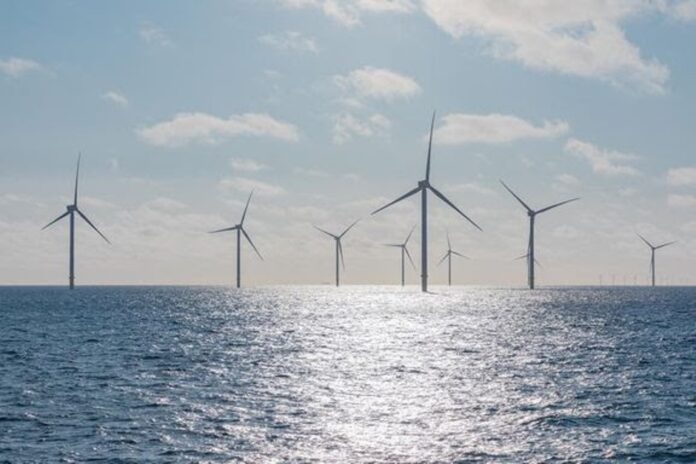
European leaders have taken a major step to accelerate offshore wind development by signing the Offshore Wind Investment Pact for the North Seas at the North Sea Summit in Hamburg. Seven Heads of State and Government, along with Energy Ministers from nine North Seas countries, committed to scaling up offshore wind capacity to strengthen Europe’s energy security, competitiveness, and clean energy transition.
The governments of Belgium, Denmark, France, Germany, Ireland, Luxembourg, the Netherlands, Norway, and the United Kingdom confirmed their shared ambition to deploy 300 GW of offshore wind capacity in the North Seas by 2050. Central to this plan is a commitment to collectively build 15 GW of offshore wind per year during the 2031 to 2040 period.
The Investment Pact was signed by governments, the wind industry, and transmission system operators. It is supported by a Heads of State Declaration, an Energy Minister Declaration, and an Industry Declaration endorsed by more than 100 offshore wind companies across the value chain.
Addressing barriers to offshore wind growth
Offshore wind has been one of Europe’s major clean energy success stories, with 37 GW installed across 13 countries and more than 6,000 turbines delivering large-scale, homegrown electricity. However, recent deployment has been slowed by sub-optimal auction designs, rising costs of capital, and limited supply chain visibility due to an uncertain project pipeline.
The Offshore Wind Investment Pact aims to address these challenges directly by providing long-term certainty for investors, manufacturers, and infrastructure developers.
Government commitments to de-risk investments
Under the pact, governments pledged to improve planning and investment security and to de-risk offshore wind projects. A key commitment is the adoption of two-sided Contracts for Difference as the standard auction design for offshore wind. These contracts provide revenue visibility, helping unlock investment and reduce financing costs.
Governments also agreed to remove regulatory barriers to Power Purchase Agreements, allowing direct contracts between electricity producers and corporate consumers. In addition, they committed to a coordinated and steady offshore wind buildout across the North Seas, giving the supply chain confidence to invest in manufacturing capacity, port infrastructure, and specialized vessels.
Industry pledges on cost reduction and jobs
In return, Europe’s offshore wind industry committed to cutting the cost of offshore wind by 30 percent by 2040 compared with 2025 levels. The industry said these reductions will be driven by economies of scale, lower financing costs, and further industrialization enabled by a clear and predictable project pipeline.
The industry also pledged to generate €1 trillion in economic activity across Europe, create 91,000 additional jobs, and invest €9.5 billion in the offshore wind value chain, including manufacturing, ports, and vessels.
Role of transmission system operators
Transmission system operators will play a critical role in enabling large-scale offshore wind deployment. Alongside traditional single-country offshore wind farms, TSOs will identify cost-effective cross-border cooperation projects in the North Seas.
They aim to identify 20 GW of economically promising cross-border offshore wind projects by 2027 for deployment in the 2030s. These include hybrid projects that combine power generation with interconnection, as well as projects located in one country and connected to another. TSOs will also develop cost-sharing principles to support these cooperation models.
Europe reinforces offshore wind strategy
WindEurope CEO Malgosia Bartosik said the pact signals a strong commitment from Europe to offshore wind. She noted that coordinated government action on offshore wind buildout can help attract €1 trillion of investment over the next decade and deliver secure, affordable, and homegrown energy for Europe.
BABURAJAN KIZHAKEDATH
