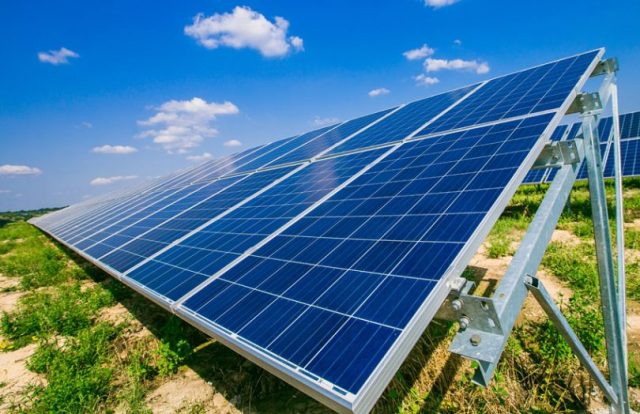
Chinese solar panels are cheap because China has built the world’s largest and most integrated solar manufacturing ecosystem, combining massive factories, vertical integration, low-cost supply chains, automation, manufacturing equipment, technology development and enormous domestic demand. In 2026, another factor is pushing prices even lower: global solar manufacturing overcapacity.
The scale of China’s advantage is extraordinary. The International Energy Agency estimates that China accounts for around 85 percent of global solar PV supply-chain production capacity and about 95 percent of global PV wafer capacity.
IEA’s report on solar PV production capacity indicates that China’s advantage therefore goes far beyond inexpensive labor. The country has built an industrial system covering polysilicon, ingots, wafers, cells, modules, glass, chemicals, production equipment and logistics.
But today’s extremely low solar panel prices have another explanation. Global manufacturing capacity has expanded much faster than demand, creating severe competition. The IEA says solar PV module prices dropped by around 50 percent between 2023 and 2025.
Understanding Chinese solar prices therefore requires separating two forces: China’s structural manufacturing cost advantage and the cyclical oversupply currently depressing selling prices.
1. China Manufactures Solar Panels at Enormous Scale
Scale is one of China’s biggest advantages.
Solar factories require billions of dollars of equipment, buildings, engineering, automation and supporting infrastructure. A manufacturer producing billions of watts annually can spread those fixed costs across vastly more output.
Large factories also negotiate better prices for silicon, glass, silver paste, aluminum frames and other materials.
The IEA’s analysis of solar manufacturing competitiveness identifies economies of scale, manufacturing efficiency and supply-chain integration among the factors supporting China’s competitiveness.
Scale also creates a learning advantage. A 20 GW factory produces far more manufacturing data than a 1 GW plant, giving engineers greater opportunities to improve yield, reduce defects and increase equipment utilization.
In solar manufacturing, tiny improvements matter because the ultimate objective is reducing cost per watt.
2. China Controls Almost the Entire Solar Supply Chain
A solar panel is the final product of a much longer manufacturing chain.
Quartz eventually becomes polysilicon, which is processed into ingots and wafers. Wafers become solar cells, and cells are assembled with glass, encapsulants, backsheets, frames and electrical components to create modules.
China has enormous manufacturing capacity across almost every stage.
Vertical integration allows companies to coordinate production, technology transitions and inventories while reducing dependence on overseas suppliers.
It can also provide protection during periods of price volatility. A vertically integrated manufacturer has more opportunities to optimize costs internally when polysilicon, wafer or cell prices change.
This creates a fundamentally different cost structure from a module manufacturer that must purchase most important inputs externally.
3. China’s 95% Share of Wafer Capacity Creates a Powerful Advantage
One of China’s least visible advantages is its dominance of solar wafer manufacturing.
The IEA estimates China accounts for approximately 95 percent of global PV wafer manufacturing capacity.
Wafer production has become an important source of solar cost reduction.
Diamond-wire sawing, thinner wafers, improved ingot quality and higher manufacturing yields allow companies to produce more wafer area from the same amount of silicon.
Reducing wafer thickness can lower silicon consumption per watt. Improving slicing yield reduces waste.
At the enormous volumes produced by Chinese manufacturers, small material savings can translate into major cost reductions.
China’s wafer dominance therefore gives it expertise at one of the most technologically important stages of crystalline-silicon solar manufacturing.
4. China Makes the Machines That Make Solar Panels
China has another advantage that is difficult for emerging solar manufacturing countries to replicate: it manufactures much of the equipment required by solar factories.
Wafer slicing, cell processing, coating, metallization, inspection, module assembly and testing all require specialized machinery.
The IEA analysis of global solar PV supply chains identifies China as home to the world’s leading solar PV manufacturing-equipment suppliers.
Domestic machinery creates a powerful feedback loop.
More solar factories create demand for better manufacturing equipment. Equipment manufacturers improve machines and automation. Better equipment raises productivity and lowers manufacturing costs. Lower costs encourage further factory expansion.
It also allows new manufacturing technologies to move rapidly from equipment suppliers into commercial factories.
5. Automation Cuts Labor, Scrap and Downtime
The idea that Chinese solar panels are cheap mainly because of inexpensive labor is increasingly outdated.
Modern solar factories depend heavily on automation, robotics, machine vision, digital manufacturing and process controls.
The important measure is not wages alone but how many saleable watts a factory produces from every unit of labor, equipment, electricity and raw material.
Better process control reduces defective cells. Automated inspection identifies problems earlier. Higher yields reduce silicon, silver, glass and other material waste.
Reducing production-line downtime is equally valuable because expensive manufacturing equipment generates no return when it is idle.
Chinese manufacturers have spent years improving these factory-level economics, making productivity a much bigger competitive factor than labor cost alone.
6. Solar Manufacturing Clusters Reduce Logistics Costs
China has developed enormous solar manufacturing clusters in which suppliers, factories, equipment companies, chemical producers, engineers and logistics providers operate in close proximity.
This matters financially.
A solar cell manufacturer operating within a mature cluster can source chemicals, machinery, packaging, engineering services and replacement parts much more efficiently than an isolated factory dependent on long international supply chains.
Roads, electricity, water, logistics and industrial infrastructure can also serve multiple factories.
This is why building a module factory outside China does not automatically recreate Chinese manufacturing economics.
The factory itself is only one component of the competitive ecosystem.
7. China’s Huge Domestic Solar Market Accelerates Learning
China’s enormous domestic solar market has provided manufacturers with another major advantage: a gigantic testing and learning platform.
Manufacturers can deploy new module technologies at scale, accumulate field-performance data and improve manufacturing before expanding internationally.
The IEA expects China to remain the world’s largest solar manufacturer and supply more than 70 percent of projected global module demand in 2030 under its Stated Policies Scenario.
This creates a powerful cycle:
More solar installations → larger factories → greater manufacturing experience → lower costs → cheaper solar → more installations.
Few competing countries have been able to reproduce this cycle at China’s scale.
8. China Competes on Solar Technology, Not Just Price
China’s competitive position increasingly depends on technology as much as manufacturing cost.
The industry moved rapidly from conventional PERC cells toward TOPCon, while manufacturers are also investing in heterojunction and back-contact technologies.
Companies are simultaneously reducing silver usage, making wafers thinner, improving metallization and increasing module efficiency.
Higher efficiency matters because it increases watts produced from the same module area.
In September 2026, LONGi achieved 28.29 percent efficiency for its hybrid interdigitated-back-contact crystalline-silicon cell, with the result independently certified by Germany’s Institute for Solar Energy Research Hamelin.
For solar developers, higher efficiency can reduce land, mounting structures, cabling, transportation and installation requirements.
China’s technology race therefore reinforces its manufacturing-cost advantage.
9. Energy, Capital and Industrial Infrastructure Lower Costs
Solar manufacturing — particularly polysilicon and wafer production — can consume substantial amounts of electricity.
Energy prices consequently influence manufacturing economics.
The IEA estimates that energy and labor differences account for about 65 percent of the production-cost gap between China and Europe in energy- and labor-intensive upstream solar PV manufacturing.
China also benefits from established industrial infrastructure and financing channels capable of supporting huge manufacturing investments.
The advantage is not necessarily permanent. The IEA says countries including India and regions such as Southeast Asia and the Middle East could potentially produce some upstream solar components at costs comparable with China under suitable conditions.
But competitors must combine low-cost energy with scale, technology, financing and supply-chain efficiency.
10. China’s Global Logistics Operate at Solar Scale
Manufacturing a cheap module is only useful if it can reach customers economically.
China’s ports, shipping infrastructure and established international distribution networks handle enormous solar export volumes.
Large-scale logistics can reduce transportation costs per watt and make inventory management more efficient.
But the delivered price can differ substantially from China’s factory price because import duties, freight, insurance, taxes and trade restrictions vary by country.
This distinction is particularly important as governments introduce policies designed to encourage domestic manufacturing and reduce reliance on Chinese imports.
Why Are Chinese Solar Panels Especially Cheap in 2026? Oversupply
China’s structural advantages explain why it can manufacture solar panels cheaply.
Oversupply explains why prices have become exceptionally low.
Global solar manufacturing capacity has expanded faster than installations, leaving factories competing aggressively for orders.
The IEA says module prices fell around 50 percent between 2023 and 2025 amid excess manufacturing capacity and intense competition.
This creates an unusual situation: solar developers benefit from extremely inexpensive equipment while manufacturers themselves can face weak margins and financial losses.
Some companies may continue producing despite poor margins because shutting a large factory would reduce utilization and leave fixed costs spread across even fewer watts.
Today’s Chinese module price therefore should not automatically be interpreted as the industry’s sustainable long-term manufacturing cost.
Why the Cheapest Solar Panel May Not Produce the Cheapest Electricity
Developers should also avoid equating the lowest module price with the lowest project cost.
Modules are only one component of utility-scale solar CAPEX.
Efficiency, degradation, temperature performance, warranty, land, trackers, structures, cables, inverters, labor, grid connection and financing influence lifetime economics.
Consider two modules with different efficiencies. A more expensive high-efficiency module may require fewer panels and less land, mounting hardware and cabling to achieve the same capacity.
The better comparison is therefore not simply dollars per panel.
Developers should evaluate price per watt, installed cost per watt and ultimately levelized cost of electricity.
Can India Challenge China’s Solar Manufacturing Advantage?
India is emerging as one of China’s most important potential competitors.
Indian module manufacturing capacity reached approximately 261.7 GW by June 2026, although solar cell capacity remained much lower at around 36.6 GW.
That gap demonstrates why replicating China’s ecosystem will be difficult. Building module assembly capacity is considerably easier than developing competitive wafers, cells, equipment, materials and supplier networks.
However, India’s enormous domestic solar market, manufacturing incentives and rapidly expanding industrial base provide an opportunity to narrow the gap.
The real competition will not be measured simply by announced GW of factory capacity.
It will be measured by cost per watt, factory utilization, manufacturing yield, module efficiency, supply-chain depth and bankability.
Why Chinese Solar Panels Are So Cheap: Final Answer
Chinese solar panels are cheap because China has optimized almost every stage of solar manufacturing.
It controls around 85 percent of global solar supply-chain production capacity and approximately 95 percent of PV wafer capacity. Gigawatt-scale factories lower fixed costs, vertical integration reduces supply-chain friction, automation improves yields, domestic equipment manufacturers increase productivity and massive industrial clusters reduce logistics costs.
China’s huge domestic solar market supports continuous manufacturing learning, while intensive R&D increases cell and module efficiency.
But the exceptionally low prices seen today have another cause: overcapacity. Solar module prices fell roughly 50 percent between 2023 and 2025 as manufacturing capacity expanded faster than global demand.
That distinction is crucial.
Oversupply may be cyclical, but China’s manufacturing ecosystem is structural.
China did not make solar cheap by finding one inexpensive component. It built an industrial system capable of continuously reducing the cost of every watt — from polysilicon and wafers to cells, modules, equipment and global logistics. That complete cost-per-watt machine remains China’s biggest solar manufacturing advantage in 2026.
SHAFANA FAZAL