
The United States is witnessing a solar energy boom, positioning solar power as a central pillar in the country’s transition to cleaner energy.
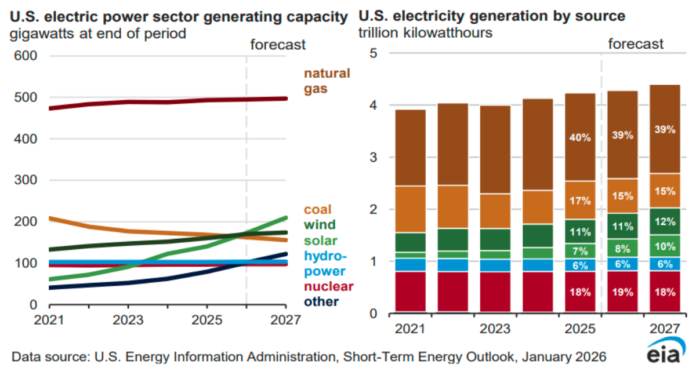
According to the latest U.S. Energy Information Administration (EIA) data, solar electricity generation, installed capacity, and overall solar energy consumption are projected to grow significantly through 2027, making solar the fastest-growing source of renewable electricity nationwide.
Solar Generation Surges Nationwide
Utility-scale solar electricity generation in the U.S. is set to rise sharply, from approximately 290 billion kilowatt hours in 2025 to nearly 350 billion kilowatt hours in 2026, and surpassing 424 billion kilowatt hours by 2027. This rapid growth highlights solar power’s increasing contribution to the U.S. renewable electricity supply, driven by substantial investment in large solar photovoltaic projects and supportive grid infrastructure.
Texas and California Lead Solar Expansion
Texas continues to emerge as the fastest-growing solar market, with solar generation forecasted to climb from 56.5 billion kilowatt hours in 2025 to over 105 billion kilowatt hours by 2027. Large-scale solar installations in the ERCOT region complement wind power and play a key role in diversifying the state’s energy mix.
California remains the largest solar-producing state, with solar generation expected to increase from 60.7 billion kilowatt hours in 2025 to more than 76 billion kilowatt hours in 2027. Aggressive renewable energy policies and widespread adoption of rooftop and utility-scale solar systems reinforce California’s leadership in solar generation.
Steady Growth Across Other U.S. Regions
Other regions are also seeing substantial solar growth:
- Midwest (MISO): Solar generation rises steadily, reaching an estimated 46 billion kilowatt hours by 2027.
- Southeast (SERC) and Florida (FRCC): Solar output grows to 37 billion and 27 billion kilowatt hours, respectively, as utilities add new capacity and reduce coal dependency.
- Northeast (ISO-NE, NYISO, PJM): States including New York and New England show incremental growth, supported by state-level clean energy targets.
- Northwest and Southwest: Solar installations expand gradually, leveraging regional solar resources alongside hydropower and wind.
Rooftop Solar Capacity Continues Expansion
Small-scale solar, particularly rooftop photovoltaic systems, is also expanding nationwide. Residential installations remain the largest segment, with commercial and industrial systems contributing significantly. Total small-scale solar capacity is projected to grow from 59.1 gigawatts in 2025 to nearly 71.7 gigawatts by 2027. Declining technology costs and consumer demand for energy independence are key drivers of this growth.
Rising Solar Energy Consumption Across Sectors
Solar energy consumption in the U.S., which includes utility-scale, small-scale photovoltaic, and solar thermal use, is expected to increase from 0.279 quadrillion Btu in 2025 to 0.323 quadrillion Btu in 2027. Residential solar consumption, including rooftop electricity and solar heating, demonstrates the sector’s expanding role beyond electricity generation.
Solar Power Strengthens the U.S. Energy Mix
The rapid expansion of solar generation and capacity is offsetting declining coal use and limiting growth in fossil fuel-based electricity. Alongside wind energy, solar is set to drive the majority of renewable energy growth in the U.S., helping the nation achieve its clean energy goals and strengthen energy security.
With robust utility-scale projects, growing rooftop installations, and increasing consumption across residential and commercial sectors, solar power is firmly establishing itself as a cornerstone of the U.S. energy transition.
BABURAJAN KIZHAKEDATH
