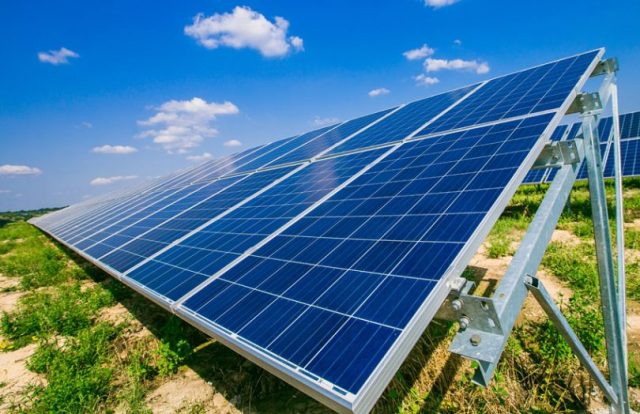
Africa’s commercial and industrial solar market is accelerating as businesses, telecom operators, mines and public institutions invest in cleaner and more reliable electricity. Major developments include SolarAfrica’s planned 1 GW SunCentral complex in South Africa, Jin An’s 20 MW captive solar plant in Zimbabwe and new solar projects supporting manufacturing, data centres, healthcare, telecom networks and EV charging across the continent.
Egypt Plans Third Tax Relief Package and Tax Sukuk to Support Investment
Egyptian President Abdel Fattah Al-Sisi has directed the government to prepare a third tax relief package and approved a tax-sukuk proposal designed to reduce public financing requirements and debt-servicing costs. Under the proposal, sukuk funded by taxpayers could be offset against future tax liabilities while offering investors a financial return.
Although the measures do not directly finance a commercial and industrial solar project, a simpler tax regime and lower financing costs could improve the investment environment for renewable-energy developers and industrial companies. Egypt is also receiving approximately $1.8 billion following the completion of IMF programme reviews, including about $272 million under the Resilience and Sustainability Facility. Improved liquidity and climate-linked financing could support further corporate solar investment in one of Africa’s largest renewable-energy markets.
AlexFert Signs 30-Year Agreement for 1 MW Industrial Solar Project
Alexandria Fertilizers Company has signed a 30-year power purchase agreement with SolarizEgypt for a 1 MW solar installation at its manufacturing complex in Alexandria. SolarizEgypt will finance, develop, own, operate and maintain the system, enabling AlexFert to procure renewable electricity without making the entire upfront capital investment.
The project is expected to generate approximately 1.58 GWh of clean electricity annually and reduce AlexFert’s reliance on Egypt’s national grid by around 4.2 percent. It could avoid approximately 718 metric tons of carbon dioxide emissions annually, equivalent to an estimated 21,528 metric tons over the 30-year agreement.
MTN Ghana Expands Solar Across Network and Data-Centre Operations
MTN Ghana is accelerating renewable-energy adoption across network sites, offices and data-centre infrastructure as part of its Project Zero strategy. Recent reports place its deployed solar capacity at approximately 3.02 MW, reflecting continued expansion from the 2.4 MW reported by MTN for 2024.
During 2024, solar systems were installed at three switching and data-centre sites, MTN House and 39 base transceiver station locations. Renewable energy supplied 64 percent of power used by switching and data-centre facilities and 54 percent of energy consumed at participating mobile sites.
MTN Group reported that its interventions reduced emissions by 3,325 metric tons of carbon dioxide equivalent in 2024, compared with 2,136 metric tons in 2023. The programme also saved 265,000 litres of diesel and delivered savings of $460,000 during 2024, taking cumulative savings since 2022 to $800,000.
FanMilk Ghana Revenue Reaches GH¢635.5 Million as Profit Jumps 214 Percent
FanMilk Ghana generated revenue of GH¢635.5 million during the first half of 2026, approximately 25 percent above GH¢506.6 million in the corresponding period of 2025. The company’s net profit increased 214 percent as stronger sales, cost controls and operational efficiency improved its financial performance.
The growth followed a record 2025, when FanMilk generated approximately GH¢1 billion in revenue and net profit increased 38 percent to GH¢68.3 million. The Danone-controlled food and beverage manufacturer is also advancing initiatives covering renewable energy, recyclable packaging, plastic recovery, water efficiency and wastewater management.
Food processing, refrigeration and cold-chain distribution require reliable electricity, making FanMilk a potentially significant C&I renewable-energy customer. Solar and storage could reduce grid consumption, protect temperature-sensitive operations from power interruptions and lower the carbon intensity of production and distribution.
Kenya Targets Solar Power for Healthcare Facilities in 14 Counties
Kenya’s Ministry of Health has identified the solarisation of off-grid healthcare facilities as a priority for building climate-resilient medical infrastructure, particularly in arid and semi-arid regions. The programme covers 14 underserved counties supported through the World Bank-backed Kenya Off-Grid Solar Access Project.
Solar electricity can power operating theatres, maternity units, lighting, oxygen equipment, laboratory systems, vaccine refrigeration and digital health platforms at facilities affected by unreliable or unavailable grid supply.
Kenya already generates approximately 93 percent of its electricity from renewable sources. However, electricity prices can reach around $0.23 per kWh, while power-system losses exceed 20 percent. Distributed solar can therefore improve service reliability while reducing exposure to high electricity and diesel-generation costs. Kenya has also committed to developing a net-zero healthcare system by 2030.
Mozambique University Data Centre Combines Grid, Solar and Generator Power
Eduardo Mondlane University in Maputo has inaugurated a data centre designed to strengthen scientific research, digital administration, cybersecurity, artificial intelligence and advanced computing in Mozambique. The facility primarily uses grid electricity but can switch to solar panels or generator backup, providing three sources of power redundancy.
The data centre will support the university’s digital systems and connect with the Mozambique Research and Education Network, which has access to 60 Gbps of bandwidth funded for 15 years. Complementary investments include a Robotics and Automation Laboratory and a planned Artificial Intelligence and Robotics Room.
Solar Companies Help 100 Nigerian MSMEs Adopt Clean Energy
At least 100 Nigerian micro, small and medium enterprises have received training and financing assistance to adopt solar energy and reduce dependence on petrol and diesel generators. The participating businesses include tailoring companies, salons, cold-storage operators and agricultural processors.
The programme operates within a much larger distributed-energy opportunity. Nigeria’s $750 million Distributed Access through Renewable Energy Scale-up project includes a $300 million standalone-solar component. The wider programme aims to provide reliable clean electricity to as many as 237,000 MSMEs and 17.5 million people, creating a major market for solar suppliers, financiers and productive-use equipment.
Delta State and REA Plan Solar Power for Healthcare Centres
Nigeria’s Delta State is working with the Rural Electrification Agency to deploy solar systems at primary healthcare centres and other public institutions. Discussions cover a collaboration agreement under the Federal Government’s Rural Electrification Programme, although project capacity, cost and the number of healthcare facilities have not yet been announced.
The proposed projects could use an Energy-as-a-Service structure under which private developers finance, install, operate and maintain the solar systems. Participating healthcare facilities would pay for electricity as a service instead of purchasing equipment upfront.
The healthcare initiative follows a wider renewable-energy agreement targeting 471 unserved communities in Delta State. That programme was projected to add approximately $2.9 billion to the state economy and create around 31,220 renewable-energy jobs if fully implemented.
CHARGE Doubles Solar EV Hub Capacity on South Africa’s N3
CHARGE plans to double charging capacity at two fully off-grid solar-powered EV hubs on South Africa’s N3 corridor from 360 kW to as much as 720 kW at each location. The system will be able to allocate up to 600 kW to a single connector when sufficient power is available, supporting passenger vehicles and electric trucks.
Solar capacity at each location will increase from 280 kWp to approximately 470 kWp, while battery storage will expand from 645 kWh to around 1.4 MWh. The upgrades are expected to be completed before the end of 2026.
The facilities are located at the Reitz interchange in Free State and the Colenso-Winterton interchange in KwaZulu-Natal. CHARGE is targeting 60 off-grid charging stations across South Africa by the end of 2027.
SolarAfrica Advances 342 MW Phase of 1 GW SunCentral Project
SolarAfrica is developing the first 342 MW phase of its SunCentral solar complex in South Africa’s Northern Cape. The R5 billion phase comprises three separate 114 MW projects and forms part of a development planned to reach 1 GW through subsequent phases. The projects are progressing through staged construction and financing. The first 114 MW facility is scheduled to begin delivering power during the second half of 2026.
SolarAfrica secured approximately R1.5 billion, or about $94 million, for the 114 MW SunCentral 2 project from FirstRand and Investec. Renewable electricity from SunCentral will be supplied to commercial and industrial customers through South Africa’s national grid under wheeling arrangements.
Uganda and Japan Expand Digital and Border-Security Cooperation
Uganda and Japan are strengthening cooperation on border management, cybersecurity and digital public services. The latest discussions focused on using digital technologies to improve operational efficiency, transparency and public-service delivery, but no new solar project, investment or generation capacity was announced.
Solar nevertheless has an established role in Uganda’s remote border infrastructure. Seven border posts have previously been equipped with standardised hybrid systems consisting of 16 kWp of solar capacity and 38 kWh of lithium-ion battery storage at each location. Combined capacity across the seven sites is therefore approximately 112 kWp of solar and 266 kWh of battery storage.
MTN Uganda Installs 20 kW Hybrid Solar System at Health Centre
MTN Uganda and its partners have installed a 20 kW hybrid solar system at Kiyunga Health Centre IV in Luuka District. The system includes solar panels, battery storage and backup equipment to provide dependable electricity for the maternity ward, theatre and medical equipment.
Kiyunga Health Centre serves approximately 3,000 patients every month. Electricity shortages previously prevented staff from operating some available medical equipment. The donation also included delivery beds, oxygen concentrators and autoclaves.
American Tower Corporation supplied the solar installation through MTN Uganda’s 21 Days of Y’ello Care campaign. MTN and participating vendors plan to provide support worth approximately UGX600 million to communities in four districts—Luuka, Bunyangabu, Gomba and Amudat—during 2026. The project demonstrates how corporate investment can extend distributed solar into essential community infrastructure.
Jin An’s 20 MW Captive Solar Plant Reaches 60 Percent Completion
Construction of Jin An Group’s 20 MW captive solar plant at Almid Private Limited in Gweru, Zimbabwe, has reached approximately 60 percent completion. The project will supplement grid electricity used by the company’s power-intensive ferrochrome smelting operations and reduce pressure on Zimbabwe’s constrained electricity network.
Recent reports value the current installation at approximately $6 million, while Jin An’s broader energy-investment programme has been placed at up to $140 million. Earlier plans indicated that the company could add another 30 MW in Gweru and pursue a 100 MW solar development near the Chessa substation.
Zimbabwe Targets Solar and Internet Connectivity for 1,350 Schools
Zimbabwe’s government is working to provide solar electricity and internet connectivity to schools, prioritising institutions without grid access or adequate digital infrastructure. Officials have identified an initial list of 1,100 schools and are targeting approximately 1,350 schools under the expanded programme.
A separate $8.7 million financing facility launched by the People’s Own Savings Bank supports access to solar systems and Starlink connectivity for schools, households and small businesses. More than 400 schools are expected to benefit from that initiative.
UNICEF has supported the solarisation of 154 Zimbabwean schools since 2022, with another 78 targeted in a subsequent phase. Zimbabwe has approximately 9,625 schools, including 6,671 primary and 2,954 secondary schools, but only around 3,014 were reported to have internet connectivity. Solar-powered digital infrastructure could substantially narrow that gap.
SHAFANA FAZAL