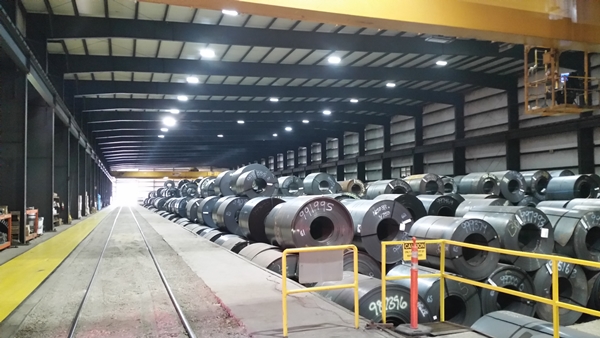
India’s steel MSME sector is emerging as a critical focus of the country’s industrial decarbonization strategy, with secondary-steel producers accounting for 94.42 million tonnes of crude-steel capacity in FY2024-25, or about 47 percent of India’s total capacity of 200.33 million tonnes.
The sector generates around 50 million tonnes of carbon dioxide emissions annually, making energy efficiency an important route to lower production costs and emissions. The government’s proposed ₹5,000 crore National Strategy for Sustainable Secondary Steel aims to accelerate this transition.
The Institute for Energy Economics and Financial Analysis (IEEFA) says India has already demonstrated that energy-efficient technologies work in smaller steel plants. The bigger challenge is converting technical opportunities into bankable projects that MSMEs can finance and implement at scale, IEEFA report said.
India Steel Capacity Reaches 200.33 Million Tonnes
India’s crude-steel capacity increased to 200.33 million tonnes in FY2024-25, from 179.51 million tonnes in FY2023-24. Crude-steel production reached 152.18 million tonnes.
The longer-term expansion is even more significant. India had crude-steel capacity of 143.91 million tonnes in FY2020-21, when production stood at 103.54 million tonnes. Capacity has therefore expanded by more than 56 million tonnes in four years.
Secondary-steel plants, including MSMEs, represented 94.42 million tonnes of capacity in FY2024-25.
The industry remains highly fragmented, with approximately 340 direct-reduced-iron units, 40 electric-arc-furnace units, 1,030 electric-induction-furnace units and 1,250 steel re-rolling mills.
This fragmented structure makes access to affordable finance, technical expertise and standardized energy-efficiency solutions particularly important.
Energy-Efficient Steel Units Jump From 34 to 321
India has already demonstrated that targeted intervention can accelerate energy-efficiency adoption.
A UNDP-Ministry of Steel program expanded the number of energy-efficient small steel units from just 34 to 321 within 30 months, adding 287 units.
IEEFA’s Soni Tiwari, Saumya Nautiyal, and Saurabh Trivedi said MSMEs are willing to adopt efficient technologies when technical assistance, project development and financing are available together.
However, adoption has often slowed after individual programs ended. India therefore needs financing and technical-support systems that can continue without depending primarily on pilot programs or temporary subsidies.
603 Projects Generate ₹58.58 Crore in Annual Savings
The UNIDO-GEF-BEE initiative provides further evidence of the economic potential of industrial energy efficiency.
The program implemented 603 energy-efficiency and renewable-energy measures across 345 MSME enterprises in 12 clusters.
These projects generated annual energy savings of 10,850 tonnes of oil equivalent, avoided 62,868 tonnes of carbon dioxide emissions annually and produced ₹58.58 crore in annual monetary savings.
Participating MSMEs contributed ₹89.76 crore in co-financing, demonstrating that smaller companies can commit their own capital when projects have a convincing commercial case.
Aggregating similar projects across industrial clusters could further improve their economics by lowering the cost of energy audits, engineering, project preparation, procurement and financing.
₹1,000 Crore ADEETIE Scheme Targets Industrial Efficiency
The government’s ₹1,000 crore Assistance in Deploying Energy Efficient Technologies in Industries and Establishments (ADEETIE) scheme could become an important financing platform for steel MSMEs.
ADEETIE covers 14 energy-intensive sectors, including steel re-rolling, and is initially being implemented across 60 industrial clusters, with another 100 clusters planned for the next phase.
The scheme offers a 5 percent interest subvention for micro and small enterprises and 3 percent for medium enterprises.
Eligible loans range from ₹10 lakh to ₹15 crore, while as much as 75 percent of project cost can qualify for interest-subvention support. Projects are required to demonstrate and maintain energy savings of at least 10 percent during the scheme period.
Of ADEETIE’s ₹1,000 crore allocation, ₹875 crore is earmarked for interest subvention, ₹50 crore for investment-grade energy audits and ₹75 crore for technical handholding through the Bureau of Energy Efficiency.
The government expects the scheme to catalyze ₹9,000 crore of investment, including ₹6,750 crore of prospective MSME lending, through FY2027-28.
Steel re-rolling clusters identified under the program include Mandi Gobindgarh and Ludhiana, Jaipur, Jalna and Raipur.
Financing Remains the Biggest Barrier for Steel MSMEs
IEEFA identifies financing and project development, rather than technology availability, as major barriers to wider adoption.
Many smaller steel companies prioritize working capital and capacity expansion over energy-efficiency investments. Even projects with attractive payback periods can struggle to secure financing because of their relatively small size, weak project documentation, perceived technology risks and lender concerns about verifying future energy savings.
Energy audits alone are therefore insufficient. MSMEs need support to identify appropriate technologies, select vendors, prepare investment-grade proposals, secure loans, install equipment and verify savings.
IEEFA points to project aggregation, longer loan tenors, partial risk-sharing mechanisms and credible technology-performance assurance as ways to strengthen financing. Energy Service Company and pay-as-you-save structures could also reduce upfront investment requirements.
The commercial proposition is particularly important. Energy efficiency becomes more attractive when MSMEs view furnace upgrades, automation, efficient motors, process controls and waste-heat recovery as investments that improve productivity and profitability rather than simply environmental spending.
Renewable Power Could Cut MSME Electricity Tariffs by 34 Percent
Energy efficiency could also be combined with renewable-energy procurement to lower steel production costs.
An analysis of India’s secondary-steel MSMEs estimated that group-captive renewable electricity could reduce power tariffs by as much as 34 percent, potentially generating annual savings of around ₹2.2 crore to ₹2.4 crore per unit under suitable project structures.
Demand aggregation could allow several smaller steel companies to participate jointly in renewable-energy projects that would be difficult for an individual MSME to finance.
Combining renewable electricity with efficiency investments creates a two-part strategy: reduce the amount of energy required for steel production and lower the cost and carbon intensity of the remaining electricity demand.
Larger Steel Producers Step Up Multi-Billion-Rupee Investments
The urgency for MSME modernization is increasing as larger secondary and mid-sized steel companies invest heavily in capacity, downstream integration and energy infrastructure.
Gallantt Ispat produced 883,400 tonnes of crude steel and generated ₹4,418 crore in consolidated revenue in FY2025-26. The company is pursuing approximately ₹3,000 crore in capital expenditure to expand steel capacity.
Shyam Metalics has outlined investment of around ₹10,000 crore in West Bengal, including approximately ₹5,400 crore for a 1.58 million-tonnes-per-year hot-rolled coil facility. Its renewable-energy share reached 45.65 percent in FY2024-25.
Jai Balaji Industries revised its capital-expenditure program to ₹1,112 crore, with ₹1,076 crore already spent by August 2026. Remaining investments are targeted at additional blast-furnace, sinter and specialized ferroalloy capacity.
These companies should not necessarily be classified as MSMEs, but their investments demonstrate how quickly India’s broader secondary-steel market is becoming more capital-intensive and technologically advanced.
Energy Efficiency Becomes a Competitiveness Strategy
For smaller steel producers unable to invest thousands of crores in large-scale expansion, energy efficiency offers a more accessible path to competitiveness.
Investments in furnace efficiency, automation, process control, efficient motors, waste-heat recovery and renewable electricity can lower energy consumption per tonne of steel, reduce operating expenses and improve margins while cutting emissions.
International financing experience also suggests that India can go beyond conventional interest subsidies. China has used risk-sharing mechanisms and bank advisory support for industrial efficiency financing, while Latin American programs have combined commercial lending with independent technical validation, standardized contracts and insurance against technology-performance risks.
Similar mechanisms could complement ADEETIE and address lenders’ concerns over smaller industrial projects.
₹5,000 Crore Strategy Could Transform Steel MSME Decarbonization
India’s steel MSMEs have already shown measurable energy-efficiency potential. The expansion from 34 to 321 efficient steel units, combined with 603 projects across 345 MSMEs in 12 clusters, demonstrates that adoption can scale when financing and technical assistance are aligned.
Those 603 projects delivered 10,850 tonnes of oil equivalent in annual energy savings, 62,868 tonnes of avoided carbon dioxide emissions and ₹58.58 crore in annual savings, backed by ₹89.76 crore of MSME co-financing.
The opportunity is much larger because secondary steel, including MSMEs, represents 94.42 million tonnes, or 47 percent, of India’s 200.33 million tonnes of crude-steel capacity and contributes around 50 million tonnes of annual carbon dioxide emissions.
The proposed ₹5,000 crore National Strategy for Sustainable Secondary Steel, together with the ₹1,000 crore ADEETIE scheme, could help shift the industry from isolated energy-efficiency projects toward a scalable investment market.
ADEETIE’s ambition to mobilize ₹9,000 crore, including ₹6,750 crore in prospective MSME lending, will ultimately depend on how successfully audits are converted into financed and installed projects delivering verified savings. For India’s steel MSMEs, energy efficiency is increasingly not just a decarbonization requirement. It is becoming a strategy for lower production costs, stronger margins, improved competitiveness and long-term participation in India’s expanding low-carbon steel industry.
SHAFANA FAZAL