
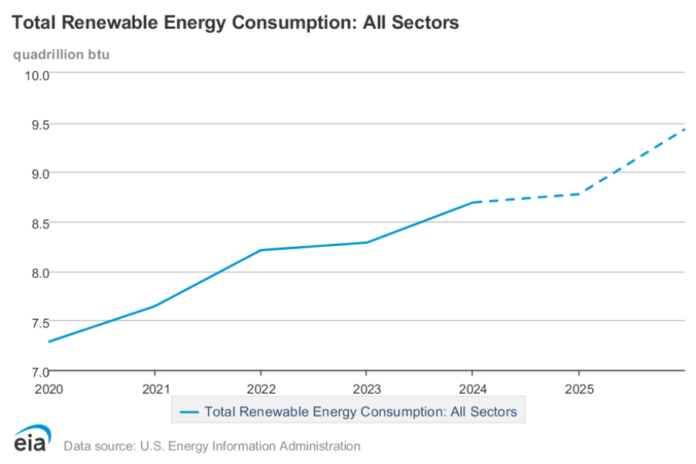
The U.S. Energy Information Administration (EIA), in its December Short-Term Energy Outlook, expects a colder December to push up natural gas prices this winter while projecting lower global oil prices and rising electricity generation through 2026. The outlook also highlights shifting dynamics in coal demand driven by fuel costs, weather patterns, and the continued rise of renewable energy.
Higher Natural Gas Prices This Winter
The EIA forecasts the Henry Hub natural gas spot price to average nearly 4.30 dollars per MMBtu during the winter season from November to March. This is more than 40 cents per MMBtu higher than last month’s forecast. The primary driver is a colder-than-expected December, which is set to increase natural gas consumption for space heating.
However, the EIA expects natural gas prices to ease after winter. Milder weather in early 2026 combined with rising production is projected to keep the average Henry Hub price near 4.00 dollars per MMBtu next year.
Global Oil Prices Expected to Decline
The forecast anticipates a continued rise in global oil inventories through 2026, adding downward pressure to crude prices. Brent crude oil is expected to average about 55 dollars per barrel in the first quarter of 2026 and remain around that level through the rest of the year.
While prices are likely to fall, EIA notes that OPEC plus production strategies and China’s ongoing inventory accumulation will help limit the extent of the decline.
U.S. Electricity Generation to Keep Rising
Electricity generation in the United States is set to grow 2.4 percent in 2025 and 1.7 percent in 2026. This represents a notable shift from the largely flat growth observed between 2010 and 2020.
Most of the increase comes from large electricity consumers such as data centers, particularly in regions managed by ERCOT and PJM. The EIA slightly trimmed its 2026 outlook compared with last month based on the pace of new large-load connections so far this year.
Coal Consumption Up in 2025, Down in 2026
Coal consumption is projected to rise 9 percent in 2025, driven by an 11 percent increase in coal use by the electric power sector as natural gas costs rise and electricity demand grows. But in 2026, coal consumption is expected to decline as renewable power generation expands.
Coal production will fall more slowly than consumption next year, supporting a modest increase in coal exports and boosting coal inventories.
Outlook
The December STEO highlights a winter shaped by colder weather, a medium-term oil market pressured by growing inventories, and a power sector experiencing demand growth from digital infrastructure. These trends point to a period of shifting fuel economics, continued investment in clean energy, and evolving patterns in U.S. energy consumption and production.
Baburajan Kizhakedath
