

Some students walk into their science class and feel eager about the mysteries their lessons will uncover about the world, while others experience extreme boredom. No matter how they feel, there are ways to make science education more engaging in and out of the classroom. Some of those are accessible at home or presented as a solo exercise in the class.
DIY science kits could change a learner’s perspective about how enjoyable science is to engage in or deepen their curiosity. These are the best places for educators and parents to invest.
1. ScienceExplorers

ScienceExplorers provides hands-on learning experiences for learners in grades kindergarten through eighth. Its mission is to create the next generation of STEM leaders by empowering them with more engaging and curiosity-based ways of learning. It has been around since 1999, providing exciting ways to boost science literacy in school, clubs, camps and more.
ScienceExplorers has kits that tackle many scientific niches, including geology, physics, biology and many others. It even has programs for learners in the arts, math and technologies. This enterprise has even found a way to make its products so enjoyable that they are available for birthday parties. Its commitment to high learning outcomes and rigorous testing makes ScienceExplorers an excellent option for any setting and student.
2. KiwiCo
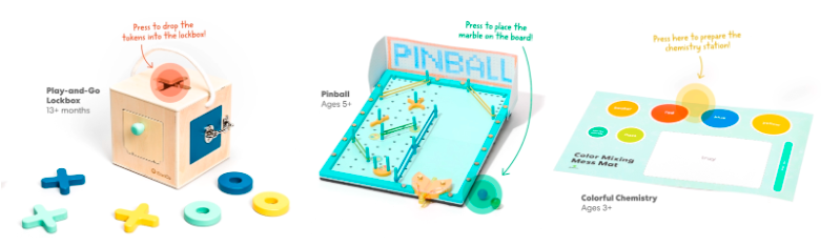
The motto behind KiwiCo is to let kids tinker, create and innovate. It has a subscription-based model, with plans starting at $20 per month for enriching DIY science kits for the home. The founders are known engineers and educators, adding credibility to the brand. Parents and teachers know they can depend on these products to be stimulating and valuable.
Learners can grab an electronics, chemistry, robotics or playtime kit — among others — to see what interests them. Every month is an opportunity to dive a little deeper into one of these subjects, appealing to all ages. KiwiCo promises the kits are kid-approved, as the team tests them at its Innovation Factory, where children can participate in the fun.
3. Engino
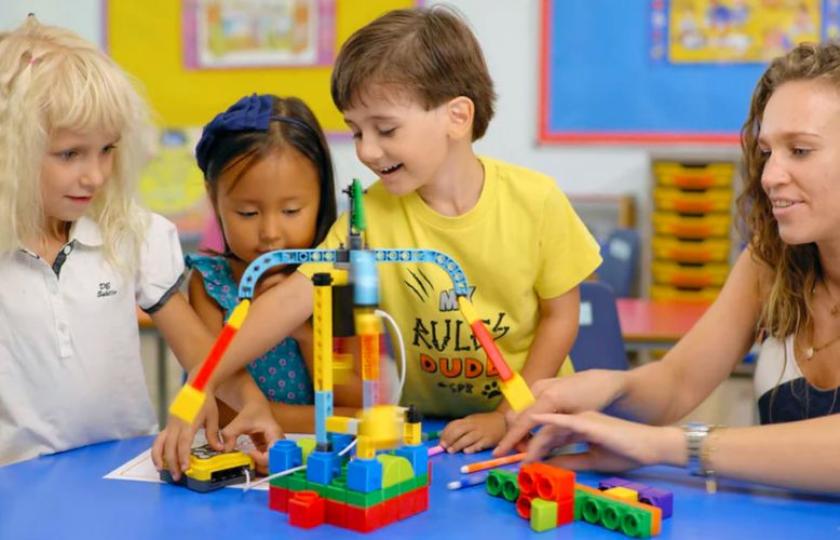
Engino specializes in building toys, though it offers far more. Kids can assemble blocks to build a working toy truck or invent their own design with various levels of engineering kits. Its instructions are akin to building a LEGO, with incredible clarity and visuals to guide students of all levels. It also offers a subscription-based service, with classroom solutions available.
Each kit promises to include detailed lesson plans and teacher guides to make the experience as accessible and educational as possible. Many are also digitally available. The creators’ priority is to design the curriculum carefully while never forgetting the fun element. Explore its many themed kits, which include space-themed adventures, wildlife rescue missions and time-travel shenanigans.
4. xUmp

There are fewer catalogs with more expansive options than xUmp. It is one of the most experienced retailers in the science kit world, with over 2,000 products to choose from and serving 110 countries. Its worldwide presence makes it a classroom staple, especially because of its affordability. Learners can build a solar- and battery-powered fan or a DC motor for less than $10, especially since many kits go on sale so frequently.
xUmp also has one of the largest selections of different types of kits, including projects for budding astronomers, Earth scientists, magnet experts and more. The store has safe-to-use laser and optics projects, microscopes, inflatables and almost everything else a science educator could ask for in a robust curriculum.
5. A Mighty Girl
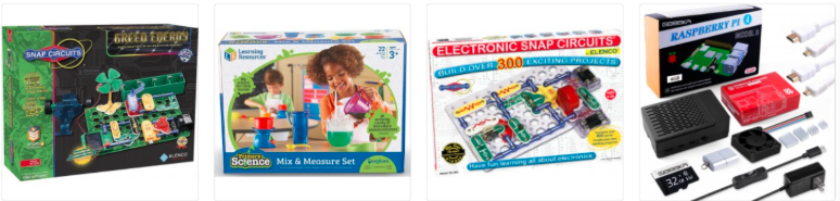
The small number of girls in STEM fields remains a problem, but many incredible companies are devoting attention to this demographic to empower them. A Mighty Girl has kits and toys curated for girls, and parents and teachers can search its catalog with the help of curated filters for age and theme. It also carries more than these kits — there are books, clothes and music to expand education to all corners.
Young girls can work with circuits, rocks, microscopes, blocks and casting kits, among countless other options. The company has won many awards for its science-based products, all made even better by its incredible mission to get more girls involved in the sciences. If parents want to dive more into these subjects, A Mighty Girl has many resources to help them learn how they can make an impact.
6. Science Buddies

Science Buddies is a nonprofit organization that has developed over 1,200 projects for learners to pick from through its selling partner Home Science Tools. They are adaptable for classrooms and home settings. Every DIY kit has been tested by scientists to let parents know they work, and it includes hand-picked supplies that will make every student feel confident in their assemblies. Science Buddies is also known for its great kit instructions.
The biggest draw is its vast library of free guides and experiments. Once a student completes a kit, they can feel empowered to explore other videos and tutorials that intrigue them without having to buy another kit. Many of the recommendations can be achieved with tools already at home, or parents can purchase additional kits based on their kids’ interests.
Comparing DIY Science Kits
All these places offer products that contribute to a greater understanding of science, so seeing their key strengths side by side may help parents decide where to invest their money.
| Company | Age Range | Unique Characteristic |
| ScienceExplorers | 4-11 | Group engagement and strict testing |
| KiwiCo | Up to 16 | Subscription structure for novelty and experimentation |
| Engino | 3+ | Engineering focus and digital tools |
| xUmp | 4+ | Expansive and diverse catalog |
| A Mighty Girl | All ages | Girl-focused toys and kits for equality and empowerment |
| Science Buddies | 4-18 | Non-profit organization with thousands of free resources |
How to Choose the Best Online Retailer
The methodology used to determine the best options to recommend is based on identifying which entities exhibit the essential traits of quality educational resources. These providers have these top characteristics and more.
Safety-First Mindset
An experiment could ask a student to build a robot, requiring them to interact with wires and light electrical components. Another could have wooden blocks, which pose a choking safety concern depending on the age group. Regardless of the target demographic, every science kit should be safe, durable and non-toxic. Even if students consume or unintentionally interact with the product in a discouraged fashion, the ramifications will not be severe.
Accessible Instructions
While many learning tools are virtual nowadays, buyers should review how the science kit’s instructions will be presented to the student. Does the box say it will include a QR code to access an instructional video? Will there be paper directions? Are teachers supposed to communicate the goal?
Verify how the manual will be used, and question whether that fits the type of learners who will be in the room. The best retailers have a variety of options.
High Educational Value
All science kits can provide value to a student, but some may be more stimulating than others. Buyers can see if educational agencies or reputable organizations like the Next Generation Science Standards back the products. This stamp of approval can indicate the kit is more likely to align with the best teaching practices and promote deeper levels of critical thinking.
Affordability
The kits need to be comprehensive, including everything a student needs without requiring excessive additional sourcing of materials. However, it must also balance this while being cost-effective. Retailers must try to make their kits as inexpensive as possible so finances are not a barrier to accessing hands-on educational tools. This is also important for schools, which have limited budgets.
The Benefits of Educational Kits
Parents may wonder why they should invest in DIY educational tools when they may have all the resources they need at school. Will these products have any impact without a certified teacher guiding them through the process? Fortunately, there are advantages to incorporating DIY science kits at home and even in a formal school setting.
Improved Memory
Hands-on learning is one of the best ways to solidify a concept — especially one as cerebral and complex as science — firmly into a learner’s mind. If a student has a hard time with retention, making the idea a tangible experience could help them understand better than hearing a lecture or reading words on a page.
Increased Morale
Students have the freedom to manipulate DIY science projects as they see fit, with the only constraints being time. The ability to experiment and think without boundaries can boost their confidence as they discover new ways to solve or understand a problem. Completing the project on their own may make them feel better about going into class every day.
Greater Collaboration
DIY kits have the potential to encourage peer interactivity. At home, students can work alongside their parents as a mentor, learning how to communicate ideas and feel encouraged to ask questions. In the classroom, working in pairs or groups can foster these soft skills as they see the value of bouncing ideas off one another and developing connections with classmates.
Deeper Creativity
Learners must innovate to find the solutions they need when they are the leaders of their own experiment. This forces them to dig deep into their minds. They explore their critical thinking abilities, expand their curiosity and feel encouraged to seek additional resources like textbooks to achieve a goal. Listening to a teacher does not engage the same parts of a student’s creative potential, so providing these projects for variety could expand their minds.
FAQ About DIY Science Kits
It may be the first time a parent or educator is diving into these learning resources, so queries about their effectiveness and implementation are inevitable. Fortunately, everything is answerable to guide decision-making in the purchasing process.
What Age Is Best for Science Kits?
There are science kits for all age groups. In general, children 6 and under should stick to experiments that have larger pieces and potentially edible components in case of curious mouths. At 7, they can start doing larger projects like sugar crystal growing and slime making with adult supervision.
The only limitation is the retailer’s catalog. Some specialize in certain educational levels, but there is something for everyone. Even adults who have not been in school for years can join in on the fun.
What Should Be in a Science Kit?
Depending on the project’s objectives, there should be some essential features right out of the box. If the experiment wants students to measure or handle perishables or liquids, trays, measuring tools, gloves and other protective equipment may be necessary. These could include goggles or aprons. The kit may also have containers to store their project, utensils and even batteries, depending on what they are building. The contents will vary, so review all contents before purchasing to ensure everything will be available in the learning environment.
Why Are Science Kits Important?
These tools are becoming bigger staples of education because of the significant positive impact they can have. They give students more ways to engage with the material outside of a textbook and lecture. The interactivity forces learners to focus on the content in a new way, activating different parts of their brains and their curiosity. These products expand what a classroom or home learning space can look like, as they become more accessible and imaginative every year.
Beyond Traditional Education
Everyone learns differently, and DIY education tools have never been more robust and diverse. There are plenty of options from these outlets to find something that will interest all students, expanding the boundaries of their scientific curiosity from the school into the home. DIY science kits offer children agency in their education, helping them improve their problem-solving and critical thinking skills. Parents and teachers can browse and contact one of these retailers today to see how these products can inspire the next generation of scientific minds.
