
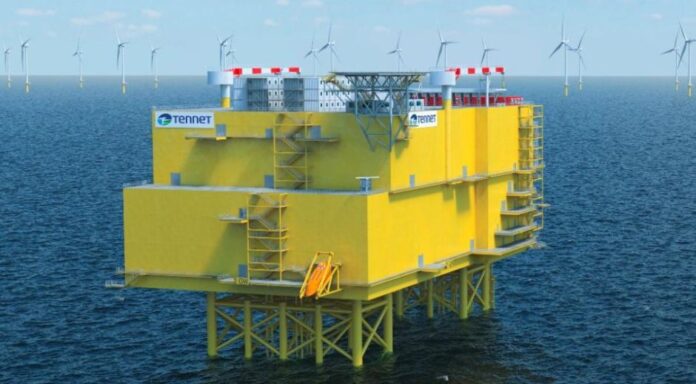
GE Vernova and Seatrium have secured a major contract from TenneT to deliver the 2.2 gigawatt BalWin5 offshore high-voltage direct current grid connection, a key project supporting Germany’s offshore wind expansion and long-term energy transition goals. Once operational, BalWin5 is expected to transmit enough renewable electricity to power nearly 2.75 million households, strengthening Germany’s pathway toward cleaner and more secure energy.
BalWin5 is part of TenneT’s two gigawatt program, which introduces a new generation of large-scale offshore grid systems designed to accelerate the integration of offshore wind power into the national transmission network. The contract marks the fourth award to the GE Vernova-Seatrium consortium under the five-year Framework Cooperation Agreement signed in March 2023 and represents the consortium’s first win under TenneT’s German two gigawatt portfolio.
Strengthening Germany’s Offshore Wind Infrastructure
BalWin5 is designed to transport 2.2 gigawatts of electricity from wind farms in the German North Sea to onshore infrastructure at Bremen-Werderland. The system includes an offshore converter platform, an onshore converter station, and a combined sea and land cable route stretching approximately 325 kilometers. Commissioning is targeted for 2032.
The project’s higher transmission capacity, which exceeds the baseline two gigawatt standard, gives the system additional technical headroom to carry more power during optimal wind conditions without additional infrastructure investment. This helps reduce the overall cost per megawatt and improves the efficiency of offshore wind energy delivery to the grid.
Scope of Work for GE Vernova and Seatrium
Under the contract, GE Vernova’s Electrification Systems business will deliver the full HVDC system, including both the offshore and onshore converter stations and the advanced control and protection technology required to maintain stable grid operations. HVDC technology is essential for long-distance offshore wind transmission and helps reduce power losses while improving system performance.
Seatrium will take responsibility for the engineering, construction, transportation, and installation of the offshore converter platform. Most of the platform fabrication will occur at Seatrium’s facilities in Singapore and Batam, with project activity slated to begin on 1 January 2026.
Leadership Perspectives
Philippe Piron, CEO of GE Vernova’s Electrification Systems business, said that BalWin5 illustrates the scale of Germany’s energy transition. He noted that GE Vernova’s decades of HVDC innovation will help deliver an efficient and reliable system that strengthens the offshore grid and supports Europe’s long-term sustainability goals.
Samuel Wong, Executive Vice President of Seatrium Energy, highlighted the consortium’s strong partnership with TenneT and the benefits of its series-build strategy. He said that the experience from earlier TenneT projects enables Seatrium to deliver the BalWin5 platform safely, efficiently, and at consistently high quality.
Advancing Germany’s Energy Transition
TenneT’s BalWin series represents a critical component of Germany’s offshore wind expansion strategy. With offshore grid connections traditionally sized at around 900 megawatts, the shift to high-capacity 2 gigawatt and 2.2 gigawatt systems marks a transformative step in optimizing transmission efficiency and lowering costs. The long-term framework agreements give suppliers greater visibility, enabling faster delivery timelines and improved project standardization.
