
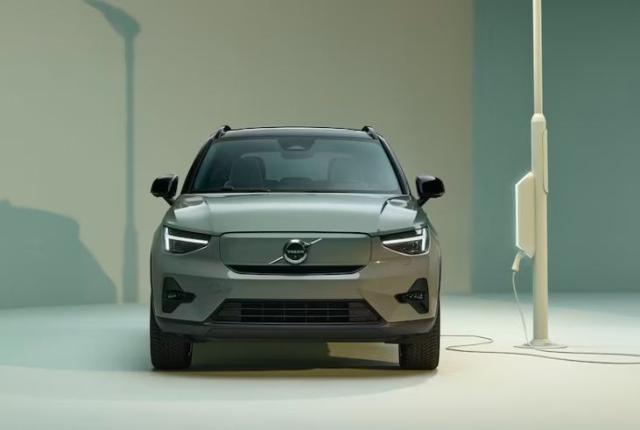
Volvo Cars reported that fully electric vehicles accounted for 22 percent of its total sales in Q3 2025, down from 25 percent in Q3 2024. The share of electrified vehicles, including hybrids, also declined to 45 percent from 48 percent in the same period last year.
Volvo Cars has reported 7 percent drop in the number of cars sold during the third-quarter of 2025 to 160,514 cars. This indicates that Volvo Cars has sold 35,313 units of fully electric vehicles during the third-quarter of 2025.
Volvo Cars has posted Q3-2025 revenue of SEK 86.4 billion vs SEK 92.8 billion in Q3-2024. Q3 operating income of Volvo Cars was SEK 6.4 billion vs SEK 5.8 billion in Q3 2024. Volvo Cars reported an operating profit before one-off costs of 5.9 billion Swedish crowns ($627 million) for the July–September period. Volvo Cars does not reveal the revenue from its EV business.
Volvo Cars, majority-owned by China’s Geely Holding, is rebalancing its EV strategy under renewed leadership, focusing on profitability, efficiency, and a measured pace of electrification.
Cost Discipline Over Rapid Electrification
CEO Håkan Samuelsson, who returned to the helm earlier this year, has sharply shifted Volvo’s focus from aggressive EV expansion to operational discipline and cash flow management. Over the past six months, Volvo has cut 3,000 jobs, slowed investments in non-core projects, and prioritized efficiency gains across its EV and hybrid lines.
The cost reductions have already paid off. Volvo’s gross margin jumped to 24.4 percent from 17.7 percent in the previous quarter, driven by improved pricing, supply chain efficiencies from Geely cooperation, and the facelifted XC60 — one of its best-selling models.
Electric Vehicles Still a Work in Progress
While Volvo remains committed to becoming a fully electric carmaker by 2030, the latest results show the challenges of balancing that ambition with profitability. In Q3, fully electric vehicles made up less than a quarter of Volvo’s total sales, reflecting softer global EV demand and growing competition from Chinese automakers and Tesla.
The company is taking a more measured approach to EV expansion, emphasizing cost discipline and localization of production to reduce tariff exposure and logistics costs, Reuters news report said.
Volvo Cars continues to move towards an electric future, and it is steadily expanding its portfolio of fully electric cars. The ES90 is now on the road, production of the EX90 flagship SUV continues to ramp up after comprehensive software updates, and the Ghent plant in Belgium is increasing EX30 production in the EU.
The company is also gearing up for the reveal of the all-new, born-electric EX60 SUV in January 2026 and the start of production after that. Final road testing is currently underway and the EX60 will be a crucial entry for Volvo Cars in the largest and most popular electric segment. This car will strengthen the company’s position in the fully electric market and underpin its growth plans in the mid-size SUV segment.
Tariff Pressures Easing, U.S. Production Planned
Volvo has been particularly affected by U.S. import tariffs on European-made vehicles. However, recent trade negotiations between the European Union and the U.S. have provided relief — reducing tariffs on European cars to 15 percent from 27.5 percent, effective retroactively from August 1.
CFO Fredrik Hansson said the tariff impact on earnings has been smaller than initially expected. “We see roughly a 1 percent group EBIT drop from the tariff roller coaster,” Hansson noted, down from the previously forecast 1–2 percent.
Volvo also plans to move production of some hybrid models to the United States in the coming years to further mitigate tariff exposure and strengthen its position in the North American market.
A Profitable Reset for the EV Transition Volvo’s Q3 performance signals a strategic reset — one that prioritizes stability over rapid EV scaling. The automaker’s renewed focus on margins, disciplined investment, and flexible production planning positions it to sustain its EV transition more profitably.
Baburajan Kizhakedath
