
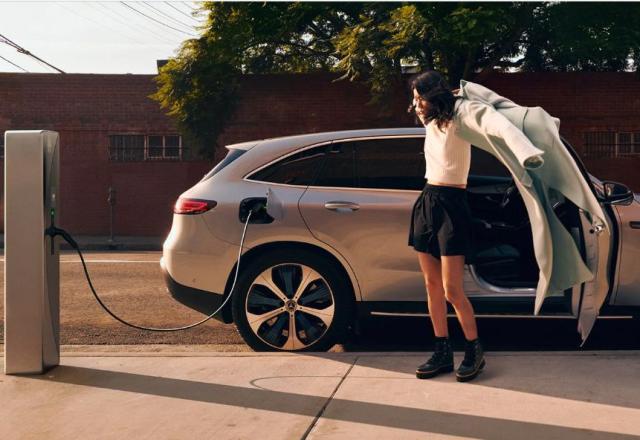
Mercedes-Benz Group’s full-year 2025 results highlight a major transition year for the luxury automaker as it pushes deeper into electric vehicles while navigating weak demand in China, pricing pressure, and tariff headwinds. The company continues to invest heavily in electrification, software-defined vehicles, and premium electric platforms as it prepares for its next growth cycle.
Mercedes-Benz financial results reflect EV transition pressure
Mercedes-Benz reported group revenue of €132.2 billion for FY 2025, down 9.2 percent from €145.6 billion in 2024. Profitability declined as the company faced softer demand in China and pricing challenges during a volatile global automotive market.
Adjusted EBIT fell to €8.2 billion from €13.7 billion a year earlier, while net profit reached €5.3 billion. Despite the earnings decline, industrial free cash flow remained strong at €5.4 billion, supported by disciplined cost control and ongoing efficiency programs.
The board proposed a dividend of €3.50 per share for the fiscal year.
Electric vehicle sales show mixed performance but strong momentum
Mercedes-Benz continued expanding its electrified lineup in 2025, with electrified vehicles (xEVs including BEVs and plug-in hybrids) reaching 368,700 units. Electrified models accounted for 20.5 percent of total sales, marking a gradual increase in adoption.
Battery electric vehicle sales declined 8.8 percent to 168,823 units for the year. However, the fourth quarter showed a strong turnaround, with BEV sales rising 18 percent sequentially following the launch of the all-new electric CLA, which was named Car of the Year 2026.
Electric vans became a major growth engine. Mercedes-Benz Vans recorded a 46 percent increase in eVan sales, reaching an electric share of 11 percent in Europe.
The electric G-Class also contributed to expanding Mercedes’ EV customer base, helping the iconic SUV achieve record sales of 49,700 units.
Heavy investment in EV platforms and software-defined vehicles
Mercedes-Benz significantly increased spending on electrification and digital technology during 2025 as part of its Digital First strategy and long-term Electric Only ambition.
Key investment areas include:
MB.OS operating system to power software-defined vehicles
AMG.EA high-performance electric architecture
MMA modular platform for next-generation compact EVs
Expanded production readiness for upcoming electric models
The company’s Next Level Performance program delivered more than €3.5 billion in savings to help offset rising R&D costs and material inflation.
Product pipeline centers on luxury EV growth
Mercedes-Benz continues to prioritize high-margin Top-End Luxury vehicles under its Economics of Desire strategy. Top-end models accounted for 15 percent of total sales mix in 2025.
The automaker plans an aggressive product rollout:
12 new vehicle launches in 2026
40 new or updated models by 2027
Expansion of software-defined vehicles across the lineup
The new electric CLA represents Mercedes’ first fully software-defined vehicle powered by MB.OS, which will enable recurring software revenue opportunities.
Regional EV strategy includes China and India expansion
Mercedes-Benz is strengthening its regional EV approach:
China: Expanding local R&D partnerships under an “In China for China” strategy
India: Planning 12 launches in 2026, including local production of the Maybach GLS
These moves aim to boost local competitiveness while supporting global electrification targets.
Mercedes-Benz EV outlook for 2026 and beyond
Mercedes-Benz expects annual sales to stabilize at around 2 million vehicles while targeting an adjusted return on sales of 8 percent to 10 percent for its car division in the medium term.
Electrification remains a central pillar of growth. The company aims to double its xEV share and exceed a 30 percent electrified sales mix by 2027, supported by upcoming electric versions of the C-Class and GLC.
Mercedes-Benz’s 2025 performance underscores the short-term financial pressure of the EV transition, but the company is positioning itself for long-term growth driven by luxury electric vehicles and software-defined mobility.
BABURAJAN KIZHAKEDATH
