

Global greenhouse gas (GHG) emissions could decline by about 12 percent below 2019 levels by 2035, according to an updated analysis by the United Nations Framework Convention on Climate Change (UNFCCC). The findings are based on 86 nationally determined contributions (NDCs) submitted by 113 Parties under the Paris Agreement.
The report marks a significant shift from pre-Paris Agreement projections, which estimated that global emissions would rise between 20 percent and 48 percent by 2035. The latest NDCs demonstrate increasing ambition, with more countries aligning their climate plans with long-term net zero targets.
Since the release of the 2025 NDC Synthesis Report, 49 Parties have submitted 22 new or updated NDCs, representing about 69 percent of total global emissions in 2019. These updated commitments are helping shape a clearer picture of where the world stands on the path toward limiting global warming to 1.5°C.
The new synthesis report estimates that the implementation of the latest NDCs could bring total GHG emissions down to approximately 12.3 gigatonnes (Gt) of CO2 equivalent by 2035. This would represent a 19 to 24 percent reduction from 2019 levels. The analysis also indicates that GHG emissions among these Parties are expected to peak before 2030, followed by strong declines through 2035.
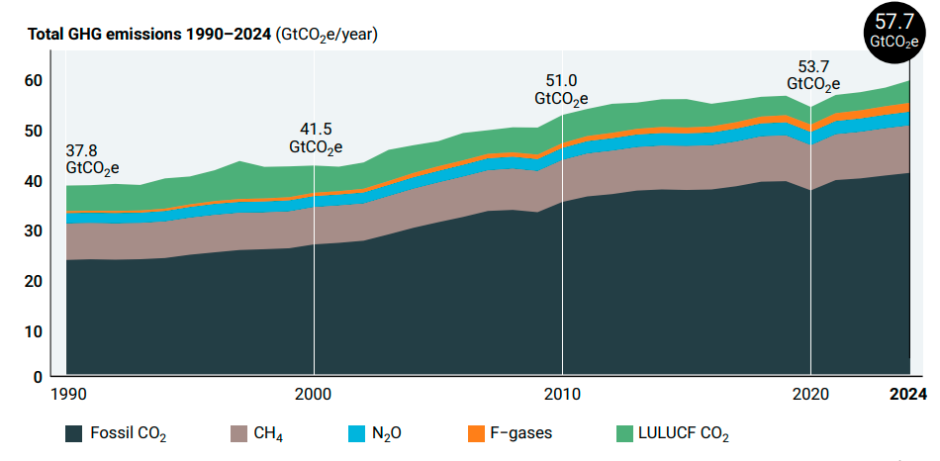
Many of the updated NDCs are linked to long-term decarbonization strategies, with most nations targeting net zero emissions between 2040 and 2060, and the majority aiming for 2050.
The 30th UN Climate Change Conference (COP30) opened this week in Belem, Brazil, with a renewed sense of urgency. “This is the moment to match opportunity with urgency,” said Brazil’s President Luiz Inacio Lula da Silva, calling for unified global action to keep the 1.5°C goal alive.
UN Climate Change Executive Secretary Simon Stiell emphasized that commitments made over recent years are beginning to make a measurable impact. “The global emissions curve is starting to bend downward,” he said, urging nations to move from pledges to implementation.
While the projected 12 percent reduction by 2035 represents progress, UNFCCC officials noted that it remains insufficient to align fully with the Paris Agreement’s 1.5°C temperature limit. The coming decade, they said, must be defined by accelerated deployment of clean energy, strengthened resilience, and international cooperation to translate promises into concrete results.
Baburajan Kizhakedath
