


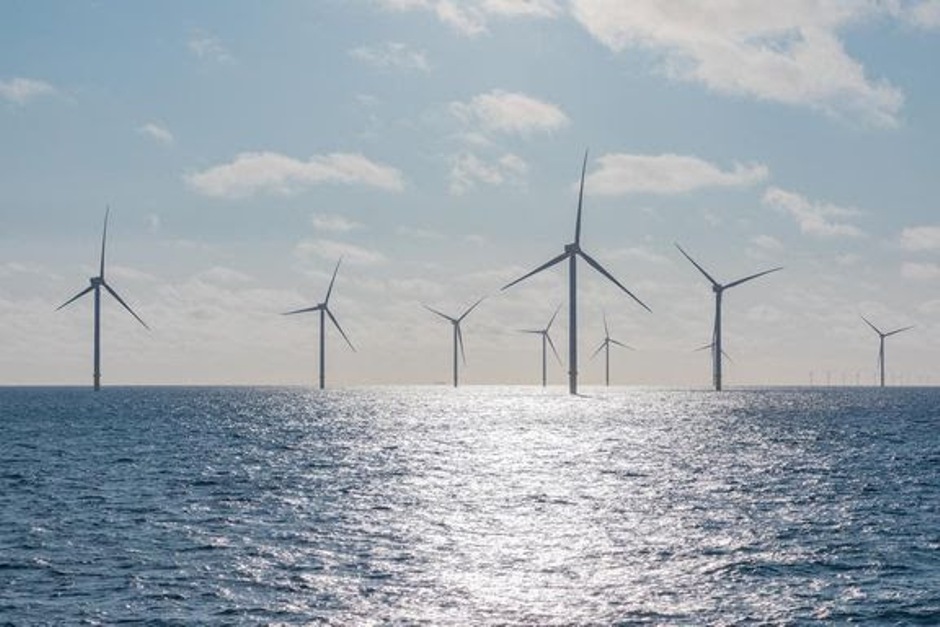
The UK Government has unveiled the results of Contracts for Difference (CfD) Allocation Round 7 (AR7), delivering a record‑breaking outcome for offshore wind capacity and marking a major milestone in the nation’s renewable energy transition. This latest CfD auction, held under the Department for Energy Security and Net Zero (DESNZ), surpasses previous rounds in scale and ambition and positions the UK closer to its 2030 clean power goals.
Record New Offshore Wind Capacity Secured
In AR7 Britain has secured 8.4 gigawatts (GW) of new offshore wind capacity, making it the largest offshore wind procurement in UK and European history.
England and Wales: 6.9 GW of fixed‑bottom offshore wind projects have been awarded contracts at a strike price of £91.20 per megawatt‑hour (MWh) (in 2024 price terms).
Scotland: 1.38 GW of capacity secured at £89.49/MWh (in 2024 prices).
Combined, these new contracts reflect the strongest market confidence in offshore wind since the scheme’s inception and significantly outstrip the previous AR6 results.
These strike prices indicate significant cost reductions compared with traditional fossil fuel generation and demonstrate that offshore wind in the UK can deliver clean power at competitive rates.
Increasing UK Offshore Wind Capacity to 36.5 GW
When built and commissioned, the projects awarded in AR7 will bring the UK’s total offshore wind capacity to approximately 36.5 GW. This figure includes all projects that are already supported through earlier CfD rounds and those under construction.
This expansion is a cornerstone of the UK’s renewable strategy. The government’s broader ambition is to reach up to 50 GW of offshore wind capacity by 2030, including both fixed‑bottom and floating technologies.
Frankie Mayo, Senior Analyst at Ember said, “New projects announced today will protect millions of households from costly imported fossil gas for decades to come. With longer contracts and help for developers that invest in clean, homegrown supply chains, offshore wind anchors new manufacturing and jobs across Britain.”
Recent Ember analysis found that in just 25 years, British offshore wind has grown to supply nearly a fifth of power and employ around 40,000 people.
Clean Energy Goals and Economic Benefits
According to government communications, the AR7 result is set to deliver enough clean electricity to power the equivalent of over 12 million homes, reduce reliance on volatile fossil fuel prices, and unlock around £22 billion in private investment across the energy sector. It is also expected to support thousands of jobs across the UK, particularly in regions tied to offshore wind supply chains.
Energy Secretary Ed Miliband and government officials have framed this outcome as a pivotal step toward energy independence, cost stability, and a more resilient energy system, news report in The Guardian indicated.
Why AR7 Matters
The Contracts for Difference scheme has been central to the UK’s renewable expansion strategy since its launch in 2014. CfDs provide long‑term revenue certainty for developers by guaranteeing a fixed strike price over the contract period. When market prices are below the strike price, the government compensates the difference; if market prices exceed the strike price, the generator pays back revenue, protecting consumers, according to a news report in Financial Times.
AR7’s success builds on lessons from previous rounds, including AR6, which delivered significant growth in renewable capacity across multiple technologies such as solar and floating offshore wind.
Challenges and the Future of the UK Wind Sector
Despite the positive results, industry analysts caution that the rapid scale‑up also presents challenges, including grid integration, supply chain constraints, and the need to expand offshore transmission infrastructure in parallel with generation capacity. Nevertheless, AR7 underscores the UK’s leadership in offshore wind and validates investor confidence even amidst global cost pressures and logistical complexities, according to news report in The Times.
Conclusion
The UK Government’s announcement of new offshore wind projects through CfD Allocation Round 7 represents a landmark moment in the country’s clean energy transition. With record‑breaking capacity awarded, competitive strike prices, and strong economic backing, the UK is poised to make substantial progress toward a low‑carbon power system by 2030.
By delivering 36.5 GW of offshore wind capacity, fostering private investment, and supporting job creation across all nations of the UK, the AR7 results reaffirm offshore wind as a cornerstone of Britain’s energy future.
BABURAJAN KIZHAKEDATH