


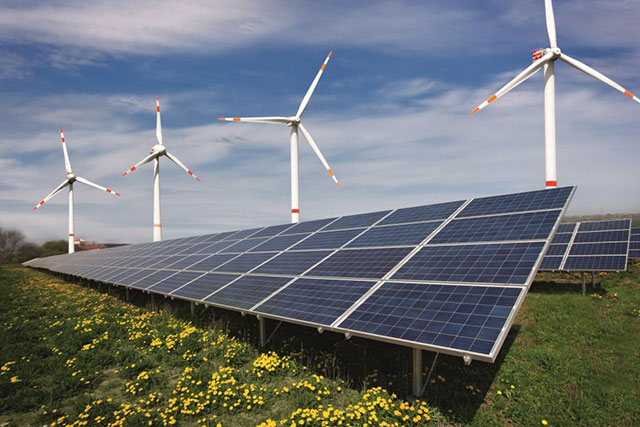
The CSIRO–Australian Energy Market Operator (AEMO) GenCost 2025-26 Report confirms that solar photovoltaic (PV) and onshore wind remain the country’s lowest-cost new-build electricity generation technologies.
However, IEEFA argues that assumptions on gas prices, coal financing costs and electricity market dynamics could significantly influence the report’s long-term conclusions.
Electricity Prices Expected to Ease Before Rising Again
Australia’s National Electricity Market has experienced major price swings in recent years. Average wholesale electricity prices climbed to approximately A$189/MWh during the 2022 global energy crisis before falling to around A$104/MWh in 2025, IEEFA report said.
Electricity futures suggest prices could decline further to between A$80/MWh and A$90/MWh by 2030 as more renewable generation, battery storage and transmission projects enter service. However, the report projects that replacing Australia’s ageing generation fleet will require all new electricity technologies to exceed A$100/MWh by 2050, highlighting the need for the most cost-effective generation mix.
Solar, Wind and Batteries Lead Australia’s Energy Transition
The report concludes that solar PV and onshore wind continue to offer the lowest-cost options for new electricity generation, supported by declining equipment prices, improved performance and growing deployment.
Battery storage is also becoming increasingly competitive. Falling lithium-ion battery costs, including price reductions of approximately 15 percent in recent years, are improving the economics of storing renewable electricity, reducing dependence on gas-fired peaking plants and strengthening grid reliability.
NoProgressToNetZero Scenario Draws Industry Attention
Among the report’s five scenarios, the NoProgressToNetZero pathway has attracted the greatest scrutiny.
Under this scenario, Australia’s electricity mix in 2050 would comprise approximately:
70 percent renewable energy.
19 percent natural gas.
11 percent coal.
Based on the report’s assumptions, this pathway delivers a system cost approximately 5 percent lower than the next least ambitious decarbonisation scenario. It is also the only scenario aligned with Australia’s target of achieving 82 percent renewable electricity by 2030 while retaining significant gas and coal generation through 2050.
Higher Gas Prices Could Eliminate the Cost Advantage
IEEFA argues that gas price assumptions play a critical role in determining the scenario’s apparent cost advantage.
According to the analysis, the NoProgressToNetZero pathway consumes approximately six times more natural gas than the StrongNetZero scenario.
The GenCost report assumes a gas price of A$13.4/GJ across all scenarios. However, updated ACIL Allen forecasts prepared for AEMO estimate average gas prices of approximately A$16.2/GJ, while CSIRO’s upper sensitivity case reaches A$17.4/GJ.
Applying the higher fuel prices increases the NoProgressToNetZero system cost to approximately A$128.5/MWh.
As a result:
The cost advantage over the WeakNetZero scenario falls from A$6.6/MWh to A$2.3/MWh.
Under higher gas price assumptions, the difference narrows to only A$0.6/MWh.
Electricity Decarbonisation Remains the Lowest-Cost Climate Option
The report and IEEFA analysis both highlight the importance of reducing emissions from electricity generation.
The NoProgressToNetZero scenario delivers an emissions intensity of approximately 0.20 tCO₂e/MWh, while the ModerateNetZero and StrongNetZero pathways reduce emissions intensity to between 0.05 tCO₂e/MWh and 0.02 tCO₂e/MWh.
According to IEEFA, cutting emissions in the electricity sector costs approximately one-third to one-half as much as achieving equivalent emissions reductions in other sectors of the economy, making electricity one of Australia’s most cost-effective decarbonisation opportunities.
Coal Financing Costs Remain a Major Uncertainty
Another key issue identified by IEEFA concerns financing assumptions.
GenCost applies a uniform Weighted Average Cost of Capital (WACC) of 7 percent across all generation technologies. However, research commissioned by AEMO estimates coal generation financing costs closer to 12 percent, with a likely range of 10 percent to 15 percent.
Under the 7 percent financing assumption, projected black coal generation costs range between A$107/MWh and A$182/MWh by 2050.
Increasing financing costs to 12 percent raises projected generation costs to between A$154/MWh and A$268/MWh, significantly reducing coal’s competitiveness.
IEEFA Identifies Seven Key Caveats
IEEFA highlights seven major considerations that could materially influence the interpretation of the NoProgressToNetZero scenario:
Higher economy-wide decarbonisation costs resulting from slower electricity emissions reductions.
A static 2050 modelling framework.
Fixed fossil fuel price assumptions.
Coal financing costs that may underestimate investor risk.
Renewable energy modelling based on Australia’s most challenging weather year.
Limited treatment of global fuel price volatility.
Exclusion of wholesale electricity market dynamics, where gas-fired generators frequently set electricity prices.
According to IEEFA, these factors suggest the reported cost advantage of slower decarbonisation may be considerably smaller than initially indicated.
The GenCost 2025-26 Report was led by Paul Graham, Principal Research Scientist at CSIRO, with contributions from Jenny Hayward and James Foster.
The IEEFA review was prepared by Johanna Bowyer, Lead Analyst for Australian Electricity at IEEFA. Supporting analysis was undertaken by Dr. Dylan McConnell of the University of New South Wales, who re-ran CSIRO’s published model using updated fuel price and financing assumptions. Nicola Falcon, Executive General Manager – System Design at AEMO, also highlighted the importance of the GenCost framework in supporting Australia’s Integrated System Plan.
The combined findings reinforce that solar PV, onshore wind and battery storage continue to provide Australia’s lowest-cost pathway for new electricity generation. While the GenCost report projects wholesale electricity prices easing from A$189/MWh in 2022 to around A$104/MWh in 2025 and potentially A$80–90/MWh by 2030, the IEEFA analysis demonstrates that assumptions around A$13.4/GJ versus A$16.2–17.4/GJ gas prices, 7 percent versus 12 percent coal financing costs, and broader market dynamics can substantially alter long-term system costs. Together, the reports underscore the importance of transparent modelling and realistic economic assumptions as Australia works toward an affordable, reliable and low-emissions electricity system.
SHAFANA FAZAL