


The latest report from the Global Wind Energy Council (GWEC) highlights how accelerating wind and renewable energy deployment is critical for achieving global energy security, affordability, and climate goals. The analysis outlines a five-point action framework supported by strong data on market trends, investment needs, and policy priorities.
#1 Wind Energy Emerging as a Core Pillar of Energy Security
Wind power is positioned as a central solution to reduce dependence on fossil fuels and mitigate geopolitical energy risks. The report emphasizes that renewable energy sources, particularly wind, provide domestic, secure, and inexhaustible energy supply, helping countries shield themselves from price volatility and supply disruptions.
Globally, wind already supplies a meaningful share of electricity and supports energy independence while improving resilience against global crises.
#2 Urgent Need to Triple Renewable Capacity by 2030
The report aligns with global climate targets calling for a rapid scale-up of renewables. Current deployment levels are insufficient.
Global wind installations reached 117 GW annually, a record level
However, 320 GW per year is required by 2030 to meet climate goals
Total installed wind capacity has crossed 1 terawatt globally
This gap highlights the urgency of accelerating project development timelines and scaling investments significantly.
#3 Five-Point Action Plan to Accelerate Deployment
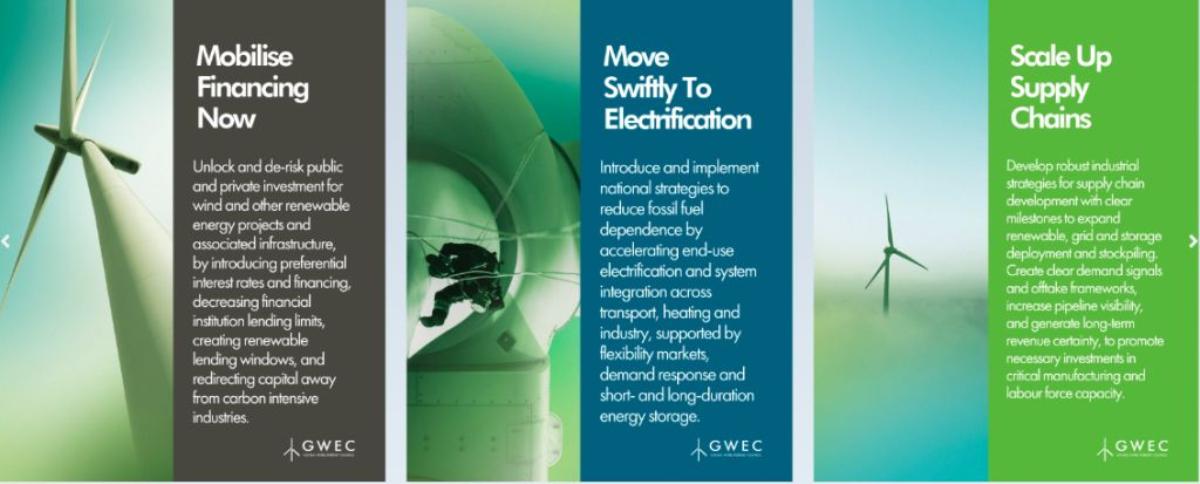
GWEC outlines five critical actions governments and industry must take to unlock growth:
Streamline permitting processes to reduce project delays
Expand and modernize grid infrastructure to integrate renewables
Improve auction and market design for better investment signals
Strengthen supply chains to avoid bottlenecks
Mobilize large-scale financing to support rapid expansion
These measures aim to remove structural barriers slowing down renewable energy adoption worldwide.
#4 Cost Advantage Strengthening the Case for Renewables
Renewables, especially wind, are now among the most cost-effective energy sources:
Around 91 percent of new renewable projects are cheaper than fossil fuels
Onshore wind remains one of the lowest-cost electricity sources globally
This cost competitiveness strengthens the economic argument for accelerating clean energy deployment, beyond environmental considerations.
#5 Supply Chain, Policy, and Investment Challenges Persist
Despite strong growth, the report flags several challenges:
Policy instability and regulatory delays impacting investments
Grid constraints and transmission bottlenecks
Supply chain disruptions and rising costs
Concentration of growth in a few major markets like China, the US, and Europe
Addressing these issues is essential to ensure balanced global growth and to unlock emerging markets.
Conclusion
The GWEC report makes it clear that wind and renewable energy are no longer optional but essential for achieving energy security in a volatile global environment. While record installations demonstrate strong momentum, bridging the gap to 2030 targets will require coordinated policy reforms, infrastructure investment, and faster deployment strategies across global markets.
BABURAJAN KIZHAKEDATH