


Zillow has accelerated its sustainability strategy in 2025 by surpassing its science-based climate targets, expanding renewable energy use, strengthening supplier decarbonization, and enhancing climate transparency for homebuyers.
The company’s latest Sustainability Report highlights significant progress in reducing greenhouse gas emissions, promoting responsible artificial intelligence, supporting affordable housing, and investing in employee development and community initiatives.
Sustainability governance strengthens ESG strategy
Zillow’s sustainability strategy is led by Brad Berning, Vice President of Strategic Affairs and Investor Relations, who serves as executive sponsor for ESG and sustainability reporting.
The Executive Sustainability Council oversees sustainability implementation across business operations, while the Nominating and Governance Committee of the Board of Directors provides oversight of climate strategy, ESG priorities, and sustainability governance.
Zillow exceeds science-based climate targets
Climate action remained Zillow’s most significant sustainability achievement during 2025.
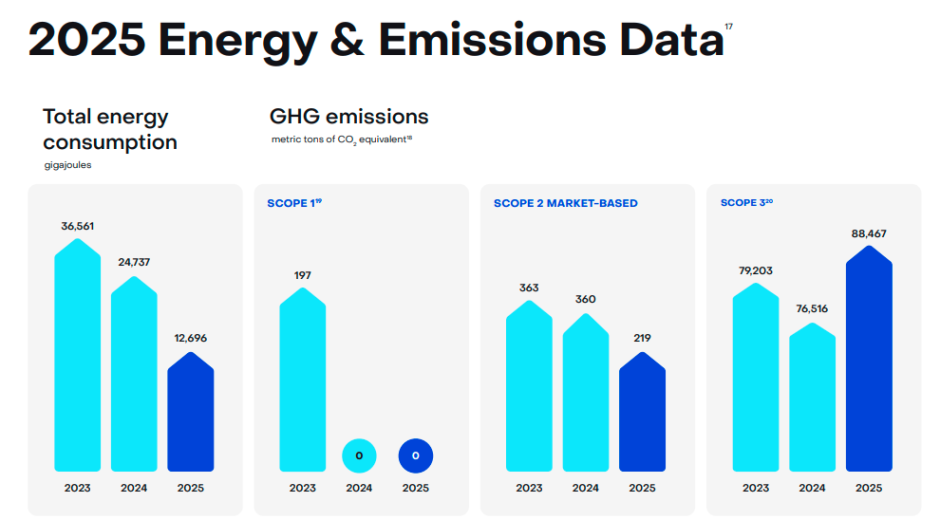
The company reduced Scope 1 and Scope 2 greenhouse gas emissions by 98 percent compared with its 2019 baseline, significantly exceeding its Science Based Targets initiative (SBTi) goal of achieving a 94 percent reduction by 2030, Zillow Sustainability Report 2025 said.
The achievement supports Zillow’s commitment to limiting global temperature increases to 1.5 degrees Celsius through science-based climate action.
Renewable energy supports operational decarbonization
Zillow purchased 7.3 million kilowatt-hours of Renewable Energy Certificates (RECs) during 2025.
The renewable electricity procurement matched 100 percent of electricity consumption across the company’s North American office operations as well as the estimated electricity used by employees working remotely.
These investments continue reducing the environmental footprint of Zillow’s operations while supporting its long-term clean energy strategy.
Supplier decarbonization gains momentum
Reducing value-chain emissions remains a major sustainability priority.
Zillow has committed to ensuring 75 percent of suppliers, measured by emissions, establish validated science-based emissions reduction targets by 2028.
Progress accelerated during 2025, with 46 percent of suppliers achieving verified science-based targets, compared with 33 percent in the previous year.
The supplier engagement program covers purchased goods, business services, capital equipment, and employee business travel.
Climate risk information helps homebuyers
Zillow continues integrating climate intelligence into its digital platform through its partnership with First Street.
Property listings now include five climate risk indicators covering:
Flood risk
Wildfire exposure
Extreme heat
Air quality
Wind and severe storm risk
According to the report, 80 percent of active homebuyers use these climate risk insights while searching for homes, helping consumers make more informed and resilient housing decisions.
Responsible AI improves housing accessibility
Technology remains central to Zillow’s sustainability strategy.
More than 3.6 million consumers have enrolled in the company’s BuyAbility affordability tool, enabling prospective homebuyers to better understand borrowing capacity and estimated monthly housing costs.
Since 2021, Zillow has connected more than 5 million prospective homebuyers with personalized down payment assistance resources, improving access to homeownership.
The company also became the first real estate platform to launch an integrated application within ChatGPT while implementing a Fair Housing Classifier to reduce algorithmic bias and support fair housing compliance.
Zillow further expanded its partnership with Esusu, enabling renters to strengthen their credit profiles through automated reporting of on-time rent payments.
Community investments expand housing support
Zillow continues supporting housing stability through strategic partnerships.
Working with Housing Connector, the company has helped more than 11,000 people secure stable housing since the partnership began in 2019, assisting individuals experiencing homelessness or housing insecurity.
During 2025, Zillow contributed US$1,538,086 through corporate cash and in-kind donations, while employees directed an additional US$400,040 to community organizations.
Combined corporate and employee contributions have exceeded US$15.5 million since 2017, demonstrating the company’s long-term commitment to community development.
Zillow also matches employee charitable donations and volunteer contributions up to US$1,000 annually for each employee and provides every new employee with a US$50 donation credit to support nonprofit organizations.
Employee engagement supports sustainability
Employee development remains a core component of Zillow’s ESG strategy.
During 2025, employees completed more than 84,000 hours of professional learning through Zillow University and other internal development programs.
The report also shows that 91 percent of surveyed employees would recommend Zillow as a workplace.
Meanwhile, 34 percent of the company’s U.S. workforce actively participates in one of Zillow’s nine Employee Resource Groups, strengthening inclusion, collaboration, and career development.
Sustainability outlook
Zillow’s 2025 Sustainability Report demonstrates continued progress in climate action, renewable energy adoption, supplier engagement, responsible AI, housing accessibility, employee development, and community investment.
With a 98 percent reduction in Scope 1 and Scope 2 emissions, 7.3 million kilowatt-hours of renewable energy procurement, 100 percent renewable electricity matching across North American offices and remote work, 75 percent supplier decarbonization target by 2028, expanded climate risk transparency, and more than US$15.5 million in community contributions since 2017, Zillow continues strengthening its position as a sustainability leader in the digital real estate industry.
SHAFANA FAZAL