


Telenor is accelerating its sustainability transformation by reducing greenhouse gas emissions, expanding renewable energy, deploying artificial intelligence to improve network efficiency, strengthening responsible sourcing, and advancing circular economy initiatives. Guided by Science Based Targets initiative (SBTi)-approved climate goals, the telecom operator is integrating sustainability across its operations while progressing toward its long-term 2045 net-zero commitment.
The company’s sustainability strategy is led by Rita Skjærvik, Executive Vice President of People, Sustainability and External Relations. Telenor said its long-term strategy focuses on “advancing the digital world while making it green, safe and for all.”
Greenhouse Gas Emissions Fall 32 Percent
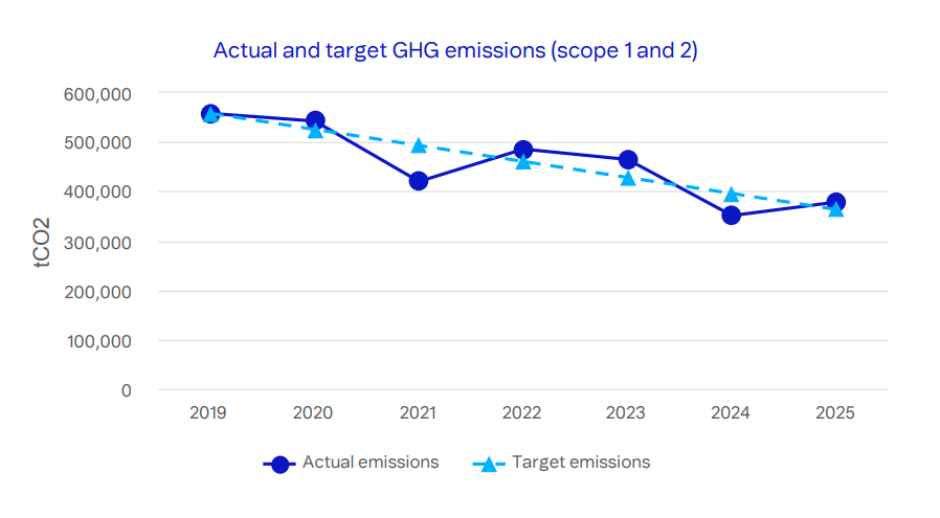
Telenor reported that its total greenhouse gas emissions have declined by 32 percent compared with its 2019 baseline, falling to approximately 1.37 billion kilograms of carbon dioxide equivalent (CO₂e). The reduction reflects portfolio optimization alongside ongoing emissions reduction initiatives across its global operations, Telenor sustainability report 2025 indicated.
Direct Scope 1 emissions totaled 102,974 metric tons, increasing slightly due to the use of backup diesel generators at remote network locations. Market-based Scope 2 emissions reached 275,143 metric tons, supported by higher renewable electricity procurement. The company said renewable electricity helped avoid approximately 190,529 metric tons of CO₂e compared with location-based electricity consumption.
Scope 3 emissions remained the largest contributor to Telenor’s climate footprint at approximately 1.1 million metric tons, accounting for more than 80 percent of total emissions. Purchased goods and investment-related activities continue to represent the largest sources of indirect emissions, making supplier engagement a key part of the company’s climate strategy.
Renewable Energy Powers More Than Half of Operations
Renewable electricity now supplies 56 percent of Telenor’s global electricity demand, helping reduce dependence on fossil fuel-based power and lowering operational emissions.
In Finland, the Palokangas wind farm generates approximately 85 gigawatt-hours of renewable electricity annually, supplying more than 80 percent of the electricity required for Telenor’s Finnish network infrastructure. The company also sources renewable electricity from Sweden’s Stor-Skälsjön wind farm.
Across Asia, Telenor has deployed more than 3,000 solar-powered telecommunications base stations, improving energy security in remote areas while reducing diesel consumption and lowering carbon emissions.
AI and 5G Improve Network Energy Efficiency
Artificial intelligence is becoming a central element of Telenor’s sustainability strategy. The company is deploying predictive generative AI within its Network Operations Centers to automate fault detection, optimize network traffic, improve energy utilization, and strengthen service reliability.
Telenor is also replacing legacy copper infrastructure with energy-efficient fiber broadband and standalone 5G networks, reducing long-term energy consumption while improving network performance. Cloud-based infrastructure and intelligent automation are further helping simplify operations and improve resource efficiency.
Science-Based Targets Guide Climate Action
Telenor’s climate roadmap is aligned with SBTi-approved emissions reduction targets. By 2030, the company aims to reduce absolute Scope 1 and Scope 2 emissions by 64 percent while lowering Scope 3 emissions by 28 percent.
Its Nordic operations continue progressing toward carbon-neutral operations through renewable electricity procurement, network modernization, and ongoing energy efficiency improvements.
As part of its circular economy strategy, Telenor plans to increase its mobile phone collection rate to 30 percent, up from the current level of approximately 14 percent, supporting greater reuse, refurbishment, and recycling of mobile devices.
Looking beyond 2030, the company has committed to achieving net-zero emissions across its entire value chain by 2045, prioritizing real emissions reductions with at least 90 percent mitigation before considering carbon offsets.
Responsible Procurement Supports Supply Chain Decarbonization
Supplier engagement remains a key component of Telenor’s environmental strategy. Approximately 68 percent of procurement spending is directed toward suppliers with validated Science Based Targets initiative commitments.
To strengthen sustainability across its supply chain, the company conducts more than 2,000 supplier sustainability audits each year, assessing environmental performance, governance standards, and ethical compliance.
Circular Economy and Digital Inclusion Strengthen ESG Performance
Telenor continues expanding circular economy initiatives that encourage customers to return used mobile phones for reuse, refurbishment, or responsible recycling. These programs reduce electronic waste, improve resource recovery, and lower demand for virgin raw materials.
The company has also delivered digital literacy training to more than 5 million people across emerging markets, helping improve access to digital services, education, and economic opportunities.
Telenor maintains more than 35 percent female representation in senior leadership, reinforcing its commitment to workplace diversity and inclusive leadership.
Sustainability-Linked Financing Supports ESG Goals
Telenor has embedded sustainability into its financial strategy through sustainability-linked bonds and syndicated credit facilities. These financing instruments link borrowing costs to predefined climate performance targets, strengthening accountability and integrating environmental performance into corporate financial decision-making. With greenhouse gas emissions down 32 percent, 56 percent renewable electricity usage, more than 3,000 solar-powered base stations, 85 GWh of annual wind power generation in Finland, and ambitious 2030 and 2045 climate targets, Telenor continues to strengthen its position as a sustainability-focused telecom operator.
SHAFANA FAZAL