


Sonoco has accelerated its sustainability agenda in 2025 through science-based climate targets, large-scale renewable energy investments, operational efficiency projects, and circular economy initiatives. Guided by the Science Based Targets initiative (SBTi), the global packaging company is pursuing long-term decarbonization while strengthening renewable energy sourcing, reducing greenhouse gas emissions, improving water stewardship, and expanding lifecycle assessments across its operations.
Science-Based Climate Strategy Supports Net Zero Ambitions
Climate strategy of Sonoco, which posted annual sales of $7.5 billion in 2025, is built around reducing operational and value chain emissions through measurable science-based targets. The company aims to reduce absolute Scope 1 and Scope 2 greenhouse gas emissions by 25 percent by 2030 using a 2020 baseline, while targeting a 13.5 percent reduction in Scope 3 emissions by 2030 from a 2019 baseline. During 2025, Sonoco began revalidating its climate targets to align with a 1.5°C pathway under the Science Based Targets initiative while continuing implementation of its Climate Transition Plan to achieve long-term net zero greenhouse gas emissions.
Within its Metal Packaging EMEA business, Sonoco has established an even more ambitious decarbonization roadmap, targeting a 50 percent emissions reduction by 2030 and net zero emissions by 2050. The division has already reduced emissions by more than 26 percent by 2025. The company is also targeting a 50 percent reduction in volatile organic compound emissions by 2030 through cleaner manufacturing technologies and improved process efficiency, R. Howard Coker, President and CEO of Sonoco, said.
Renewable Energy Expansion Accelerates Decarbonization
Renewable energy remained one of Sonoco’s biggest sustainability achievements during 2025. Total renewable energy consumption reached 6,632,579 MMBtu, while solar energy increased by 40,295 MMBtu and overall year-over-year energy reduction totaled 1,097,016 MMBtu, Scott Byrne, Vice President of Sustainability and Industry Affairs at Sonoco, said.
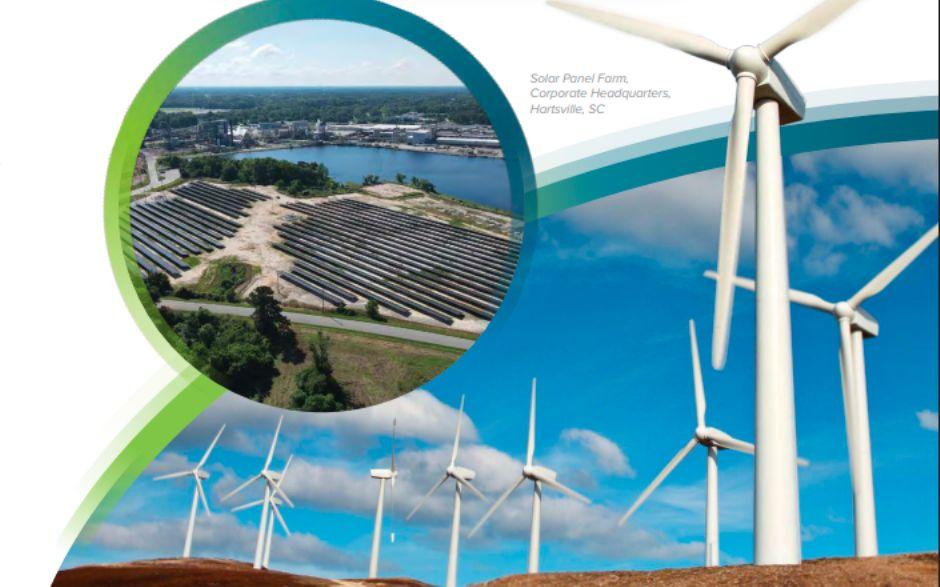
The company signed a 15-year Virtual Power Purchase Agreement with ENGIE North America supporting the 270 MW Big Sampson Wind Project in Texas. The project includes 60 wind turbines capable of supplying renewable electricity to approximately 130,000 homes. Sonoco secured approximately 140 MW, representing 52 percent of the project’s total capacity.
Renewable Energy Credits generated through the agreement are expected to cover about 83 percent of Sonoco’s U.S. electricity consumption while reducing annual carbon emissions by approximately 19 percent. Sonoco’s share of the project is projected to generate approximately 500,000 MWh of renewable electricity each year and produced 112,685 MWh during its first three months of operation.
Solar energy investments also expanded across the company’s manufacturing network. The Hartsville, South Carolina solar installation is expected to generate approximately 7.5 million kWh annually. Solar projects at the corporate headquarters are projected to reduce greenhouse gas emissions by 2,276 metric tons of CO₂e, while the Cirie, Italy installation is expected to reduce emissions by another 230 metric tons of CO₂e. Sonoco now operates six facilities equipped with solar panel installations worldwide.
Energy Efficiency Projects Reduce Emissions Across Manufacturing
Operational improvements continued to deliver measurable climate benefits. Sustainability projects completed during 2025 reduced greenhouse gas emissions by approximately 15,000 metric tons of CO₂e through energy efficiency upgrades, equipment modernization, and process optimization.
Compressed air upgrades at four manufacturing facilities reduced electricity consumption by 2,846,518 kWh annually while lowering emissions by 1,334 metric tons of CO₂e each year.
Additional facility improvements include:
Hartsville, South Carolina compressed air project saving 1,265,584 kWh annually while reducing emissions by 333 metric tons of CO₂e.
Forest Park, Georgia project saving 267,191 kWh annually.
Santa Clara, Mexico project saving 568,986 kWh annually.
Winchester, Virginia project saving 744,757 kWh annually while reducing emissions by 633 metric tons of CO₂e.
Sonoco also implemented regenerative braking technology at its Cali, Colombia paper mill, generating approximately 675,976 kWh of reusable electricity annually. To coordinate these initiatives globally, the company established a Global Energy Council responsible for driving enterprise-wide energy efficiency, LED lighting upgrades, biogas utilization, and industrial optimization programs.
Renewable Natural Gas and Biogas Projects Support Decarbonization
Beyond renewable electricity, Sonoco is expanding renewable fuel use through wastewater treatment and methane recovery projects.
The Hartsville wastewater treatment facility captures methane and converts it into renewable natural gas. Similar methane capture systems in Subang, Indonesia, and Cirie, Italy utilize recovered biogas to fuel boiler operations, replacing conventional natural gas while reducing methane emissions.
A new wastewater treatment system under development in Milwaukee will incorporate biogas capture and combustion technology to further reduce emissions and improve wastewater treatment performance.
Circular Economy and Life Cycle Assessments Advance Sustainable Packaging
Circular economy principles remain central to Sonoco’s sustainability strategy. During 2025, the company completed 331 Life Cycle Assessments and product carbon footprint studies to evaluate environmental impacts across raw materials, manufacturing, transportation, product use, and end-of-life recycling.
Sonoco also launched the automated SonoCO₂ platform across its global Tubes and Cores operations, enabling faster carbon footprint calculations and providing customers with improved environmental reporting capabilities. The company aims to automate 75 percent of its carbon footprint assessment capacity by 2030.
Environmental Management and Water Stewardship
Sonoco strengthened environmental governance across its manufacturing network during 2025.
The company now operates:
50 global sites certified to ISO 14001 Environmental Management Systems.
10 facilities certified to ISO 50001 Energy Management Systems.
52 sites audited during 2025.
96 percent of targeted sites completed environmental self-assessments.
Water stewardship also remains a major sustainability priority. Sonoco plans to reduce water consumption by 3 percent by 2030 and 5 percent by 2040 while lowering water intensity from 12.8 m³ per ton to 12.3 m³ per ton by 2040.
Water risk assessments have now been completed across 100 percent of the company’s paper mills, representing more than 90 percent of Sonoco’s global water consumption. Current water intensity of 12.8 m³ per ton remains significantly below the paper industry average of approximately 20 m³ per ton.
CDP Recognition Demonstrates Sustainability Progress
Sonoco continued to strengthen its environmental performance through external benchmarking. During 2025, the company achieved a CDP rating of “B” across Climate, Water, and Forests, reflecting ongoing progress in climate management, emissions reduction, and natural resource stewardship.
Outlook
Sonoco’s 2025 Sustainability Report highlights substantial progress toward long-term decarbonization through science-based climate targets, renewable energy expansion, energy efficiency investments, circular economy initiatives, and improved environmental management. Supported by a 15-year wind power agreement, expanded solar installations, renewable natural gas projects, 331 life cycle assessments, and approximately 15,000 metric tons of CO₂e emissions reductions during 2025, the company is building a scalable pathway toward its 2030 climate goals and long-term net zero ambitions while strengthening sustainable packaging solutions for customers worldwide.
SHAFANA FAZAL