


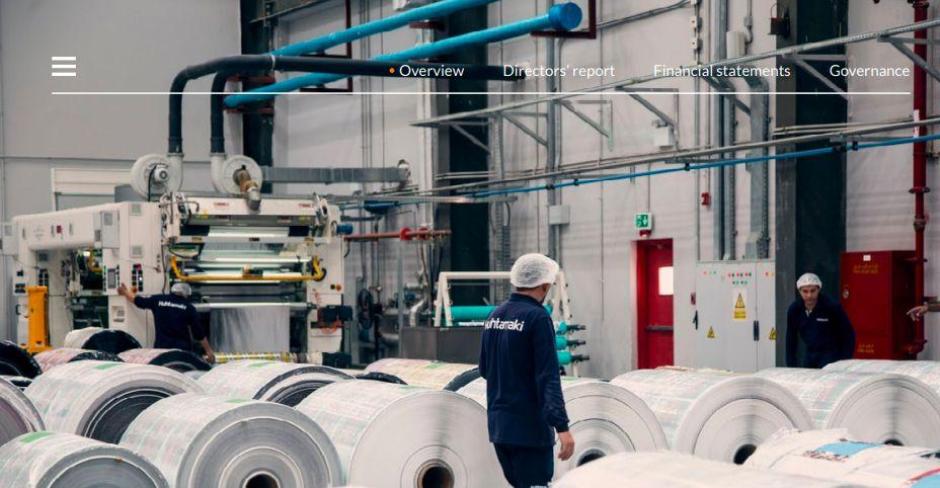
Huhtamaki has accelerated its sustainability strategy during 2025 by strengthening ESG governance, expanding renewable energy, improving energy efficiency, reducing greenhouse gas emissions, conserving water, and advancing circular packaging innovation.
The €3.96 billion global packaging company continued embedding sustainability across its business operations while aligning its climate strategy with a 1.5°C pathway and progressing toward its 2030 sustainability commitments.
Stronger ESG Governance Supports Long-Term Sustainability
Huhtamaki’s sustainability responsibilities at the Group level were led by Sami Pauni, Executive Vice President, Sustainability, Corporate Affairs and Legal. Riikka Tieaho was appointed Executive Vice President, Sustainability, Corporate Affairs & Legal and joined the Global Executive Team.
Net Zero Strategy Targets Scope 1, Scope 2 and Scope 3 Emissions
Huhtamaki’s climate strategy addresses Scope 1, Scope 2 and Scope 3 greenhouse gas emissions across its manufacturing operations as well as upstream and downstream value chains. The company prepares its emissions inventory in accordance with the Greenhouse Gas Protocol, with climate ambitions for Scope 1 and Scope 2 aligned with a 1.5°C pathway, Huhtamaki Sustainability Report 2025 indicated.
The company’s greenhouse gas reporting expanded during 2025 to include one newly acquired manufacturing site, which has been incorporated into emissions reporting from May 2025 onward, improving transparency across its global operations.
Rooftop Solar Project Expands Renewable Energy Use
Huhtamaki continued investing in renewable energy by commissioning a rooftop solar photovoltaic installation at its Bangkok, Thailand manufacturing facility during 2025.
The solar power system is expected to generate approximately 4.5 percent of the site’s electricity demand, helping reduce carbon dioxide emissions while lowering electricity costs and increasing the share of renewable energy used in manufacturing operations.
Cairo Plant Delivers Major Energy Efficiency Gains
One of Huhtamaki’s most significant energy efficiency projects during 2025 was completed at its Cairo, Egypt manufacturing facility.
During Q2 2025, the company installed a new water-cooled chiller that improved cooling performance by 48.5 percent.
The project reduced energy consumption from 1.4 kW to 0.72 kW per ton of refrigeration, while providing a cooling capacity of 700 tons.
The initiative is expected to deliver electricity savings of approximately 2,900 MWh by the end of 2025, increasing to around 5,000 MWh during 2026.
The project is also expected to reduce greenhouse gas emissions by approximately 2,040 metric tons of CO₂e annually, demonstrating how operational upgrades can simultaneously improve productivity, reduce energy use and lower carbon emissions.
Water Conservation and Zero Waste Progress
Huhtamaki continued improving resource efficiency across its manufacturing network.
At its Marion, Indiana manufacturing facility, the company achieved zero waste to landfill while reducing water consumption by 55 percent through the installation of an automated humidification system.
The initiative highlights Huhtamaki’s focus on reducing waste generation, conserving water resources and improving operational sustainability.
Circular Packaging Innovation Reduces Plastic Use
Sustainable product innovation remained one of the company’s strongest environmental priorities during 2025.
Huhtamaki introduced next-generation hot and cold paper cups containing less than 5 percent polymer coating, significantly lowering plastic content while maintaining product performance and improving recyclability.
The company also expanded its dairy packaging portfolio with ProDairy, a recyclable single-coated paper cup containing less than 10 percent plastic. The innovative barrier technology enables improved recyclability while meeting the performance requirements of yogurt and dairy packaging.
Further strengthening its sustainable packaging portfolio, Huhtamaki launched recyclable and home-compostable ice cream cups featuring proprietary bio-based coatings that provide renewable alternatives to conventional fossil-based materials.
These innovations support the company’s broader circular economy strategy by reducing virgin fossil-based plastic use while increasing compatibility with existing recycling and composting systems.
Renewable and Recycled Materials Support Circular Economy
Huhtamaki continues prioritizing renewable and recycled raw materials across product development.
Its innovation strategy focuses on increasing the use of fiber-based materials, reducing dependence on virgin fossil-based plastics, improving recyclability, enhancing compostability and minimizing packaging waste throughout product life cycles.
By designing packaging that remains in circulation longer and is easier to recover after use, the company is helping customers meet evolving environmental regulations while supporting the global transition toward a circular economy.
Sustainability Center of Expertise Drives Global Implementation
Huhtamaki’s Sustainability Center of Expertise, led by Rahul Nene, plays a central role in implementing sustainability initiatives across the company’s worldwide manufacturing network.
The center provides technical guidance, coordinates sustainability performance reviews, strengthens ESG reporting, supports transparent environmental disclosures and promotes consistent implementation of sustainability best practices across global operations.
Rather than managing sustainability solely through centralized functions, Huhtamaki has integrated environmental performance into individual business segments, allowing manufacturing, procurement, research and development, product design and commercial teams to take greater ownership of climate performance, emissions reduction, resource efficiency and circularity.
Transparent Sustainability Reporting Covers 71 Manufacturing Sites
Huhtamaki prepared its 2025 Sustainability Statement in accordance with the European Sustainability Reporting Standards (ESRS) and the EU Taxonomy Regulation, strengthening transparency and comparability of environmental disclosures.
Environmental reporting covers 71 manufacturing sites worldwide, including:
19 Foodservice Packaging manufacturing sites
22 Flexible Packaging manufacturing sites
19 North America manufacturing sites
11 Fiber Packaging manufacturing sites
The inclusion of one manufacturing site acquired during 2025, beginning with reporting from May 2025, further improves the completeness of the company’s greenhouse gas disclosures.
Huhtamaki Advances Toward 2030 Sustainability Goals
Huhtamaki’s sustainability achievements during 2025 demonstrate continued progress in climate action, renewable energy deployment, operational efficiency and circular packaging innovation.
From generating 4.5 percent of electricity through rooftop solar in Thailand to improving cooling efficiency by 48.5 percent in Egypt, reducing energy consumption from 1.4 kW to 0.72 kW per ton of refrigeration, delivering projected electricity savings of 2,900 MWh in 2025 and 5,000 MWh in 2026, cutting emissions by 2,040 metric tons of CO₂e annually, lowering water consumption by 55 percent, achieving zero waste to landfill, introducing paper cups with less than 5 percent polymer coating and dairy cups with less than 10 percent plastic, Huhtamaki continues to translate its sustainability commitments into measurable environmental outcomes.
Supported by robust ESG governance, science-based climate ambitions covering Scope 1, Scope 2 and Scope 3 emissions, transparent reporting across 71 manufacturing sites, and investments in renewable energy and circular product innovation, Huhtamaki is strengthening its contribution to the global transition toward a low-carbon, resource-efficient and circular economy while advancing its 2030 sustainability objectives.
SHAFANA FAZAL