


Hitachi Energy and Hitachi have outlined sustainability, renewable energy, and decarbonization strategies in their Sustainability Report 2025, highlighting major progress in emissions reduction, clean energy infrastructure, digital transformation, and sustainable investment during fiscal 2024.
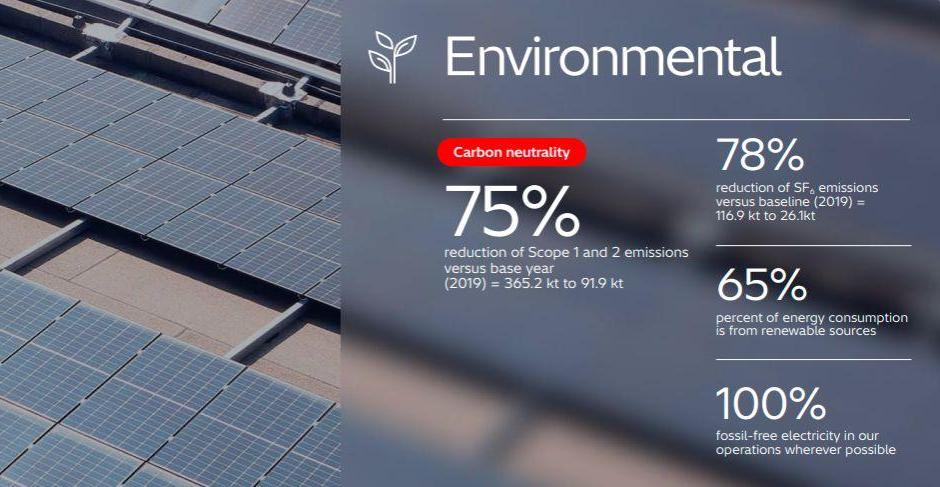
Hitachi Energy reported a 75 percent reduction in Scope 1 and Scope 2 greenhouse gas emissions compared with its 2019 baseline, cutting emissions from 365.2 kilotons to 91.9 kilotons. The company also achieved a 32 percent reduction in Scope 3 emissions intensity and a 78 percent reduction in SF6 emissions, reducing emissions from 116.9 kilotons to 26.1 kilotons.
Renewable energy adoption continues to expand across operations. Hitachi Energy now sources 65 percent of its energy consumption from renewable energy while operating with 100 percent fossil-free electricity wherever possible. More than 100 environmental improvement projects were completed or initiated during FY24.
The company has strengthened its circular economy strategy, achieving zero-waste-to-landfill status at more than 100 locations worldwide. Landfill disposal of non-hazardous waste remains below 5 percent, supported by eco-design principles and lifecycle assessments embedded throughout product development and manufacturing processes.
Hitachi Energy plays a critical role in global renewable energy integration. The company has connected more than 150 GW of HVDC transmission capacity worldwide and serves 50 percent of the world’s top 250 electric utilities. Its installed asset base exceeds $230 billion across more than 140 countries.
According to the company, global electricity demand increased by 4 percent during 2024, equivalent to adding a country the size of Japan to the world’s power grid. Electricity demand is projected to rise by 6 percent annually through 2035, driven by electrification, data centers, transportation, industrial modernization, and renewable energy deployment.
To support the energy transition, Hitachi Energy invests more than 4 percent of annual revenue in research and development. With annual revenue of approximately $16 billion, the company’s R&D spending exceeds $640 million annually. More than 2,600 R&D experts across over 20 countries are focused on developing next-generation grid, electrification, and sustainability technologies.
Innovation remains central to the company’s sustainability strategy. Hitachi Energy holds approximately 2,500 patent families aligned with its sustainability objectives, covering smart grids, renewable energy integration, greenhouse gas reduction technologies, and advanced manufacturing.
Several flagship renewable energy projects demonstrate the environmental impact of Hitachi Energy’s technology portfolio. Australia’s Golden Plains Wind Farm is expected to generate 4,000 GWh of renewable electricity annually, supply power to more than 765,000 homes, and avoid 4.5 million metric tons of CO2 emissions each year. In Saudi Arabia, the Al-Khushaybi and Al Muwayh solar projects are expected to offset nearly 3.5 million metric tons of CO2 emissions annually. Meanwhile, Lithuania’s rail electrification project is projected to reduce emissions by 150,000 metric tons annually while lowering operating costs by 40 percent.
The company’s EconiQ portfolio of eco-efficient products is helping utilities reduce greenhouse gas emissions. Its SF6-free circuit breaker technology reduces CO2-equivalent emissions from insulating gases by 99.3 percent compared with conventional alternatives. Hitachi Energy estimates that digitalization of power systems could lower global power sector emissions by up to 20 percent through improved infrastructure planning, predictive maintenance, and optimized grid operations.
Hitachi operates through 995 companies and approximately 280,000 employees worldwide. Around 61 percent of revenue is generated outside Japan, while 60 percent of employees are located overseas. The company manages sustainability initiatives across 619 high environmental load production and business sites under its PLEDGES ESG framework covering FY2025-FY2027.
Hitachi has established long-term climate targets that include achieving 100 percent carbon neutrality for Scope 1 and Scope 2 emissions by FY2030 and net-zero greenhouse gas emissions across its entire value chain by FY2050, including Scope 3 emissions.
Environmental performance during FY2024 showed an 81 percent reduction in CO2 emissions from factories and business sites compared with FY2010 levels. Through customer solutions such as smart grids, digital industrial systems, and energy-efficient infrastructure, Hitachi enabled an average of 142 million metric tons of avoided CO2 emissions annually across FY2022-FY2024. Product efficiency improved as CO2 emissions per unit of output declined by 14 percent versus FY2010. Circular economy initiatives also expanded, with 128 sites achieving zero-landfill status.
Human capital remains a key pillar of sustainability. Hitachi expanded its global digital workforce to 107,000 employees, supporting growth in artificial intelligence, data analytics, industrial IoT, and smart infrastructure. Employee engagement reached 71.5 points, while women accounted for 15.9 percent of executive and corporate officer positions. Non-Japanese executives represented 26.1 percent of leadership roles as of June 2025.
Digital transformation continues to drive business growth through Hitachi’s Lumada platform, which combines artificial intelligence, industrial IoT, and data analytics solutions. Lumada revenue increased 14 percent year over year and contributed 27 percent of total consolidated revenue, reaching ¥9,783.3 billion in FY2024.
Hitachi is also increasing investment in sustainable finance, using green bonds and sustainability-linked loans to fund renewable energy integration, smart grids, industrial automation, and electrified transportation projects. Sustainability disclosures are independently verified by KPMG AZSA Sustainability under ISAE 3000 and ISAE 3410 standards, ensuring transparency and accountability.
Through its Inspire 2027 strategy, Hitachi is integrating sustainability, digital innovation, renewable energy, and infrastructure modernization into a unified growth model designed to accelerate global decarbonization while delivering long-term business value.
SHAFANA FAZAL