


Antofagasta strengthened its environmental, social, and governance (ESG) performance in 2025 by expanding renewable electricity, advancing its decarbonization roadmap, improving water stewardship, and reinforcing responsible mining standards.
The copper miner continued investing in climate resilience, clean energy, biodiversity, workforce safety, and community development while supporting the global energy transition through responsibly produced copper, Antofagasta Sustainability Report 2025 indicated.
“We advanced energy-efficiency initiatives and continued piloting emissions-reduction technologies, including the trolley-assist system and other electrification and advanced automation initiatives,” Ivan Arriagada, Chief Executive Officer of Antofagasta, said.
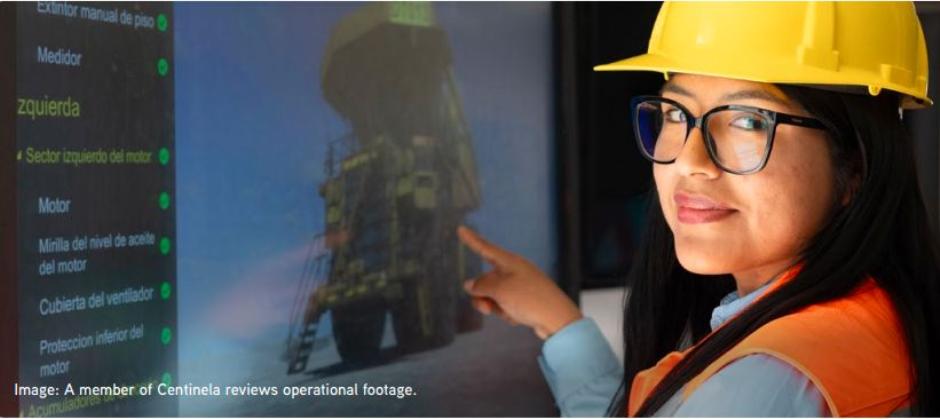
Renewable electricity remained a cornerstone of Antofagasta’s climate strategy. The company supplied 100 percent renewable electricity across all mining operations through contracted clean energy, while its corporate offices achieved 99.6 percent renewable electricity usage. The transition to renewable power reduced greenhouse gas emissions by more than 766,000 tonnes of carbon dioxide equivalent annually. The Centinela Second Concentrator Project, scheduled for completion in 2027, will operate using 100 percent renewable energy and sea water, eliminating freshwater consumption during processing. Antofagasta also expanded fleet electrification by deploying 50 electric pickup trucks at the Centinela mine and continued testing trolley-assist systems, automation, electrification technologies, and machine learning to improve energy efficiency.
Antofagasta continues to pursue its long-term climate ambitions with a commitment to achieve carbon neutrality by 2050. The company aims to reduce combined Scope 1 and Scope 2 greenhouse gas emissions by 50 percent by 2035 from a 2020 baseline and lower Scope 3 emissions by 10 percent by 2030 using a 2022 no-action baseline. During 2025, Mining Division emissions intensity was 1.91 tonnes of CO₂e per tonne of copper produced, compared with 1.75 tonnes of CO₂e per tonne in 2024, reflecting the impact of renewable electricity, operational efficiency initiatives, and ongoing electrification.
Water stewardship remained central to Antofagasta’s sustainability strategy. Company-wide water recirculation increased to 84 percent, compared with 83 percent in 2024. Individual operations achieved water recirculation rates of 80 percent at Los Pelambres, 82 percent at Centinela, 89 percent at Antucoya, and 94 percent at Zaldívar. Total water withdrawals across the Mining Division reached 93.2 gigaliters during the year. The company continued expanding desalination infrastructure by increasing Los Pelambres’ desalination capacity from 400 litres per second to 800 litres per second, while Zaldívar secured environmental approval for its water transition project that will replace continental water with sea water or third-party supply, extending mine operations through 2051.
Antofagasta further strengthened responsible environmental management through biodiversity conservation and circular economy initiatives. The company protected 27,808 hectares of biodiversity, including four natural sanctuaries, while all mining operations retained 100 percent The Copper Mark certification. The company also achieved 100 percent compliance with the Global Industry Standard on Tailings Management, reinforcing global best practices in tailings safety. Circular economy initiatives included an in-pit tailings disposal pilot at Centinela, a tyre retreading programme at Los Pelambres, and copper dust recovery systems designed to improve resource efficiency and reduce waste.
Energy efficiency initiatives continued across operations. Energy intensity measured 37 GJ/tCu at Los Pelambres, 58 GJ/tCu at Centinela, 41 GJ/tCu at Antucoya, 49 GJ/tCu at Zaldívar, and 0.17 GJ/tCu transported across FCAB’s rail transport operations. FCAB also completed Latin America’s first green hydrogen-powered freight locomotive pilot on 20 November 2025, using a hybrid hydrogen-battery system that emits only water vapour, marking another milestone in low-carbon mining logistics.
Health and safety remained a top operational priority. Antofagasta delivered its fourth consecutive fatality-free year, supported by comprehensive risk management across operations and major construction projects involving more than 18,000 contractors. The company recorded a Lost Time Injury Frequency Rate (LTIFR) of 0.58, while construction activities achieved an even lower 0.47. High-potential incidents declined to 20, from 21 in 2024, reflecting continued improvements in proactive safety management.
The company also advanced workforce diversity and local economic development. Female representation in the workforce reached 30.0 percent, up significantly from 8.8 percent in 2018. Local employment accounted for 39 percent of the workforce at the Los Pelambres Growth Enabling Projects and 29 percent at the Centinela Second Concentrator Project. More than 140 social programmes were delivered in partnership with municipalities and Indigenous communities, supported by $63 million in social investment, compared with $49 million in 2024. Antofagasta also worked with more than 2,000 local suppliers, while over 95 percent of procurement spending by value remained within Chile, strengthening regional economic development.
Capital investment accelerated alongside sustainability initiatives. Total capital expenditure reached $3.7 billion in 2025, compared with $2.4 billion in the previous year. This included $1.68 billion for growth projects, $1.22 billion in sustaining capital expenditure, and $784.7 million for mine development. The company’s Competitiveness Programme also generated $115 million in productivity improvements and operational savings, demonstrating that sustainability investments continue to deliver both environmental and financial benefits.
Alejandra Vial, Vice President of Sustainability, highlighted the importance of responsible copper production, stating: “With this recertification, we are demonstrating that we produce copper, which is critical for the energy transition, with high standards in sustainability. In turn, this helps us to fulfil our purpose of developing mining for a better future.”
Antofagasta’s 2025 sustainability performance demonstrates measurable progress across renewable energy, emissions reduction, water conservation, biodiversity protection, responsible mining governance, workplace safety, and community investment. Backed by 100 percent renewable electricity across its mining operations, ambitious carbon reduction targets, expanded desalination capacity, global sustainability certifications, and record investment in sustainable growth, the company continues to strengthen its position as a leader in responsible copper production while supporting the global transition to a low-carbon economy.
SHAFANA FAZAL