


Indonesia is advancing an ambitious 100GW solar plus battery energy storage system (BESS) program to replace diesel-based power generation, reduce electricity costs, and strengthen long-term energy security across its vast archipelago. The initiative marks a structural shift in the country’s energy strategy, as policymakers and investors increasingly prioritize renewable energy over costly imported fuels.
The recent analysis from the Institute for Energy Economics and Financial Analysis (IEEFA) indicates that large-scale deployment of solar and storage can significantly lower generation costs while reducing dependence on imported fossil fuels.
Diesel reliance drives structural cost challenges
Diesel power generation continues to play a critical role in Indonesia’s energy mix, particularly in remote and island regions with limited grid connectivity. While it has supported electrification, it remains one of the most expensive sources of power.
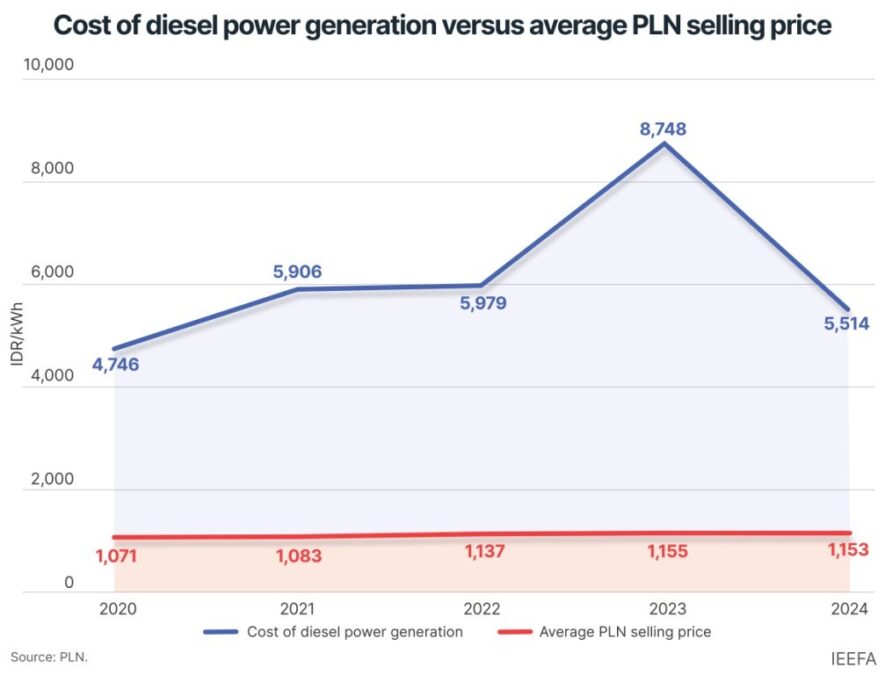
IEEFA estimates that diesel-based electricity generation costs range between $0.29 and $0.65 per kWh, far higher than renewable alternatives. Indonesia also spends more than $2 billion annually on diesel imports, exposing the power sector to global oil price volatility and supply disruptions, Mutya Yustika, Research & Engagement Lead, Indonesia Energy Transition at IEEFA, said.
Efforts to mitigate these costs include expanding biodiesel blending from B40 toward a planned B50 mandate. However, biodiesel remains relatively expensive and may reduce engine efficiency in certain cases. Continued reliance on imported diesel further increases fiscal pressure, requiring higher subsidies to maintain affordability.
Solar plus storage emerges as cost-effective alternative
Solar PV combined with battery storage is emerging as a more competitive and scalable solution. Utility-scale solar generation costs have declined to around $0.04 to $0.06 per kWh, while solar plus BESS systems can deliver electricity at $0.08 to $0.20 per kWh, depending on project configuration.
These systems are particularly effective in remote regions, where diesel transportation significantly increases costs. Battery storage enhances reliability by ensuring power availability beyond daylight hours, making solar a viable replacement for diesel-based generation.
Initial 13GW rollout targets diesel replacement
Indonesia’s roadmap includes an initial deployment of about 13GW of solar plus storage capacity aimed at replacing approximately 5,200 diesel power plants. This phased rollout is part of a broader de-dieselization strategy to modernize the energy system, reduce fuel imports, and expand electricity access in underserved regions.
Data from Perusahaan Listrik Negara shows that diesel generation costs have consistently exceeded regulated electricity tariffs, highlighting the scale of subsidies required and reinforcing the economic case for accelerating renewable deployment.
Investment activity accelerates across solar ecosystem
Indonesia’s solar expansion is supported by a growing ecosystem of domestic and international companies investing across project development, manufacturing, and financing.
SUN Energy is a leading player in the commercial and industrial rooftop segment, focusing on solar leasing models and digital energy solutions to scale adoption. Its affiliated company, Energi Mitra Investama, has attracted foreign investment from Sojitz Corporation through a joint venture to expand rooftop solar and related energy services.
Emerging developers such as Investasi Hijau Selaras are also gaining traction, supported by funding from regional climate-focused investors to expand distributed solar capacity.
Established domestic firm Surya Energi Indotama continues to scale utility-scale and industrial solar deployment, while ATW Solar Indonesia is investing in vertically integrated operations, including equipment distribution and leasing models to accelerate adoption.
Companies such as Solarion are focusing on innovative financing structures, including zero upfront cost installations, to improve accessibility for commercial and residential users.
On the manufacturing side, Apollo Solar Indonesia is investing in domestic module production, with a 500 MW facility in Batam and plans to expand capacity toward 3 GW, supporting localization of the solar supply chain.
Global investors target large-scale renewable opportunities
International energy companies are increasingly entering Indonesia’s solar market. TotalEnergies and Masdar have formed a $2.2 billion joint venture to develop renewable energy assets across Asia, including Indonesia.
Meanwhile, Perusahaan Listrik Negara is investing in utility-scale projects such as floating solar plants, supporting the government’s long-term renewable capacity targets.
Addressing barriers to unlock full potential
IEEFA highlights several priorities to accelerate deployment, including clearer regulatory frameworks, streamlined procurement processes, and bankable power purchase agreements to improve investor confidence.
Blended finance mechanisms combining public, private, and concessional capital will be critical to reducing project risks and unlocking large-scale investment. At the same time, land acquisition challenges must be addressed through simplified approval processes and better coordination between national and regional authorities.
Strategic shift toward energy security and cost efficiency
Reducing reliance on diesel imports is expected to enhance Indonesia’s energy security while lowering exposure to global fuel price fluctuations. The transition to solar and storage could generate substantial cost savings, reduce subsidy burdens, and improve fiscal stability.
Beyond cost benefits, the 100GW solar initiative is set to drive infrastructure investment, improve grid reliability, and expand electricity access across remote regions.
With strong policy support, rising investment activity, and continued cost declines in solar and storage technologies, Indonesia is positioning itself for a major transformation toward a more resilient, sustainable, and economically efficient power system.
FASNA SHABEER