


Bangladesh’s rising electricity tariffs are accelerating investments in rooftop solar, battery energy storage systems (BESS), and industrial energy efficiency as businesses seek to reduce operating costs and improve energy security. According to a new analysis by the Institute for Energy Economics and Financial Analysis (IEEFA), higher grid electricity prices are making clean energy solutions significantly more cost-effective for industries while reducing dependence on imported fossil fuels.
Bangladesh’s power sector has come under increasing financial pressure as declining domestic natural gas production has forced greater reliance on imported liquefied natural gas (LNG), coal, and oil over the past 4 to 5 years. Since 2022, volatile global fuel prices have widened the gap between electricity generation costs and retail tariffs, creating a structural deficit of approximately BDT 5 per kWh (USD 0.041 per kWh), the IEEFA report said.
To reduce this imbalance, the government implemented major electricity tariff revisions from June 2026. While low-consumption residential customers were largely protected, industrial, commercial, and higher-usage residential consumers faced substantial tariff increases. Despite the reforms, electricity sector subsidies are still projected to reach around BDT 410 billion (USD 3.33 billion), highlighting the continued financial burden on the country’s power sector, Shafiqul Alam, IEEFA’s Lead Analyst, Energy, for Bangladesh, said.
Industrial electricity users have experienced some of the steepest increases. For customers with sanctioned loads of up to 5 MW, off-peak tariffs increased from BDT 9.75 per kWh (USD 0.079) to BDT 11.56 per kWh (USD 0.094), while peak-hour tariffs rose from BDT 13.62 per kWh (USD 0.11) to BDT 16.06 per kWh (USD 0.13). Compared with December 2022, industrial electricity tariffs have climbed by around 50 percent. In addition, industries continue to pay a 5 percent VAT on grid electricity, further increasing operating costs. Residential consumers using more than 75 kWh per month have also seen electricity bills increase by at least 18.05 percent.
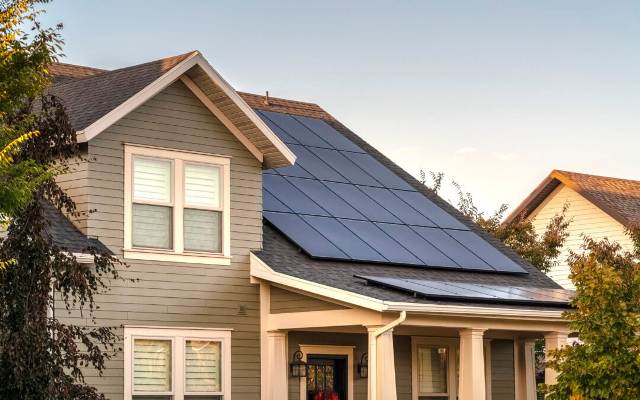
The higher tariffs have significantly improved the economics of rooftop solar. IEEFA estimates that rooftop solar systems generate electricity at a levelized cost of BDT 3.5 to 4 per kWh (USD 0.028 to 0.032 per kWh). Compared with the revised industrial daytime tariff of BDT 11.56 per kWh, businesses can save at least BDT 7.56 per kWh (USD 0.061 per kWh) by producing their own electricity. The latest tariff revision alone adds another BDT 1.81 per kWh (USD 0.015 per kWh) in potential savings compared with previous electricity prices. Companies also avoid the 5 percent VAT charged on grid electricity, further improving project returns.
Battery Energy Storage Systems are also becoming more attractive under the revised pricing structure. Bangladesh’s evening peak tariff reaches BDT 16.06 per kWh (USD 0.13 per kWh) between 6:00 PM and 9:00 PM, creating an opportunity for businesses to store excess daytime solar generation and use it during high-cost evening hours. Combining rooftop solar with battery storage enables industries to lower peak electricity costs, improve energy reliability, and reduce dependence on the grid.
Industrial energy efficiency is emerging as another key strategy. Motor and motor-driven systems account for approximately two-thirds of industrial electricity consumption in Bangladesh. Upgrading to high-efficiency IE3 and IE4 motors and deploying Variable Frequency Drives (VFDs) can substantially reduce electricity use, lower energy costs, and shorten investment payback periods.
Export-oriented manufacturers are increasingly investing in rooftop solar, battery storage, and energy-efficient technologies to protect themselves from rising electricity costs and volatile fossil fuel prices. At the same time, the Bangladesh Power Development Board (BPDB) continues to address the BDT 5 per kWh generation-cost gap and projected BDT 410 billion subsidy burden, while the Sustainable and Renewable Energy Development Authority (SREDA) is promoting clean energy adoption through awareness programmes and energy-efficient technologies such as Brushless Direct Current (BLDC) fans.
According to IEEFA’s Shafiqul Alam, although consumers cannot control government-set electricity tariffs, they can reduce their electricity bills by adopting clean energy technologies. With rooftop solar generating electricity at BDT 3.5 to 4 per kWh compared with industrial peak tariffs of BDT 16.06 per kWh, Bangladesh’s changing tariff structure is making renewable energy, battery storage, and energy efficiency essential investments for businesses seeking lower costs, improved competitiveness, and long-term energy resilience.
SHAFANA FAZAL