


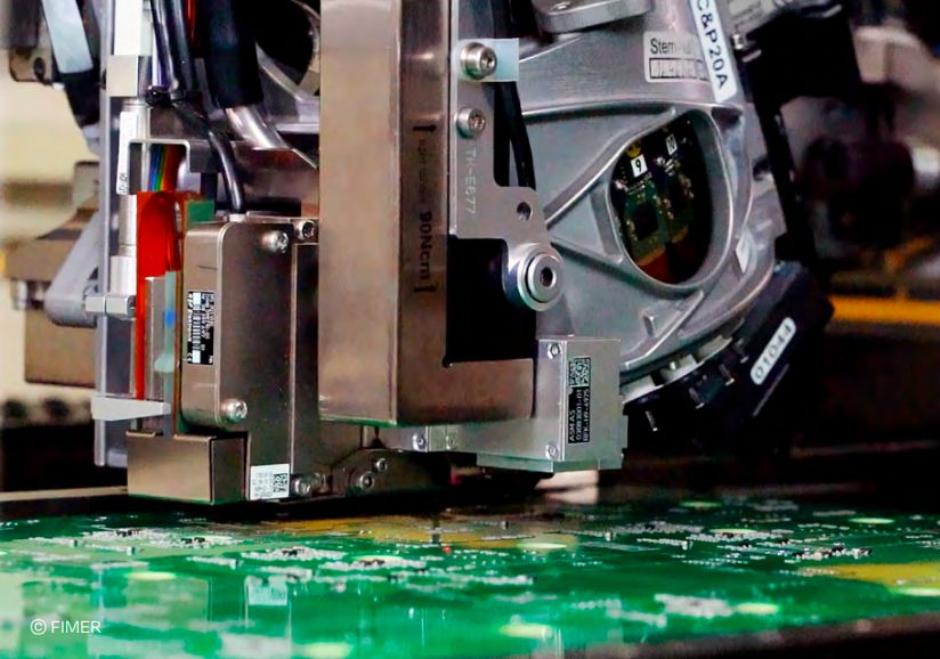
Solar manufacturing in Europe entered 2025 at a critical turning point, Solar Power Europe said in a report. Despite strong political momentum and new EU-level initiatives, Europe’s PV manufacturing ecosystem continues to face global market pressures, structural bottlenecks, and widening gaps relative to the European Union’s 2030 goals. Solar Power Europe’s latest assessment outlines a sobering picture of where the continent stands and what must be done to build a resilient domestic value chain.
Here are the 10 most important facts about solar manufacturing in Europe in 2025:
1. Europe remains far behind the 2030 target of 30 GW capacity across all solar value chain stages
The Net-Zero Industry Act, in force since June 2024, requires at least 30 GW of annual manufacturing capacity at each stage of the value chain by 2030. In 2025, most segments fall short of this target despite a handful of promising new projects.
2. Inverter manufacturing is Europe’s strongest segment at 96 GW capacity
Solar inverter production continues to be the standout performer, with European manufacturers dominating global markets such as the United States and Australia. This segment has already surpassed the 30 GW target more than threefold.
3. Polysilicon is the closest module-chain segment to the EU’s goal
Europe’s polysilicon capacity reached around 26 GW in 2025. However, most production is concentrated in one major company, and part of this capacity is reserved for semiconductors rather than solar.
4. Europe’s module manufacturing capacity remains limited at only 11 GW
Module output would need to triple by 2030 to reach the 30 GW target. As of 2025, even operating at full capacity, European module factories could only meet 17 percent of EU solar demand.
5. PV cell manufacturing is critically low at just 2 GW
With EU cell capacity needing to increase 15-fold by 2030, this is the most severe bottleneck in the solar supply chain. Cell makers are fully dependent on imported wafers and ingots, as these production steps now no longer exist in Europe.
6. Several high-profile manufacturers closed or went insolvent in 2024 and 2025
Global oversupply—driven mostly by rapid capacity expansion in China—has pushed module and component prices to historic lows. This has forced multiple European companies to shut down, mothball factories, or cancel expansion plans.
7. Announced projects could raise module capacity to 20 GW by 2030
If all planned manufacturing projects proceed, Europe could meet up to 45 percent of its projected 2030 solar demand. However, many announcements remain uncertain due to financial and market pressures.
8. Many European manufacturers are shifting investments outside the EU
With friendlier manufacturing environments abroad, companies are exploring opportunities in India, China and especially the United States. The US became a preferred destination after the Inflation Reduction Act, though recent tariff changes and policy shifts have added new uncertainties.
9. Industry consolidation is accelerating as only competitive or supported firms survive
The EU solar manufacturing market is shrinking and consolidating. Only companies with strong balance sheets, competitive technology, or strategic backing from national governments have remained operational through 2025.
10. EU countries are rolling out national support measures to revive local production
Following the European Solar Charter and the NZIA, countries including France, Italy and Austria have begun introducing incentives, procurement rules and funding mechanisms to keep domestic PV manufacturing alive. Still, support remains inconsistent across the bloc.
Conclusion: Europe’s Solar Industry Is at a Crossroads
The European solar manufacturing ecosystem in 2025 is marked by both opportunity and risk. While political interest is high and new support measures are emerging, Europe faces strong global competition, missing value-chain stages, and market volatility. Closing the gap to 2030 targets will require:
Stable long-term policy support
Competitive financing mechanisms
Strategic investments in cell, ingot and wafer production
Stronger demand-side measures favouring European-made products Without rapid intervention, Europe risks falling further behind in one of the world’s most critical clean energy industries.