


The global energy transition toward renewable energy, electric mobility, biofuels, and cleaner power systems is accelerating as oil markets face one of the largest supply disruptions in decades, according to the International Energy Agency (IEA) Oil Market Report 2026. The report highlights how geopolitical tensions, soaring oil prices, and fuel shortages are increasing the urgency for countries to diversify energy sources and strengthen renewable energy investments.
1. Global Oil Supply Falls by 12.8 Million Barrels Per Day
Global oil supply has declined by 12.8 million barrels per day since the beginning of the Middle East conflict, creating severe pressure on energy-importing economies and accelerating interest in renewable energy alternatives. Global oil supply fell to 95.1 million barrels per day in April 2026.
2. Oil Demand Expected to Decline by 420,000 Barrels Per Day in 2026
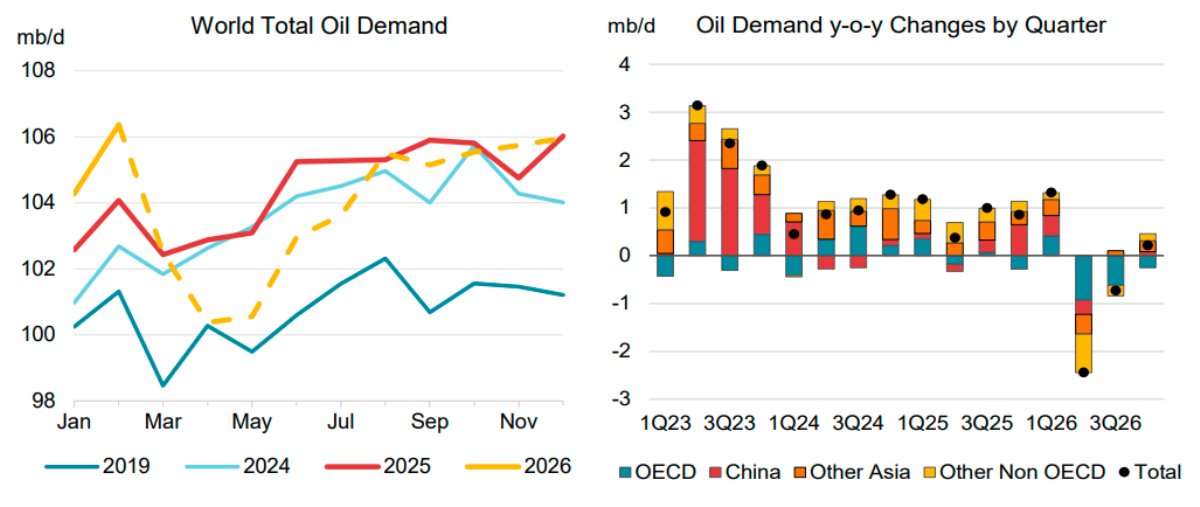
The IEA forecasts global oil demand will contract by 420,000 barrels per day year-on-year in 2026 to 104 million barrels per day. Higher oil prices, economic uncertainty, fuel-saving measures, and increasing electrification are reducing fossil fuel consumption across transport and industrial sectors.
3. Renewable Fuels and Bioenergy Gain Importance in Energy Mix
The report estimates that bioenergy production and traditional biomass account for around 20 million tonnes of methane emissions, underlining the growing importance of cleaner renewable fuel systems and modern bioenergy infrastructure in reducing emissions and improving energy efficiency.
4. Brazil’s Ethanol Strategy Shields Economy from Oil Price Shock
Brazil emerged as one of the most resilient energy markets because of its large dual-fuel vehicle fleet powered by sugar cane-based ethanol and gasoline. Domestic gasoline prices in Brazil rose only about 6 percent during the oil crisis, significantly lower than increases seen in other major economies. Brazilian oil demand still increased by 250,000 barrels per day year-on-year in March.
5. Electric Vehicle Slowdown Impacts China Oil Demand Growth
China’s passenger vehicle market weakened sharply during the crisis, with overall passenger car sales dropping 15 percent in March and electric vehicle sales declining 14.4 percent. Despite the slowdown, China continues investing heavily in electrification and renewable energy technologies to reduce long-term dependence on imported oil.
6. Governments Introduce Energy-Saving Measures to Reduce Oil Use
Several countries introduced emergency energy-saving measures, including four-day work weeks, fuel rationing, and energy price controls. Pakistan, Sri Lanka, and the Philippines adopted demand-reduction strategies as soaring oil prices increased pressure on national energy budgets.
7. Oil Prices Surge Above $120 per Barrel, Boosting Renewable Energy Economics
North Sea Dated crude prices averaged $120.36 per barrel in April after rising by approximately $16.50 month-on-month. The sharp increase in fossil fuel prices improves the competitiveness of renewable energy projects, battery storage, solar power, wind energy, and electric transportation.
8. Global Oil Inventory Drawdown Highlights Energy Security Risks
Global observed oil inventories declined by 129 million barrels in March and another 117 million barrels in April, reflecting severe supply shortages. The rapid stock depletion reinforces the importance of renewable power generation, localized energy systems, and diversified electricity infrastructure.
9. US LPG Exports Reach 2.7 Million Barrels Per Day
The United States increased LPG exports by 450,000 barrels per day to 2.7 million barrels per day, accounting for 69 percent of global seaborne LPG supply. The report noted that petrochemical and industrial sectors remain highly vulnerable to fossil fuel supply disruptions, increasing long-term interest in renewable feedstocks and circular manufacturing systems.
10. Renewable Energy Transition Seen as Long-Term Solution to Oil Market Volatility
The IEA report indicates that ongoing oil market volatility, supply chain disruptions, and geopolitical risks are accelerating investment in renewable energy, electrification, energy storage, sustainable transport, and cleaner industrial systems. Countries with stronger renewable energy ecosystems and diversified energy sources are proving more resilient against oil supply shocks and inflationary pressures.
BABURAJAN KIZHAKEDATH