


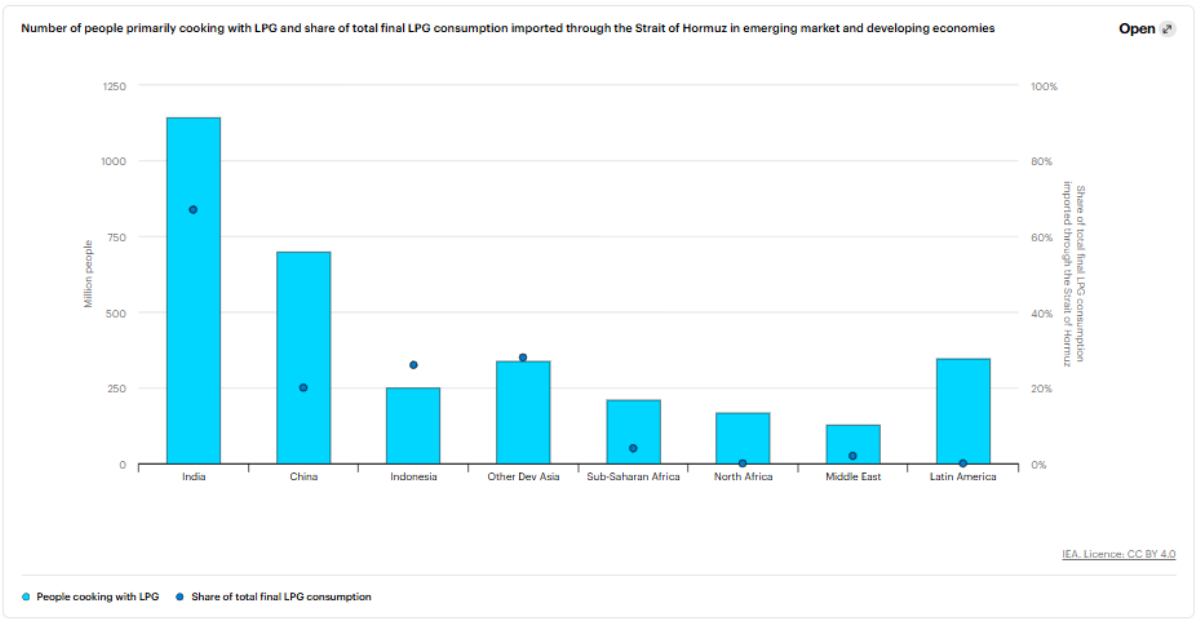
The International Energy Agency (IEA) has warned that the global energy crisis and severe disruptions in LPG supplies are threatening energy access for billions of people, accelerating the need for renewable energy, electric cooking, and sustainable energy infrastructure. The crisis is exposing the risks of fossil fuel dependence while strengthening the economic and strategic case for solar power, battery storage, bioenergy, and electrification, IEA said in its report.
1. Around 3.4 Billion People Depend on LPG for Cooking
The IEA said approximately 3.4 billion people worldwide rely on liquefied petroleum gas (LPG) and other modern cooking fuels. Supply shortages caused by disruptions in Middle East energy flows are now threatening cooking fuel access across Asia and Africa, increasing interest in renewable-powered cooking alternatives.
2. Nearly 30 Percent of Global LPG Trade Passes Through Strait of Hormuz
Around 30 percent of global seaborne LPG exports move through the Strait of Hormuz, making global cooking fuel markets highly vulnerable to geopolitical disruptions. The crisis is strengthening government focus on domestic renewable energy generation and decentralized clean energy systems.
3. Renewable Electricity Emerging as Alternative to Imported Fuels
The growing LPG shortage is accelerating investments in renewable electricity infrastructure including solar, wind, and battery storage systems that can support electric cooking appliances and reduce dependence on imported fossil fuels. Renewable-powered electrification is increasingly viewed as a long-term energy security strategy.
4. India Faces Severe LPG Supply Pressure
India is among the countries most affected by the crisis due to its heavy reliance on imported LPG. The IEA highlighted growing supply constraints and long waiting times for LPG cylinders, increasing pressure to accelerate clean energy and electric cooking adoption in rural and urban households.
5. Clean Cooking Transition Faces Major Setback
The energy crisis risks reversing years of progress in clean cooking adoption. Millions of households may return to traditional fuels such as firewood and charcoal because of rising LPG prices and shortages, increasing deforestation and carbon emissions. Renewable energy-based cooking solutions are becoming increasingly important to avoid this setback.
6. Solar Energy and Battery Systems Gain Momentum
The IEA noted that solar home systems, mini-grids, and battery-backed renewable power systems can provide affordable electricity access for electric cooking technologies. Declining solar and battery costs are improving the economics of renewable-powered household energy solutions.
7. Energy Crisis Accelerates Electrification Strategies
Governments are increasingly prioritizing electrification of cooking, transportation, and industrial sectors to reduce exposure to volatile oil and gas markets. The crisis has strengthened support for renewable energy investment, energy efficiency programs, and grid modernization projects.
8. Health Risks from Polluting Fuels Could Increase
The IEA warned that households shifting back to biomass fuels face growing exposure to indoor air pollution. Traditional cooking methods contribute to millions of premature deaths globally each year, reinforcing the need for sustainable clean cooking technologies powered by renewable electricity.
9. Renewable Energy Strengthens Long-Term Energy Security
Countries with stronger renewable energy capacity and diversified energy systems are proving more resilient during the fuel supply shock. Investments in wind, solar, hydroelectricity, and bioenergy are increasingly viewed as essential for reducing import dependence and protecting consumers from future fuel crises.
10. Global Energy Transition Expected to Accelerate
The current fuel crisis is expected to accelerate the global transition toward renewable energy and electrification. Rising fossil fuel risks, supply-chain disruptions, and affordability concerns are pushing governments and businesses to increase investments in cleaner, more sustainable energy systems.
BABURAJAN KIZHAKEDATH