


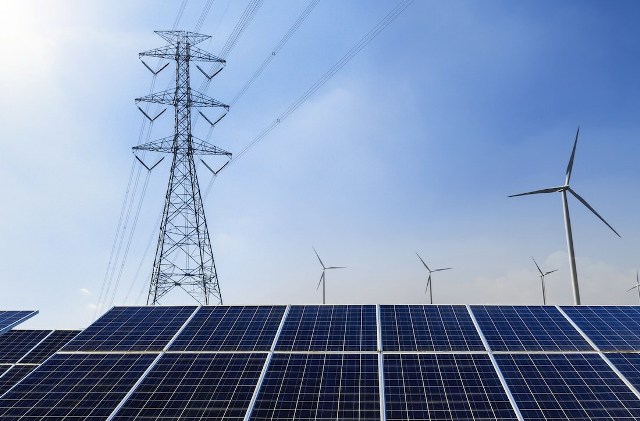
Global renewable energy capacity recorded a significant milestone in 2025, reaching 5,149 gigawatts (GW) after adding 692 GW, marking 15.5 percent annual increase, according to the International Renewable Energy Agency. The latest Renewable Capacity Statistics 2026 highlights that renewables accounted for 85.6 percent of total capacity additions, reinforcing their dominant role in the global energy transition.
Amid rising geopolitical tensions, particularly in the Middle East, concerns over fossil fuel supply disruptions and price volatility are accelerating the shift toward renewable energy. Countries are increasingly turning to locally produced, cost-effective renewable sources to strengthen energy security and reduce dependence on international fuel markets.
IRENA Director-General Francesco La Camera emphasized that renewable energy continues to demonstrate resilience despite global uncertainties. He noted that decentralized energy systems with higher renewable penetration enhance economic stability, energy security, and competitiveness, helping nations better withstand external shocks.
Solar and Wind Dominate Renewable Expansion
Solar energy remained the primary growth driver in 2025, contributing 511 GW, or nearly 75 percent of total renewable additions. Wind energy followed with 159 GW, bringing the combined share of solar and wind to an overwhelming 96.8 percent of all new renewable capacity. Declining costs and rapid deployment capabilities continue to fuel the expansion of these technologies.
Bioenergy ranked third, adding 3.4 GW and achieving a 2.3 percent growth rate, while other renewable sources such as hydropower, geothermal, and off-grid solutions recorded modest but steady gains.
Regional Trends Highlight Global Imbalance
Asia maintained its leadership position, contributing 74.2 percent of global renewable capacity additions, equivalent to 513.3 GW, and achieving a growth rate of 21.6 percent. The region’s total renewable capacity reached 2,891 GW, far exceeding other regions.
Africa recorded its highest-ever growth, increasing capacity by 15.9 percent with 11.3 GW of additions, driven by key markets such as Ethiopia, South Africa, and Egypt. The Middle East also saw rapid expansion, growing by 28.9 percent, led by Saudi Arabia.
Europe ranked second globally with a total renewable capacity of 934 GW. In contrast, Central America and the Caribbean remained the least developed region in renewable deployment, with just 21 GW, highlighting persistent disparities and the urgent need for investment in clean energy infrastructure.
Technology Highlights
Solar energy: Solar photovoltaics dominated, accounting for 510.3 GW of the 511.2 GW total solar additions.
Hydropower: Added 18.4 GW, with China contributing 96 percent of the increase. Countries such as India, Ethiopia, and Canada also made notable additions.
Wind energy: Expanded by 14 percent, with 158.7 GW added. China led the growth, followed by India with 6.3 GW.
Bioenergy: Increased by 3.4 GW, led by Japan, China, and Brazil.
Geothermal: Grew modestly by 0.3 GW, with contributions from the Philippines, Indonesia, Germany, Türkiye, and Japan.
Off-grid renewables: Expanded by 1.7 GW, primarily driven by solar energy, supporting electrification in underserved regions.
Renewables Strengthen Energy Security
The 2025 data underscores the growing importance of renewable energy in building resilient and secure energy systems. While global capacity continues to expand at a record pace, regional disparities remain a key challenge. Accelerating investments in emerging markets will be critical to ensuring a balanced and inclusive global energy transition.
BABURAJAN KIZHAKEDATH