


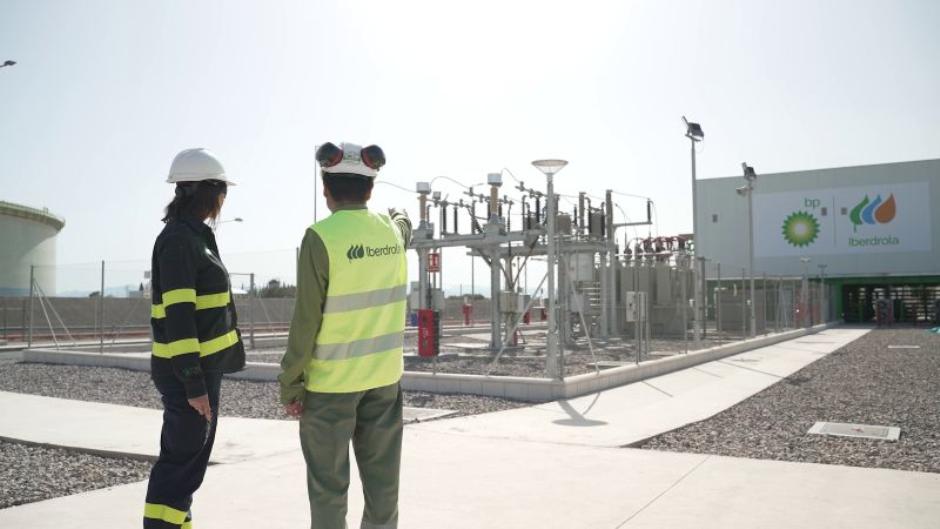
bp and Iberdrola have started operations at their 25 MW green hydrogen plant at bp’s Castellon refinery in Spain, marking a significant milestone in industrial decarbonization, renewable hydrogen production and the integration of clean energy into European refining operations.
The facility, currently Spain’s largest operating green hydrogen plant, is expected to produce approximately 2,800 tonnes of green hydrogen annually and avoid around 23,000 tonnes of carbon dioxide emissions each year.
Developed by Castellon Green Hydrogen, a 50:50 joint venture between bp and Iberdrola, the facility will be operated by bp to support the refinery’s transition towards lower-carbon industrial processes.
Castellon green hydrogen plant: Key project details
| Project indicator | Details |
| Electrolyzer capacity | 25 MW |
| Annual green hydrogen production | 2,800 tonnes |
| Annual CO₂ emissions avoided | 23,000 tonnes |
| Renewable electricity supply | 170 GWh per year |
| Project ownership | bp 50%, Iberdrola 50% |
| Public funding | €15 million |
| Spanish companies involved | Around 25 |
| Refinery processing capacity | 110,000 barrels per day |
Iberdrola supplies renewable electricity for hydrogen production
Iberdrola will supply 170 GWh of renewable electricity annually through a power purchase agreement (PPA), sourcing energy from its wind and solar farms across Spain.
The renewable electricity will power the electrolysis process, enabling hydrogen production without relying directly on fossil fuels as feedstock.
The project demonstrates how renewable energy developers can secure long-term industrial electricity customers through green hydrogen partnerships, creating additional demand for wind and solar power generation.
Hydrogen is an essential component of petroleum refining, particularly in processes that remove sulfur and improve fuel quality. The Castellon facility will replace a portion of the refinery’s existing grey hydrogen consumption, reducing emissions and associated carbon costs.
bp targets lower refining costs and improved competitiveness
The green hydrogen investment supports bp’s strategy of improving the operational competitiveness of its European refining assets while maintaining capital discipline.
The Castellon refinery processes approximately 110,000 barrels of crude oil per day and supplies jet fuel, diesel and gasoline to customers in Spain and other European markets.
The refinery is integrated with bp’s global sourcing, trading, shipping, refining and distribution operations, connecting international crude oil suppliers with European fuel customers.
Brenda Stout, Senior Vice President of Refining, Terminals and Pipelines at bp, said the green hydrogen plant would improve the competitiveness of the Castellón refinery while supporting customer demand and European energy security.
bp operates around 700 branded retail fuel stations in Spain and supplies aviation fuel to airports across the country.
European Union provides €15 million in green hydrogen funding
The Castellon green hydrogen project has received €15 million in financial support through incentive programs supporting innovation and knowledge development across the renewable hydrogen value chain.
The funding is managed by Spain’s Institute for Energy Diversification and Saving (IDAE) and financed through the European Union’s NextGenerationEU initiative under Spain’s Recovery, Transformation and Resilience Plan.
The Instituto Tecnológico de la Energía (ITE) is also participating in the initiative, supporting the development of Spain’s renewable hydrogen ecosystem.
Around 25 Spanish companies contributed to the project through equipment supplies and construction services, strengthening domestic industrial capabilities and creating opportunities across the hydrogen supply chain.
Mario Ruiz-Tagle, CEO of Iberdrola Espana, said renewable-powered electrification and green hydrogen can improve industrial competitiveness, create employment, strengthen energy autonomy and reduce emissions from industrial operations.
With annual production of 2,800 tonnes and expected emissions savings of 23,000 tonnes, the bp-Iberdrola project represents an important step towards expanding Spain’s green hydrogen economy while addressing the cost and decarbonization requirements of Europe’s refining industry.