


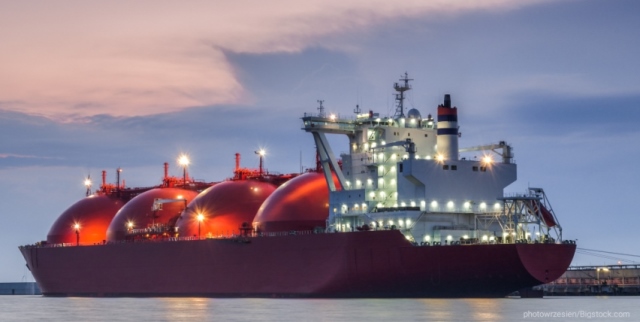
Australia is set to introduce one of its most significant energy market reforms in over a decade, requiring east coast liquefied natural gas (LNG) exporters to reserve 20 percent of export volumes for domestic customers starting in July 2027.
The federal government’s new gas reservation policy aims to address projected gas shortages, improve energy security, and reduce pressure on domestic gas prices that have risen sharply since Queensland’s LNG export boom began in 2015, IEEFA’s Kevin Morrison, an Energy Finance Analyst, Australian Oil and Gas, said in a report.
Australia exports nearly 80 percent of its gas production under long-term LNG contracts, making it one of the world’s largest LNG suppliers. However, local manufacturers, households, and energy-intensive industries have increasingly faced higher gas prices and concerns about future supply availability as domestic markets became linked to global LNG pricing.
Under the new framework, LNG exporters operating on Australia’s east coast will be required to ensure a portion of their gas production remains available for domestic consumers before export. Existing export contracts signed before December 22, 2025, will remain exempt.
The policy is largely driven by concerns over declining production from mature gas fields, particularly the Gippsland Basin in Victoria. The Australian Energy Market Operator has warned that eastern Australia could face gas shortages by 2029 without additional supply measures.
The reform will primarily affect the three LNG export projects in Gladstone, Queensland – Australia Pacific LNG (APLNG), Queensland Curtis LNG, and Gladstone LNG. Industry analysts believe the measure could increase domestic gas availability and place downward pressure on prices.
Manufacturing groups have welcomed the initiative, arguing it will strengthen Australia’s industrial competitiveness and improve long-term energy security. LNG producers, however, warn that mandatory reservation requirements could discourage future investment and reduce market flexibility.
The policy comes as Australia’s LNG sector continues to attract major investment. Woodside Energy is advancing the Scarborough Energy Project, which was approximately 96 percent complete during the first quarter of 2026 and is expected to deliver first LNG later this year. Woodside is also progressing the Browse LNG project, estimated to require investment of approximately A$48.7 billion.
Australia Pacific LNG, developed at a cost of about US$20 billion, operates two LNG trains with annual capacity of 9 million tonnes and has secured approvals for up to 1,696 additional coal seam gas wells and more than 1,500 kilometers of pipelines.
Meanwhile, Santos continues investing in the Barossa gas project, Darwin LNG operations, and exploration activities in the Beetaloo Basin, while Inpex remains a key player through its Ichthys LNG project, which contributes roughly 10 percent of Australia’s LNG production.
Geopolitical tensions involving Iran and concerns over the security of the Strait of Hormuz have further strengthened the strategic importance of Australian LNG exports. Asian buyers increasingly view Australia as a reliable alternative supplier amid growing concerns about potential disruptions to Middle East energy shipments.
Australia’s new reservation framework draws on the experience of Western Australia, where LNG exporters have generally reserved around 15 percent of production for domestic use since 2006. Supporters argue the model has helped maintain more stable domestic gas prices while allowing LNG exports to continue growing.
The success of the new policy will depend on implementation details, regulatory oversight, and industry cooperation. If fully enacted, the reform could significantly alter the balance between domestic consumption and LNG exports while influencing future investment decisions across Australia’s energy sector.
For households and industrial consumers, the policy offers the prospect of improved gas availability and greater protection from global energy price volatility. For LNG exporters, it represents a major shift in a market that has historically prioritized international demand. As consultations continue, the gas reservation scheme is expected to remain one of the most closely watched energy policy developments in Australia.
FASNA SHABEER