


ASEAN countries can significantly improve electricity security by accelerating investments in distributed renewable energy, battery storage and stronger regional grid interconnections, according to an Ember analysis. With 64 percent of the region’s installed power generation capacity still dependent on fossil fuels, Southeast Asia remains vulnerable to climate shocks and natural disasters that frequently disrupt centralized power infrastructure.
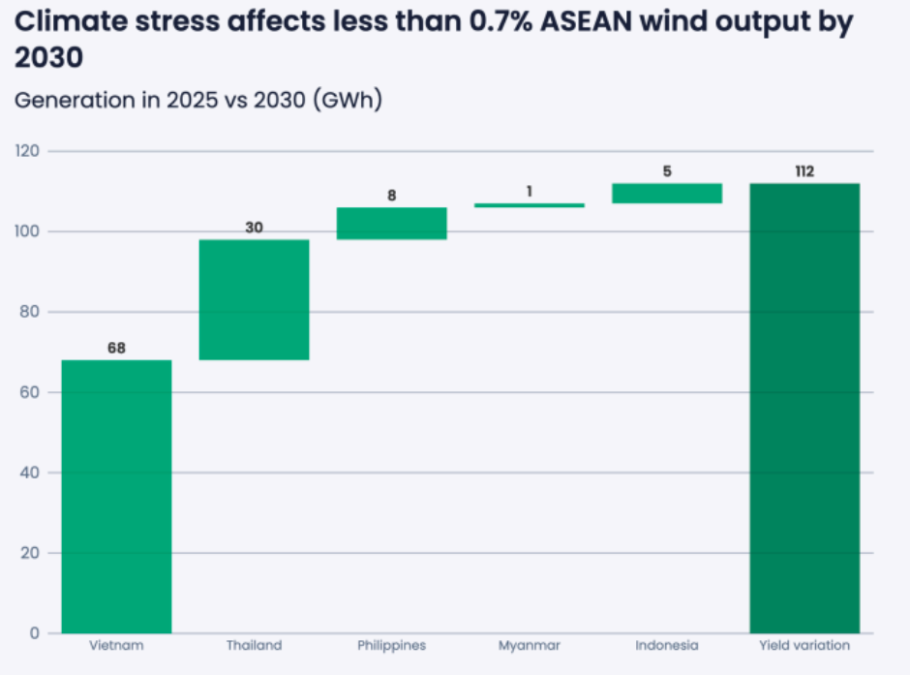
The analysis – prepared by Dinita Setyawati and Alnie Demoral — shows that distributed renewable energy systems are far more resilient than conventional fossil fuel-based electricity networks. Even under the most extreme weather scenarios projected for 2030, electricity generation from wind and solar is expected to vary by less than 1 percent from normal output, substantially lower than the output losses projected for thermal and nuclear power plants under less severe warming conditions.
The region faces two major power sector challenges: gradual climate-related declines in generation across fossil fuel, hydropower and renewable assets, and sudden disasters that damage power plants and transmission infrastructure. Distributed solar, wind and battery storage can isolate damaged assets, restore electricity more quickly and reduce the risk of widespread outages.
In Indonesia’s Central Sulawesi, the 7.4-magnitude earthquake in 2018 disabled the Panau coal power plant and damaged 1,192 electricity distribution units. Despite plans to add 2.25 GW of new coal capacity by 2030, deploying 600 MW of solar power together with 720 MWh of battery storage could replace 250 MW of the planned coal capacity and avoid approximately 1.4 TWh of coal-fired electricity generation while enabling faster recovery after future disasters.
The Philippines is also strengthening grid resilience through transmission expansion. A planned 58 MVA interconnection linking Catanduanes with Luzon is expected to supply up to 22 percent of the island’s electricity demand by 2030, reducing dependence on isolated diesel generation and improving recovery following typhoons.
Vietnam has already experienced the cost of inadequate grid flexibility, with approximately 405 GWh of solar power curtailed in 2020, representing an estimated economic loss of around US$26 million. Expanding transmission infrastructure, deploying smart grids and increasing battery storage capacity would allow the country to utilize more renewable electricity while enhancing overall grid resilience.
The analysis recommends integrating energy planning with regional disaster management frameworks such as the ASEAN Agreement on Disaster Management and Emergency Response (AADMER) while accelerating investments in grid interconnection, transmission modernization, energy storage and distributed renewable energy to build a more resilient and reliable electricity system across Southeast Asia.
INVESTMENT
According to the International Energy Agency (IEA), clean energy investment in Southeast Asia has increased 60 percent since 2015, helping total energy investment exceed US$100 billion in 2025. Renewable energy capacity reached 120 GW in 2024 and is projected to nearly triple by 2035 under current policies, while grid and storage investment needs are expected to rise from US$13 billion today to US$50 billion by 2050, including US$27 billion for the ASEAN Power Grid, IEA report said.
Several projects are reshaping the regional market. In the Philippines, TotalEnergies and Nextnorth are building a 440 MWp solar park backed by a US$300 million investment, expected to generate 1.2 TWh of electricity over 20 years.
Another major project by VinEnergo and SunAsia Energy will develop 422 MWp of solar capacity above fish ponds, creating one of Southeast Asia’s largest aquaculture-integrated solar developments.
Vietnam continues to attract significant renewable investment despite regulatory challenges. More than US$13 billion of existing solar and wind investments are linked to projects affected by proposed tariff reviews, while the country plans to expand wind and solar capacity to 56 GW by 2030. Separately, five new wind projects totaling 344 MW have secured approximately US$509 million in investment.
Malaysia is scaling renewable investment. Utility company Tenaga Nasional has doubled its renewable energy investment plan to approximately US$9.8 billion under the National Energy Transition Roadmap, while Brunei has approved a US$26.4 million investment for its largest solar project, expected to generate 64.47 million kWh of renewable electricity annually.
BABURAJAN KIZHAKEDATH